
Thai PM Anutin Eyes Another Term, Claims Early Election Victory
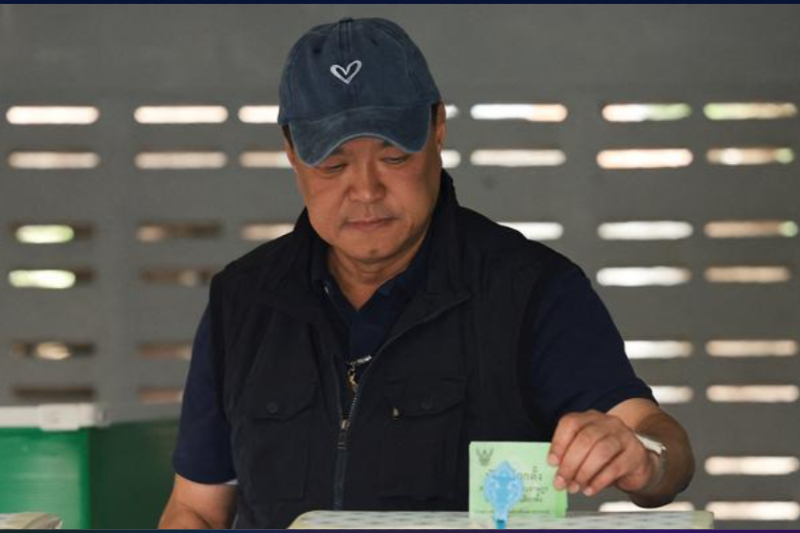
Feb 9, 2026: Thailand’s incumbent Prime Minister Anutin Charnvirakul on Sunday declared victory in the country’s parliamentary election after early television projections showed his conservative Bhumjaithai Party emerging as the largest force in parliament.
Speaking to reporters at party headquarters in Bangkok, Anutin said initial results indicated a clear lead for his party. “We are likely to secure first position in this election,” he said, adding that the outcome reflected the collective will of the Thai people regardless of political affiliation.
The election featured a closely watched three-way contest between the ruling Bhumjaithai Party, the reform-leaning People’s Party, and Pheu Thai, the long-dominant political force associated with the influential Shinawatra family.
Opposition accepts results, pledges cooperation
The People’s Party acknowledged it had not finished first in the race. Party leader Natthaphong Ruengpanyawut said his party respected the democratic process and the right of the leading party to form the next government.
“We recognize that we did not come out on top,” Natthaphong told journalists. “We remain committed to democratic principles and will respect the outcome.”
Pre-election forecasts had suggested a tight race with no party likely to secure an outright majority in the 500-seat lower house, raising expectations of complex coalition negotiations in the days ahead.
Economic challenges and regional tensions shape vote
The election was held at a time of economic strain, with Thailand’s growth slowing and its vital tourism sector still struggling to regain momentum.
Voters also went to the polls amid heightened border tensions with neighboring Cambodia, following deadly clashes in disputed areas.
Political instability has remained a defining feature of Thai politics. Since the 2023 general election, the country has seen three prime ministers in less than three years, underscoring persistent volatility in governance.
Thailand has experienced 13 successful military coups since the end of absolute monarchy in 1932, a legacy that continues to influence its political landscape.
Key political forces in the election
The People’s Party, widely viewed as the successor to the dissolved Move Forward Party, entered the race with strong public support, particularly among younger voters.
Move Forward won the 2023 election but was later disbanded after a court ruling that found parts of its reform agenda conflicted with constitutional protections of the monarchy.
Natthaphong, a 38-year-old entrepreneur, led the People’s Party into the election after moderating its reformist platform in an effort to broaden appeal. Despite this, analysts said the party was unlikely to gain enough seats to govern alone.
Pheu Thai, once the dominant force in Thai politics, has seen its influence decline following the removal of former prime minister Paetongtarn Shinawatra last year. The Shinawatra family, led by ex-prime minister Thaksin Shinawatra, has shaped Thai politics for more than two decades. Thaksin is currently serving a prison sentence related to corruption and abuse of power.
Constitutional referendum held alongside election
In addition to parliamentary voting, Thai citizens also participated in a constitutional referendum on whether the current 2017 military-backed charter should be replaced.
Voters were asked whether they supported drafting a new constitution, with options to vote “Yes,” “No,” or “No opinion.” A majority vote in favor would not immediately change the constitution but would authorize parliament to begin a multi-stage drafting process, including two further referendums before any new charter could take effect.
As official results continue to be tallied, attention is now turning to coalition talks and the formation of Thailand’s next government.