

Japan Faces Snap Election Amid Heavy Snow
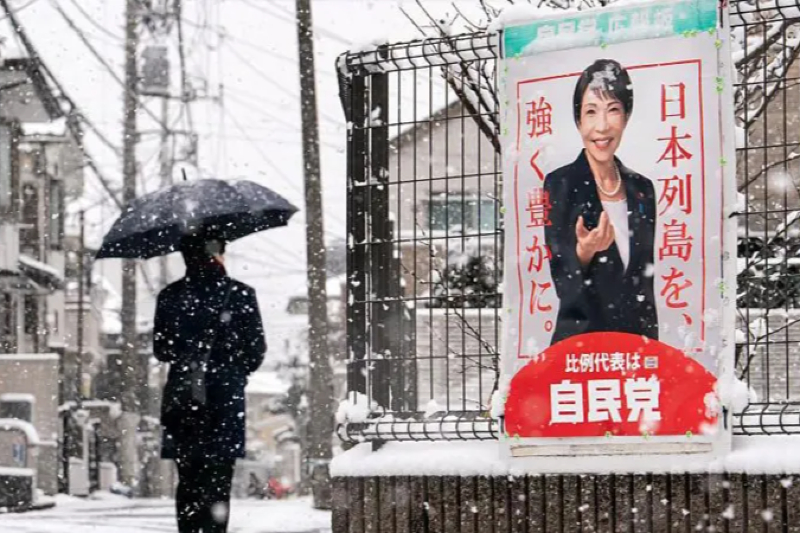
Tokyo: Millions of people across Japan are heading to polling stations in heavy snow to cast their ballots in a snap general election called by Prime Minister Sanae Takaichi, with opinion polls predicting a decisive victory for her ruling coalition.
This is Japan’s first mid-winter election in 36 years, as national polls are usually held during milder seasons. Prime Minister Takaichi called the early election shortly after winning her party’s leadership race, seeking a fresh public mandate.
According to pre-election surveys, Takaichi’s Liberal Democratic Party (LDP) and its coalition partner, the Japanese Innovation Party, are expected to secure as many as 300 of the 465 seats in the powerful lower house of parliament.
Such an outcome would mark a strong comeback for the LDP, which had previously lost its long-standing coalition ally and parliamentary majority amid corruption scandals and rising living costs.
Takaichi rose to power after two consecutive LDP prime ministers stepped down following sharp drops in public approval. She has since gained popularity by promising tax cuts and government subsidies, although critics question whether increased spending is sustainable given Japan’s high public debt, one of the largest among developed economies.
Political analysts say Takaichi’s personal appeal could significantly boost the ruling coalition’s performance. However, severe winter weather threatens to suppress voter turnout, particularly in northern and eastern Japan.
Early voting figures suggest weather has already had an impact. About 4.6 million people voted early, representing a 2.5 percent decline compared with the previous election in 2024.
Heavy snowfall was reported in several regions, including Niigata Prefecture in central Japan. The transport ministry said 37 train lines and 58 ferry routes were suspended, while 54 flights were cancelled by Sunday morning. Tokyo also experienced rare snowfall as voters made their way to polling stations.
Despite holding traditional views on gender and family, Takaichi has attracted strong support among young voters aged 18 to 30, according to polls. Since taking office in October, approval ratings for her government have remained above 70 percent, reflecting broad public confidence ahead of the election.