
Diplomatic Recriminations: US and Iran Trade Blame as Islamabad Peace Summit Collapses
WASHINGTON / ISLAMABAD — The historic, high-stakes peace talks between the United States and Iran have collapsed in a flurry of mutual accusations, leaving the region on a knife-edge as a fragile ceasefire enters its final days. Following 21 hours of grueling negotiations in the Pakistani capital, both delegations departed today, signaling a total breakdown in trust.
The War of Words: He Said, They Said
The fallout from the summit has rapidly shifted from the negotiating table to a public battle for the moral high ground.
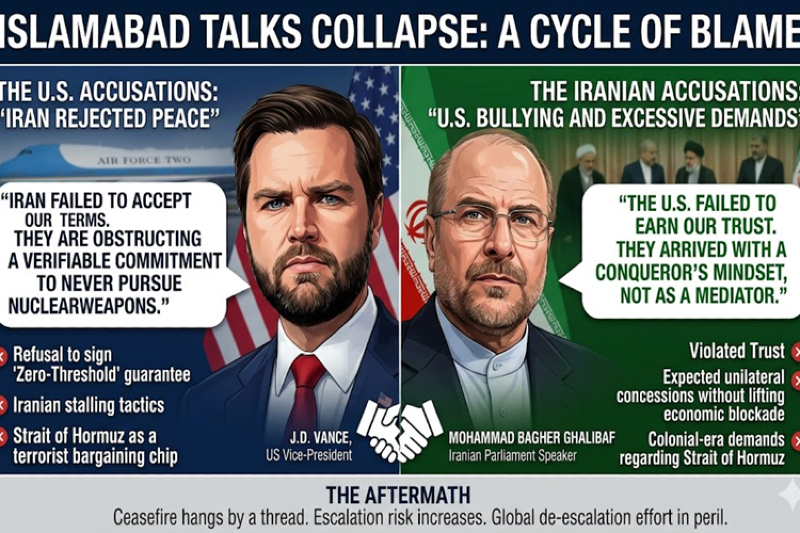
The Washington Perspective: "Tehran Rejected Peace" US Vice-President JD Vance, returning to Washington empty-handed, framed the failure as a missed opportunity by Iran.
The Nuclear Standoff: Vance identified the "core goal" of the talks as the permanent cessation of Iran’s nuclear capabilities. He explicitly stated that the US "could not get to a situation" where Tehran was willing to accept these terms.
Bad News for Tehran: Vance described the outcome as "bad news for Iran," suggesting that by rejecting US terms, Tehran had chosen continued economic and military pressure over a diplomatic exit from the conflict.
The Tehran Perspective: "US Bullying and Unlawful Demands" Iranian Parliament Speaker Mohammad Bagher Ghalibaf and the Foreign Ministry fired back, accusing Washington of sabotaging the talks with a "colonial" mindset.
The Trust Gap: Ghalibaf asserted that the US "failed to gain the trust" of the Iranian team. He emphasized that Iran entered the room in "good faith," but was met with "excessive demands and unlawful requests" that ignored Iran's national defense achievements.
Initiative vs. Obstruction: Tehran claims it presented "forward-looking initiatives" to resolve the crisis, but that Washington's refusal to concede on key sovereign issues—specifically regarding the Strait of Hormuz—rendered a deal impossible.
The Strait of Hormuz: The New Red Line
While not mentioned in Vance’s press conference, the strategic waterway emerged as a central point of contention.
Iranian Sovereignty: Deputy Speaker Haji Babaei declared the Strait is "entirely in Iran's hands," demanding that passage tolls be paid in Iranian rials.
US Defiance: President Trump has countered on social media, insisting the Strait will "soon be open," as US Central Command confirmed that Navy destroyers are already operating in the area to clear sea mines—a claim Iran denies.
What Happens Next?
As the delegations depart, the global community is bracing for the potential resumption of hostilities.
The Ceasefire Clock: Only days remain in the current two-week ceasefire. Pakistan’s Foreign Minister Ishaq Dar has called it "imperative" that both sides maintain the truce, but the lack of a formal agreement makes escalation a distinct possibility.
Trump’s Choice: Analysts suggest the US President now faces a binary choice: escalate the military campaign to force a total collapse of Iranian infrastructure or pivot back to long-term, back-channel negotiations.
Internal Crisis: Amidst the diplomatic failure, Iran remains under a 44-day government-enforced internet blackout, compounding the economic and humanitarian toll of the conflict
Global Leaders Urge Restraint as Islamabad Talks Hit a Wall
As the 21-hour diplomatic marathon in Islamabad concluded without a deal, world leaders have stepped in with a chorus of calls for caution to prevent a return to full-scale war. British Prime Minister Keir Starmer urged both Washington and Tehran to "find a way through" the deadlock, emphasizing that a continuation of the ceasefire is "vital" for global stability.
Australian Prime Minister Anthony Albanese, while endorsing Pakistan’s role as a mediator, warned that previous escalatory rhetoric was counterproductive and joined calls for a "positive spirit" to achieve durable peace.
Pakistani Prime Minister Shehbaz Sharif, who hosted the historic summit, called it "imperative" that both sides uphold their ceasefire commitments, offering Pakistan’s continued facilitation to bridge what he described as a bridgeable—though currently vast—gap between the two long-time adversaries.
The Islamabad Scorecard: What Was Settled and What Remains UnresolvedWhile the talks were described as "substantive" by the U.S. and "intensive" by Iran, the two nations remain deeply divided on the most critical issues.
The following breakdown shows where the negotiations stood at the time of the delegations' departure:
Status Key Issue Details of Stance Agreed Temporary Ceasefire Both sides have maintained the initial 14-day ceasefire, though it is currently under extreme pressure following the failed talks. Partially Agreed Release of Assets Discussions regarding the release of billions in frozen Iranian assets were held; however, the U.S. has linked this relief to broader concessions that Iran has not yet accepted. Not Agreed Nuclear Guarantees This was the "core goal" for the U.S. Washington demanded a permanent commitment against weaponization; Iran refused, citing a lack of trust and "unreasonable" American terms. Not Agreed Strait of Hormuz A major sticking point. The U.S. demands unconditional reopening; Iran insists the waterway is a "red line" and has proposed tolls to be paid in Iranian rials. Not Agreed War Reparations Tehran demanded compensation for damages caused by U.S. and Israeli strikes since February 28—a condition the U.S. delegation has flatly rejected.