
🔴 JUST IN: US-Iran Direct Peace Talks Officially Begin in Islamabad
The Breakthrough: Face-to-Face Negotiations
In a historic shift for global diplomacy, state media PTV News has confirmed that direct talks between the United States and Iranian delegations have officially commenced in Islamabad.
This marks the first high-level, face-to-face encounter between the two nations in decades, signaling a critical attempt to transform a fragile two-week ceasefire into a permanent resolution to the conflict that erupted on February 28.
The High-Level Teams
The presence of top-tier officials highlights the gravity of the session:
The U.S. Delegation: Led by Vice President JD Vance, the team includes Jared Kushner and Middle East Envoy Steve Witkoff, alongside experts from the National Security Council and the Pentagon.
The Iranian Delegation: Led by Parliament Speaker Mohammad Bagher Ghalibaf, the group features Foreign Minister Abbas Araghchi, National Defence Council Secretary Ali Akbar Ahmadian, and Central Bank Governor Abdolnaser Hemmati.
Strategic Mediation by PM Shehbaz Sharif
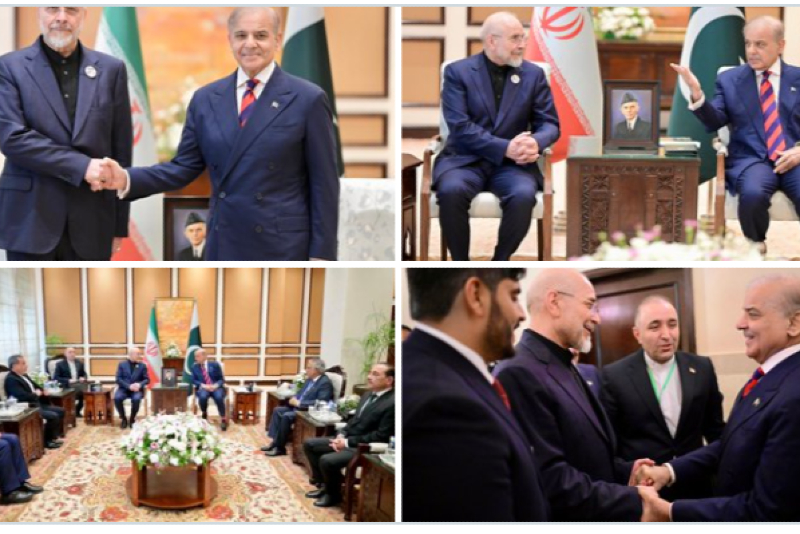
Before the direct session began, Prime Minister Shehbaz Sharif conducted a series of high-stakes "shuttle diplomacy" meetings to solidify the ground.
Meeting with Tehran
The Prime Minister’s Office (PMO) released footage showing PM Shehbaz warmly greeting Speaker Ghalibaf and FM Araghchi. During the exchange, the Premier affirmed Pakistan’s "sincere resolve" to act as a bridge, praising Iran’s willingness to engage constructively for regional stability.
Meeting with Washington
In a separate session with VP Vance and his team, the Prime Minister commended the U.S. commitment to the process. He characterized the Islamabad Talks as a vital "stepping stone" toward a durable peace, reiterating that Pakistan will continue to facilitate both sides to ensure meaningful progress.
The Fragile Road to the Table
The start of these talks was nearly derailed on Friday. Tehran had made its participation contingent on a cessation of Israeli military activity in Lebanon. Pakistan successfully mediated this "red line," ensuring that the halt in attacks in Beirut and Dahieh was integrated into the broader ceasefire framework.
Despite this, a clear divergence remains: Iran views the Lebanon front and the war with Israel as a single, unified ceasefire, while the U.S. and Israel have previously attempted to categorize Lebanon as a separate theater.
Primary Points of Contention
The agenda is built around Iran’s 10-point proposal, but significant gaps persist:
Financial & Maritime: Iran is demanding the immediate release of $7 billion in frozen assets and recognition of its nuclear rights. In return, the U.S. is seeking a firm framework for the security of global shipping through the Strait of Hormuz.
Nuclear Constraints: Washington is expected to push for strict caps on uranium enrichment and the potential removal of sensitive nuclear materials.
Regional Proxies: The sequencing of concessions and the role of regional proxy networks remain major flashpoints that negotiators must navigate.
Current Outlook
While analysts and officials remain cautious about achieving a comprehensive breakthrough within this initial two-day window, the mere fact that direct talks are happening is seen as a monumental victory for Pakistani diplomacy. At minimum, the goal is to establish a formal pathway for continued negotiations and prevent a return to full-scale hostilities once the temporary truce expires.
EDITORIAL NOTE: We will continue to update this entry as reports emerge from the direct sessions. PM Shehbaz was assisted in today's meetings by Deputy PM Ishaq Dar, Army Chief Field Marshal Asim Munir, and Interior Minister Mohsin Naqvi.