
High-Stakes Peace Talks Set for Islamabad as Vance Leads US Team
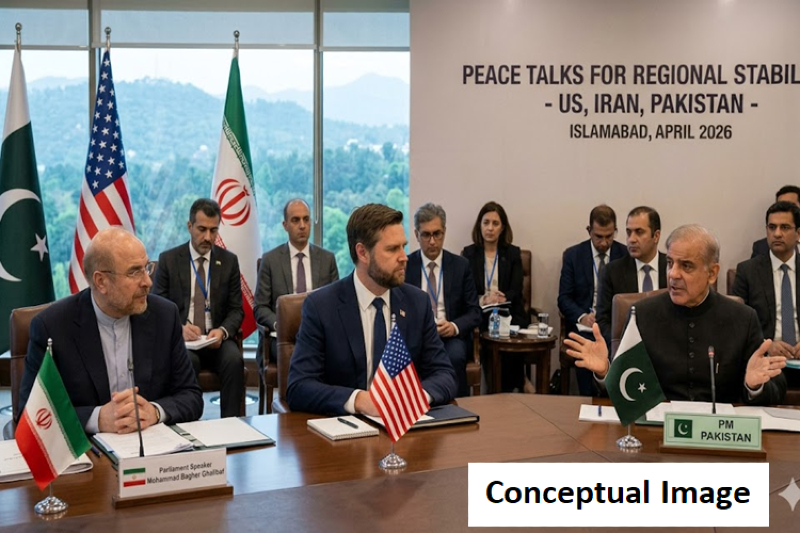
ISLAMABAD / WASHINGTON — The fragile two-week ceasefire between the United States and Iran has gained significant momentum with the announcement that Vice President JD Vance will personally lead the American delegation to peace talks in Pakistan this Saturday.
The selection of such a high-ranking official, alongside key envoys Steve Witkoff and Jared Kushner, signals President Trump’s "impatient" desire to secure a permanent end to the conflict. However, the diplomatic breakthrough remains shadowed by massive military escalations in Lebanon and conflicting interpretations of the truce.
Vance Takes the Lead in Islamabad
The White House confirmed on Wednesday that Vance will head the team in the Pakistani capital, a move reportedly preferred by Tehran. Iranian officials had previously accused other US envoys of misrepresenting their positions, whereas Vance is viewed as a figure who has historically questioned the necessity of the war.
Speaking from Hungary before his departure, Vance noted that President Trump has instructed the team to engage in "good faith," though he warned that the success of the talks rests on Iran's willingness to separate its interests from the conflict in Lebanon.
The ‘Lebanon Loophole’: A Legitimate Misunderstanding?
The most significant threat to the ceasefire is a dispute over its geographic scope.
The Iranian View: Tehran and Pakistani mediators initially claimed the truce covered Lebanon.
The US/Israeli View: Vice President Vance clarified that the US "never made that promise," describing the confusion as a "legitimate misunderstanding." He asserted the ceasefire is strictly between the US, Iran, Israel, and the Gulf Arab states.
Despite this, Vance mentioned that Israel had agreed to "check itself a little bit" in Lebanon to protect the negotiation process. However, this was contradicted by reality on the ground Wednesday, as Israeli strikes reached their highest intensity since the war began.
Global Powers Call for Restraint
As the countdown to Saturday’s talks begins, the international community is exerting massive pressure on all parties:
China: The Foreign Ministry in Beijing called for "stability as soon as possible," urging all parties to "grasp this chance at peace."
UK & France: Both nations issued urgent calls for the strict abiding of ceasefire conditions to prevent a total regional collapse.
Iran’s Skepticism: Iranian Parliament Speaker Mohammad Bagher Ghalibaf has already accused the US of violating components of Iran’s 10-point peace proposal, questioning if the negotiations are "even worthwhile."
Pakistan Denounces Israeli Strikes as Breach of International Law: The Government of Pakistan has issued a sharp condemnation of the escalating Israeli military campaign in Lebanon, characterizing the actions as a "serious violation of international law" and a threat to regional stability.
In an official statement released by the Foreign Office, Islamabad asserted that the intensity of the strikes undermines current global efforts to secure a lasting peace. Highlighting the "blatant violation of fundamental humanitarian principles," Pakistan called upon the international community to move beyond rhetoric and take "urgent and concrete steps" to halt the aggression.
This stance reinforces Pakistan's role as a key mediator in the region, particularly as it prepares to host the high-stakes US-Iran peace summit in Islamabad this weekend.
The Islamabad Peace Summit: Negotiators and Core Conditions
The high-stakes peace talks, scheduled to begin this Saturday, April 11, 2026, in Islamabad, represent the first formal effort to convert a fragile 14-day ceasefire into a permanent settlement.
The US Team & Their Strategic Objectives
President Trump has assembled a heavyweight delegation, signaling that Washington views these talks as a definitive "closer" for the regional conflict.
The Negotiators: Led by Vice President JD Vance, the team includes top presidential envoys Steve Witkoff and Jared Kushner, as well as White House Press Secretary Karoline Leavitt.
Key US Conditions:
Verified Reopening of Hormuz: An immediate and permanent restoration of global oil transit through the Strait.
Nuclear "Zero Tolerance": The US is demanding the complete removal of all "nuclear dust" and a permanent halt to uranium enrichment.
Regional Security Framework: Creating a new maritime security pact that includes Israel and the Gulf Arab states.
Structured De-escalation: A two-phase plan where temporary peace leads to a 45-day window for a final settlement.
The Iranian Delegation & The "10-Point Proposal"
Tehran views these talks as a victory for its "inner strength," sending a delegation focused on lifting the economic siege on the country.
The Negotiators: Foreign Minister Abbas Araghchi and Ambassador Reza Amiri Moghadam are spearheading the Iranian side, with direct oversight from Parliament Speaker Mohammad Bagher Ghalibaf.
Key Iranian Conditions:
Total Sanctions Removal: The lifting of all primary, secondary, and UN-level sanctions.
"All-Fronts" Ceasefire: Iran insists the truce must include Lebanon and the cessation of Israeli strikes against Hezbollah.
Frozen Asset Release: The immediate unfreezing of Iranian funds held in international and US banks.
War Damages: Iran is seeking the establishment of a financial fund to compensate for damages suffered during the recent hostilities.
US Withdrawal: A long-term demand for the withdrawal of US combat forces from regional bases.
Logistics and Other Critical Details
The Venue: Talks will be hosted in Islamabad, Pakistan, under the mediation of Prime Minister Shehbaz Sharif and Army Chief Asim Munir.
The Format: While Iran historically prefers indirect talks, the White House has expressed a preference for direct engagement to avoid "misunderstandings."
The Deadline: The current ceasefire is set to expire on April 21, 2026. If no progress is made by this date, President Trump has threatened a return to "lethal prosecution."
Global Monitoring: The UK, France, and China have requested that any final agreement be formalized as an official United Nations Security Council Resolution to ensure international compliance.
Tehran Defiant on Nuclear Enrichment Ahead of Islamabad Talks
As preparations for high-level negotiations in Pakistan intensify, Iran’s nuclear chief, Mohammad Eslami, has reaffirmed that the nation's uranium enrichment activities will not be scaled back.
Speaking to the Iranian Students’ News Agency, Eslami asserted that "the enemy" would fail to block Iran’s nuclear progress, emphasizing that the program remains a sovereign right that "no law or person" can dismantle.This defiant stance directly challenges the White House’s "red line" regarding zero enrichment and adds a layer of complexity to the upcoming summit.
While Tehran’s 10-point peace proposal includes the "acceptance of enrichment" as a core demand, the US administration continues to insist on the removal of enriched stockpiles, setting the stage for a major diplomatic showdown when Vice President JD Vance meets with Iranian negotiators this Saturday.