
Beirut Strike Jeopardizes Imminent US-Iran Peace Deal as Trump Demands Restraint
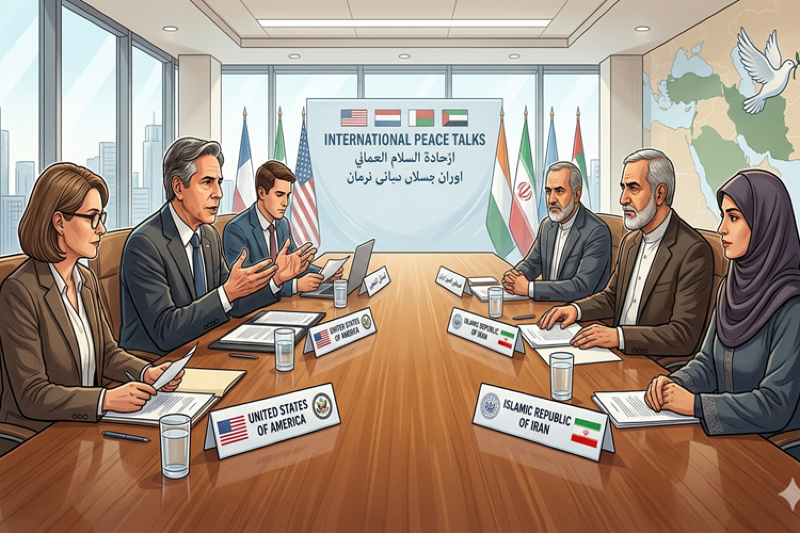
BEIRUT — A highly anticipated peace agreement aimed at ending the four-month war between the United States and Iran was thrown into jeopardy on Sunday after an Israeli airstrike hit a Hezbollah command center in Beirut.
The attack prompted furious responses from Tehran and an urgent plea for restraint from US President Donald Trump.
The escalation occurred just as international mediators expected Washington and Tehran to digitally sign a historic framework agreement.
In the wake of the strike, Iran's chief negotiator cast severe doubt on the timeline, warning that the diplomatic breakthrough could collapse.
Escalation in Lebanon Threatens Diplomacy
On Sunday afternoon, the Israel Defense Forces (IDF) launched a targeted airstrike on the Dahieh suburb, a known Hezbollah stronghold in southern Beirut.
According to Lebanon’s state-run National News Agency (NNA) and civil defense officials, the strike brought down structural targets, leaving at least three people dead and 15 others injured.
The IDF stated the operation was an direct response to automated aerial targets and rockets fired by Hezbollah into northern Israel earlier in the day.
The diplomatic fallout was immediate. Mohammad-Bagher Ghalibaf, Iran’s chief negotiator, fiercely criticized the attack, asserting it proved Washington either lacked the authority or the will to enforce its geopolitical obligations.
"If you do not have the will or the ability to fulfill your commitments, then there is no point in talking about continuing down this path," Ghalibaf stated publicly, signaling that Iran might walk away from the table.
Iran has consistently demanded that its regional allies, including Lebanon's Hezbollah, be protected under any comprehensive regional framework negotiated with the West.
"Let's Not Blow It!": Trump Pleads for Restraint
Taking to Truth Social, President Donald Trump expressed immense frustration over the timing of the Israeli military action.
While reiterating that Israel retains a foundational "right to defend itself," Trump downplayed the initial Hezbollah rocket fire as "very small and meaningless."
He strongly rebuked the retaliatory strike on Beirut, noting it occurred on a critical day when global powers were on the cusp of finalizing a historic deal.
"The attack should not have happened, particularly on a special day when we are so close to a Peace Deal with Iran. All sides should stand down... This could be the beginning of a long and beautiful peace — Let’s not blow it!"
— US President Donald Trump via Truth Social
The administration had previously voiced supreme confidence that the initial deal would be signed on Sunday.
According to details shared by Trump on Saturday, the pact would immediately secure the reopening of the strategic Strait of Hormuz to global commercial shipping and establish strict verification guidelines to dismantle Tehran’s enriched uranium reserves.
A Fragile Timeline Managed by Mediators
Pakistan, acting as the primary diplomatic mediator alongside international partners, had spent the weekend finalizing a virtual, electronic signing ceremony.
Pakistani Prime Minister Shehbaz Sharif confirmed on Saturday that an "agreed-upon text" had been reached, expressing optimism that a 60-day truce framework was ready for formalization.
However, Iran’s foreign ministry spokesperson, Esmaeil Baqaei, had already urged caution regarding Trump's strict Sunday deadline.
Following the Beirut bombing, regional analysts suggest that while the initial memorandum of understanding is highly vulnerable, it remains salvageable if a broader ceasefire holds.
The stakes remain extraordinarily high for global markets. The conflict has severely bottlenecked shipping corridors through the Persian Gulf, triggering a massive surge in international oil prices and global inflation.
For the White House, salvaging the agreement represents the absolute priority to stabilizing energy security before the upcoming G7 summit.