
U.S. Jet Shot Down by Iran: One Airman Rescued, Second Airman Untraced Yet
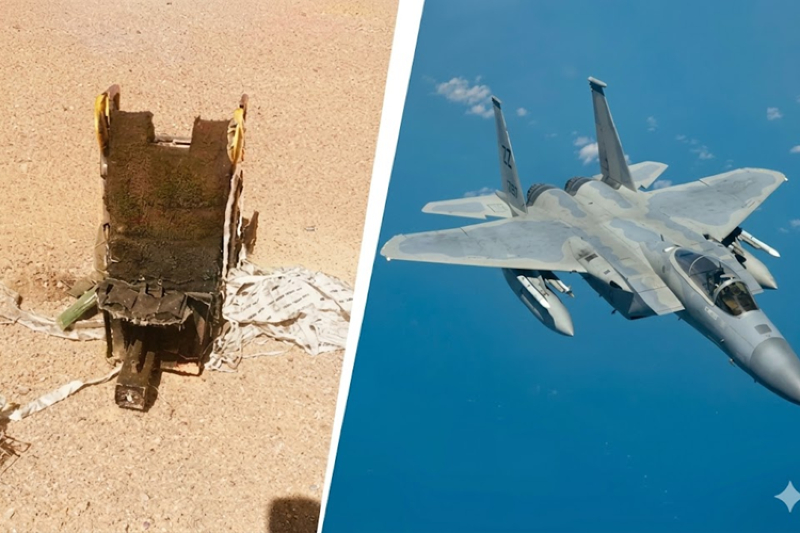
TEHRAN / WASHINGTON – A high-stakes rescue operation has successfully recovered one of two crew members from a U.S. F-15E Strike Eagle that was downed over southern Iran on Friday (April 3).
While the Pentagon and White House have remained cautious in their public statements, officials have confirmed that the rescued airman is now in safe hands, even as a massive search continues for their teammate.
This incident marks a major turning point in Operation Epic Fury, as it is the first confirmed loss of a manned U.S. aircraft within Iranian territory since the conflict began five weeks ago.
High-Altitude Drama, Low-Altitude Rescue
The drama unfolded in the rugged, mountainous terrain of Khuzestan and Kohgiluyeh and Boyer-Ahmad provinces. Following reports from Iranian state media that a "hostile aircraft" had been shot down, social media footage—later verified by defense analysts—showed U.S. HC-130J Combat King II aircraft and HH-60W Jolly Green II helicopters flying at dangerously low altitudes to locate the crew.
The Rescue: One crew member was extracted by U.S. special operations forces on Friday. Sources indicate that Israeli military assets provided critical intelligence and support during the extraction.
The Missing: The F-15E is a tandem-seat fighter. While one airman is safe, the status of the second—either the pilot or the Weapons Systems Officer (WSO)—remains unknown.
The Threat: Local Iranian authorities have broadcasted messages to nomadic tribes and villagers, offering a 10 billion toman bounty (approx. $120,000) for the capture of the "intruder" alive.
White House Response: "President Trump Has Been Briefed"
White House Press Secretary Karoline Leavitt confirmed that President Trump is being kept up to date on the situation. The shoot-down serves as a stark rebuttal to recent claims from the administration and Defense Secretary Pete Hegseth, who suggested that Iranian air defenses were "all but destroyed."
Military analysts suggest the jet may have been targeted by mobile, short-range systems or "hidden" surface-to-air missiles that survived previous rounds of U.S. and Israeli bombardment.
Regional Escalation: IRGC Retaliates Against Israel
Simultaneously, the Islamic Revolutionary Guard Corps (IRGC) launched a significant missile and drone barrage against Israeli "combat support centers."
Targets: Strikes were reported in Haifa, Western Galilee, and Kafr Kanna.
Casualties: The Israeli ambulance service reported 26 injuries following the attacks.
Infrastructure: In a move that has roiled global markets, Iranian forces also targeted a desalination plant and the Mina al-Ahmadi oil refinery in Kuwait, causing "material damage" and sparking multiple fires.
Regional Fallout and Economic Impact
The conflict is rapidly expanding beyond the borders of the primary combatants:
Steel Industry Crippled: Prime Minister Benjamin Netanyahu claimed Israeli strikes have successfully destroyed 70% of Iran's steel production, aiming to bankrupt the IRGC’s supply chain.
Infrastructure Attacks: A major bridge in Karaj, Iran, was destroyed by U.S. strikes. While Trump claimed it was a strategic target, Iranian officials stated the bridge was a civilian project nearing completion, calling the strike a "war crime."
Global Supply Chain: The Al Taweelah aluminum plant in the UAE was forced to shut down following Iranian attacks, with experts warning that recovery could take up to a year, potentially destabilizing global aluminum prices.
Strategic Outlook
The downing of the F-15E represents a symbolic and tactical shift. While the U.S. and Israel continue to "crush" Iranian infrastructure, the ability of Tehran to strike back—both in the air and across the Gulf—suggests a long and unpredictable war of attrition. With the UN Security Council set to vote on a resolution regarding the Strait of Hormuz this Saturday, the international community remains on edge.
Core Incident Details
The Aircraft: A U.S. F-15E Strike Eagle (a two-seat fighter) was downed over southern Iran on Friday, April 3.
While Iranian state media initially claimed it was an F-35, wreckage analysis and U.S. officials confirmed the F-15E model. The Location: The incident occurred in the mountainous region of Khuzestan and Kohgiluyeh and Boyer-Ahmad provinces in southwestern Iran.
Historical Context: This marks the first confirmed loss of a manned U.S. aircraft inside Iranian territory since the conflict began five weeks ago (February 28, 2026).
Search and Rescue (CSAR) Status
One Rescued: U.S. and Israeli officials confirm that one crew member has been successfully rescued by American special forces and is reported to be safe.
One Missing: A massive "Combat Search and Rescue" operation remains underway for the second crew member (the Weapons Systems Officer).
Israeli Assistance: Sources report that the Israeli military is actively assisting the U.S. in the recovery mission.
Political and Military Reactions
White House: Press Secretary Karoline Leavitt confirmed President Trump has been briefed.
The incident challenges the administration's recent claims that Iran’s air defenses had been "all but destroyed." Tehran’s Bounty: Iranian provincial authorities and local merchants have offered a reward of 10 billion tomans (approx. $120,000) for the capture of the remaining "enemy pilot" alive.
Conflict Escalation: The IRGC claims the jet was hit by a "new advanced defense system," while the U.S. is investigating whether it was a Surface-to-Air Missile (SAM) or a technical failure.
Summary Table for Quick Reference
| Feature | Detail |
|---|---|
| Aircraft Model | F-15E Strike Eagle |
| Crew Status | 1 Rescued, 1 Missing |
| Crash Site | Khuzestan / Kohgiluyeh & Boyer-Ahmad, Iran |
| Primary Sources | CBS News, AP, Reuters, IRGC State Media |
| Current Objective | Extraction of the second crew member before capture |