
A Shift in the Status Quo? Trump Pressures Taiwan on Independence to Appease Beijing After Xi Summit
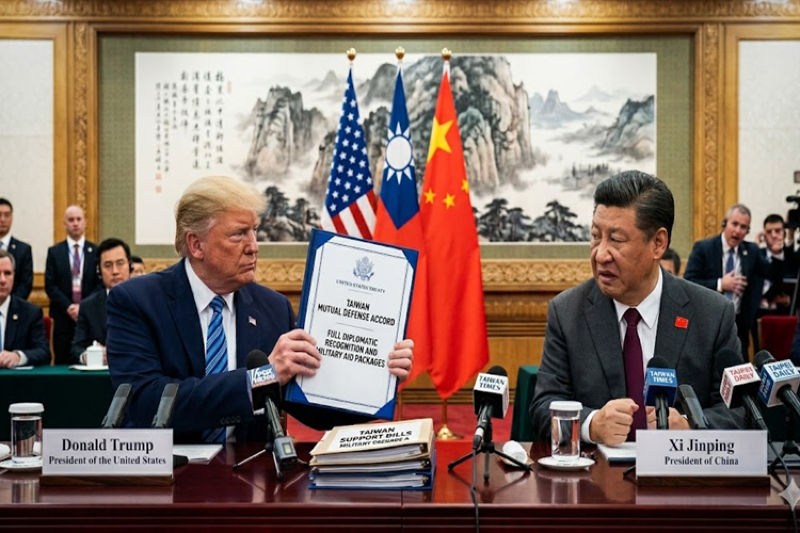
WASHINGTON / BEIJING — In a striking rhetorical departure that signals a potential realignment in Washington's cross-strait policy, President Donald Trump has explicitly warned Taiwan against declaring formal independence.
Speaking immediately after his high-stakes summit with Chinese President Xi Jinping, Trump openly questioned the logistics of defending the island and demanded a regional "cool down," introducing a sharp twist to traditional U.S. strategic ambiguity.
"I’m not looking to have somebody go independent," Trump told Fox News, explicitly linking Taiwan's sovereignty movement to the risk of drawing the United States into a distant military conflict. "You know, we’re supposed to travel 9,500 miles to fight a war. I’m not looking for that."
Chilling the Rhetoric: Trump Breaks Tradition
The president's comments mark a noticeable pivot from Washington's long-standing, delicate balancing act.
While the U.S. remains legally bound to provide Taipei with defensive weapons, Trump’s public admonition effectively warns Taiwan not to rely blindly on an American security blanket.
"We’re not looking to have somebody say, 'Let's go independent because the United States is backing us,'" Trump emphasized.
The remarks appear aimed at soothing Beijing following intense closed-door discussions. According to Chinese state media, President Xi Jinping drew a firm line during the bilateral talks, labeling the Taiwan question as the single most critical issue between the two superpowers and warning that any mishandling could cause the nations to "collide or even come into conflict."
Trump appeared to take the warning to heart, telling reporters on Air Force One that Xi "feels very strongly" about the island.
However, Trump dismissed the likelihood of an actual invasion, stating, "No, I don't think so... [Xi] doesn't want to see a war."
Arms Sales on the Chopping Block?
The potential policy shift extends beyond rhetoric to concrete military aid. Late last year, the Trump administration approved a massive $11 billion arms package for Taiwan, featuring sophisticated rocket launchers and advanced missile systems.
Trump revealed that he and Xi discussed this deal "in great detail," and suggested that its final execution is now under review.
In another unconventional twist that could trigger immense friction with Beijing, Trump stated he would soon make a decision after speaking directly with the Taiwanese leadership.
"I’m going to say I have to speak to the person that right now is... running Taiwan," Trump said. Because Washington maintains only unofficial ties with Taipei, a direct conversation between a U.S. president and Taiwanese President Lai Ching-te would break strict diplomatic protocol—even as the substance of Trump's message leans toward restricting Taiwan's political ambitions.
Taipei Scrambles for Clarity
In Taipei, officials are carefully navigating the fallout of the summit. Responding to the interview, Taiwan's Deputy Foreign Minister Chen Ming-chi noted that the government would need to clarify the precise intent behind Trump's remarks, while firmly reiterating that U.S. arms sales are mandated by American law and serve as "a cornerstone of regional peace."
A spokesperson for President Lai Ching-te also defended the weapons transfers, calling them a vital component of a "shared deterrent against regional threats."
For his part, President Lai has consistently maintained that Taiwan is already an independent, sovereign nation, meaning a formal declaration of independence is legally unnecessary.
The vast majority of the Taiwanese public remains heavily in favor of maintaining the existing status quo—neither formally breaking away from China nor unifying with it.
However, with Trump signaling an unwillingness to sail into a cross-strait conflict, the stability of that status quo faces its most unpredictable challenge yet.