

High-Stakes Diplomacy: Trump Arrives in Beijing for First Visit in Nine Years
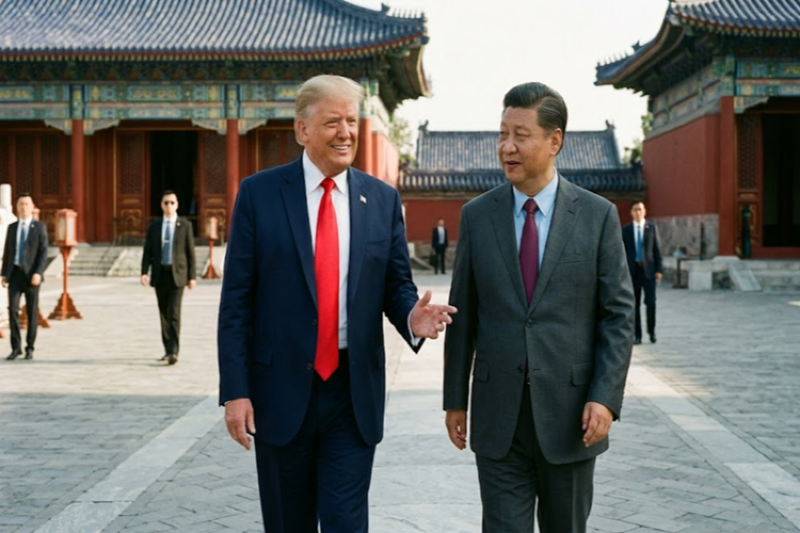
BEIJING – Nearly a decade after his last imperial-style welcome, President Donald Trump is scheduled to arrive in the Chinese capital this evening, Wednesday (May 13, 2026).
This historic state visit, running through May 15, marks the first time a sitting U.S. president has set foot in China since Trump’s own 2017 trip.
The geopolitical landscape has shifted dramatically in the intervening years. Trump returns to find a China that is more assertive, led by a President Xi Jinping now firmly in his third term. While the 2017 visit was characterized by "extravagant hospitality" at the Forbidden City, the 2026 summit faces a far more complex and volatile global backdrop.
The 2026 Summit Agenda
The two-day summit, set to officially begin on Thursday morning at the Great Hall of the People, carries an agenda laden with economic friction and regional instability.
Trade and Tariffs: Trump aims to secure "headline-grabbing deals," specifically pushing for increased Chinese purchases of American agricultural goods and Boeing aircraft to reduce the trade deficit.
The Iran Conflict: The ongoing war in the Middle East looms over the talks. Trump is expected to seek Xi’s leverage with Tehran to reopen the Strait of Hormuz and stabilize global energy markets.
Technology & AI: Accompanied by tech giants including Elon Musk and Tim Cook, Trump will navigate the "chip war."
Beijing is expected to lobby for the easing of semiconductor export restrictions, while the U.S. remains wary of China's rapid advancements in robotics and AI. The Taiwan Question: In a departure from traditional diplomacy, Trump has indicated a willingness to discuss U.S. arms sales to Taiwan directly with Xi, a move that has sparked both anticipation and concern among regional analysts.
A Tale of Two Cities
While the diplomatic core remains in Beijing—with a scheduled stop at the Temple of Heaven—the broader narrative of this visit highlights China's domestic transformation.
Cities like Chongqing have emerged as "cyberpunk" tech hubs, symbolizing China’s push toward "new productive forces" like electric vehicles and automation.
However, the "8D" futuristic skyline of Chongqing masks underlying economic pressures, including a struggling property sector and heavy local government debt.
"The assertion of equality isn't necessary this time," notes Ali Wyne of the International Crisis Group. "Washington now acknowledges China as a 'near-peer' and perhaps the most powerful competitor the U.S. has ever confronted."
As the world watches, the outcome of this week’s meetings will determine whether the world’s two largest economies can sustain their fragile trade truce or if the strategic rivalry will deepen into a new era of confrontation.