
Trump Brokes 10-Day Lebanon Ceasefire as U.S. Maintains 'Economic Fury' Blockade on Iran
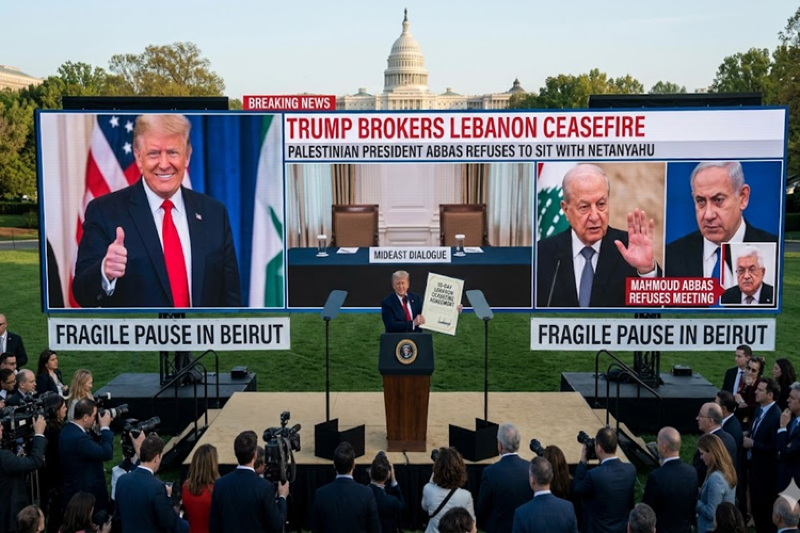
WASHINGTON / BEIRUT – In a high-stakes diplomatic move, U.S. President Donald Trump has announced a 10-day ceasefire between Israel and Lebanon, aimed at pausing the devastating six-week conflict with Hezbollah.
The announcement, made on April 16, 2026, marks the most significant attempt at de-escalation since the regional crisis intensified earlier this year.
Despite the U.S. President’s optimistic social media declaration of a "historic" breakthrough, the truce remains fragile due to deep-seated leadership distrust and ongoing military tension.
A Tense Diplomatic Standoff
The ceasefire, scheduled to take effect immediately, follows weeks of heavy bombardment and a humanitarian crisis that has displaced over a million Lebanese residents.
Aoun’s Rejection: Lebanese President Joseph Aoun reportedly refused a direct phone conversation with Prime Minister Netanyahu, despite Trump’s push for a landmark call between the two leaders.
Beirut’s Position: Lebanese officials informed Washington that a formal ceasefire must be fully implemented before direct negotiations can begin.
Beirut is wary of handing Netanyahu a "moral victory" while Israeli operations continue in southern Lebanon. Preconditions: Lebanon has insisted on the disarmament of militant groups and the protection of its sovereignty, while Israel maintains its right to continue operations until its security objectives are met.
"Eternal Darkness" and the Broken Trust
The current push for a truce follows the controversial events of early April, often referred to as "Black Wednesday." Just hours after a previous regional ceasefire was signaled,
Israel launched Operation "Eternal Darkness," a massive wave of strikes across Lebanon that killed over 300 people.
Critics and UN experts have labeled those earlier strikes a "grave violation" of diplomatic trust, casting a long shadow over the current 10-day agreement.
Regional Stalemate: Abbas vs. Netanyahu
The diplomatic gridlock extends beyond Lebanon. Palestinian President Mahmoud Abbas continues to maintain a firm stance against the Netanyahu administration.
Sources indicate that Abbas has repeatedly refused to engage in direct talks, citing Israel's "Greater Israel" expansionist policies and the ongoing military presence in Palestinian territories.
Abbas has called on the international community to move beyond temporary pauses and focus on a comprehensive two-state solution, rejecting any postwar governance plans that do not uphold Palestinian sovereignty.
What’s Next for the 10-Day Truce?
The ceasefire is viewed as a "breathing space" for humanitarian aid and further negotiation. However, the lack of direct communication between the primary leaders suggests that the truce is being held together largely by U.S. and regional pressure from actors like Pakistan and Egypt.
As the 10-day clock begins, the international community remains watchful to see if this pause will lead to a lasting diplomatic framework or if it is merely a brief intermission in an escalating regional war.