
Vance Slams Iran for "Economic Terrorism" as Tehran Warns of "Capabilities Not Yet Revealed"
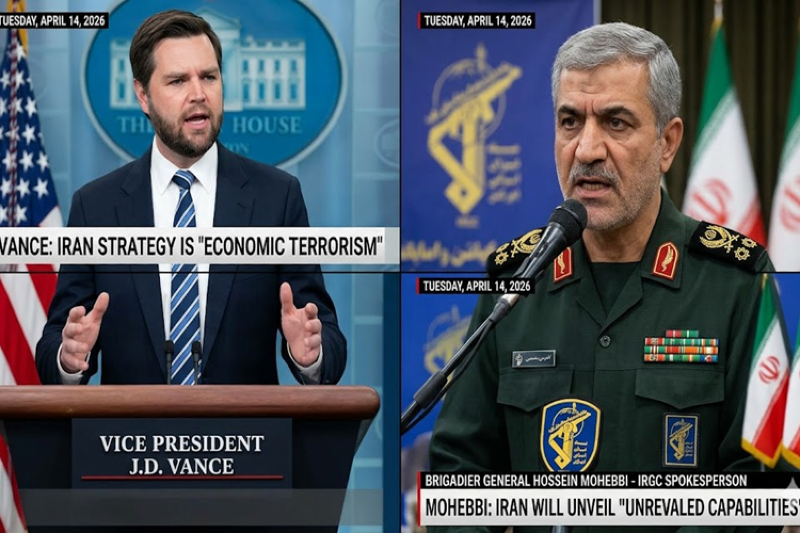
WASHINGTON D.C. / TEHRAN— U.S. Vice President JD Vance has officially branded the Iranian government’s interference in global shipping as "economic terrorism," marking a sharp escalation in rhetoric as the U.S. naval blockade of the Strait of Hormuz enters its first full day of operations.
The accusation follows a directive from President Donald Trump, who ordered the U.S. military to seal off all maritime traffic entering and exiting Iranian ports. Speaking with Fox News, Vance defended the aggressive strategy, stating that the administration is matching Iran’s tactics. "If the Iranians engage in economic terrorism, the U.S. will abide by the principle that no Iranian ships are getting out either," Vance declared.
Tehran’s Cryptic Warning: Hidden Military Might
As U.S. warships took up positions in the Persian Gulf, the Islamic Revolutionary Guard Corps (IRGC) issued a chilling counter-threat. IRGC spokesperson Hossein Mohebbi suggested that the U.S. and its allies are severely underestimating Iran's defensive reach.
"Iran has not yet revealed many of its capabilities," Mohebbi stated via state-aligned media. He warned that if the naval blockade continues, Tehran will "unveil capacities that the enemy has no conception of," specifically mentioning "modern methods of warfare" designed to neutralize superior naval power.
A High-Stakes Maritime Standoff
The U.S. blockade, which went into effect at 10:00 ET Monday, has already disrupted global logistics:
The "Elimination" Order: President Trump reiterated on social media that any Iranian "fast attack ships" attempting to challenge the blockade will be "immediately ELIMINATED."
Shipping Giants Retreat: German shipping leader Hapag-Lloyd has confirmed it will not risk sending vessels through the Strait, citing fears of sea mines and a lack of guaranteed "safe passage."
Economic Ripples: Qantas Airways and other major carriers have begun raising ticket prices as jet fuel costs double, while U.S. Energy Secretary Chris Wright predicted oil prices will remain volatile until ship traffic is restored.
Diplomatic Deadlock and Local Combat
While the U.S. State Department confirmed that Secretary Marco Rubio will host the Lebanese and Israeli ambassadors in Washington today to discuss a possible end to the war in Lebanon, the situation on the ground remains bloody. The IDF reported the death of Sergeant Major Ayal Uriel Bianco in southern Lebanon, highlighting the continued intensity of the ground invasion despite the diplomatic push.
On the nuclear front, negotiations in Pakistan remain at a stalemate. Reports indicate Iran offered a 5-year suspension of uranium enrichment, but the U.S. is demanding a 20-year freeze—a gap that sources say keeps a final peace deal out of reach for now.