
'Back to the Stone Age': US-Israel Blitz Hits Iran’s Steel Giants and Key Bridges as Tehran Vows 'Crushing' Blow
TEHRAN/WASHINGTON — The conflict between the United States, Israel, and Iran has entered a volatile new phase as air strikes targeted civilian infrastructure and medical facilities in and around the Iranian capital.
The escalation follows a televised address by U.S. President Donald Trump, who issued a stark warning to "bomb Iran back to the Stone Ages" if Tehran does not agree to Washington’s terms.
Strategic Targets and Human Cost
Reports from Iranian state media and local officials confirm that the latest wave of strikes hit several high-profile locations:
Medical Research: The Pasteur Institute of Iran, a century-old facility critical for vaccine development, was reportedly destroyed.
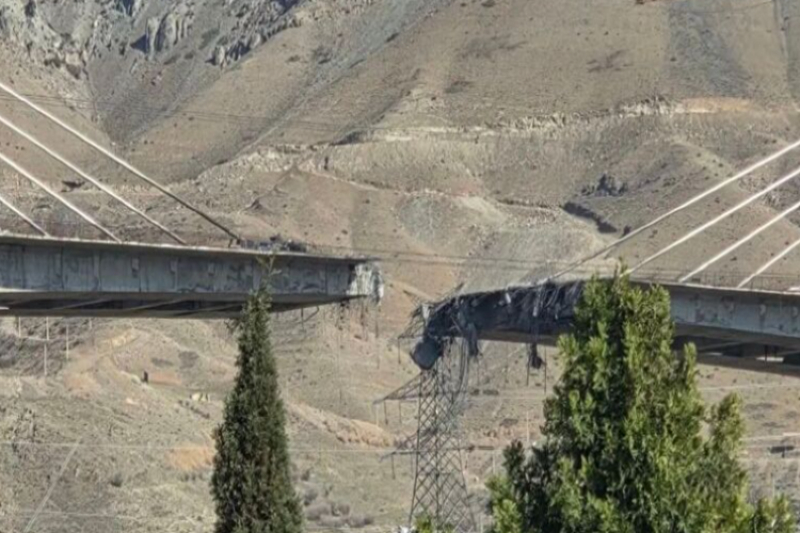
Infrastructure: A major highway bridge linking Tehran to Karaj was struck twice. Local officials in Alborz province confirmed at least two deaths and multiple injuries from the attack.
Industrial Impact: Two of the nation's largest steel producers—Khuzestan Steel and Mobarakeh Steel—have been forced offline following targeted strikes, threatening the country's industrial backbone.
According to the Iranian Health Ministry, the death toll since the commencement of U.S.-Israeli operations on February 28 has reached 2,076, with over 26,500 wounded. The International Red Cross has warned that trauma supplies are reaching critically low levels.
Regional Fallout and Maritime Gridlock
The war is causing a massive ripple effect across the Middle East and global markets:
Strait of Hormuz: A de facto blockade has paralyzed one of the world's most vital oil transit points. The United Kingdom is currently leading a 40-country coalition to discuss reopening the waterway, notably without U.S. participation.
Economic Shockwaves: Global markets saw a significant selloff on Thursday. The Dow Jones fell 1.0%, while the Nasdaq dropped 1.3% as oil prices surged in response to the instability.
African Food Security: Experts warn that the disruption of fertilizer exports through the Gulf could trigger a food crisis in Africa. A joint UN and African Union report suggests African economies could lose 0.2% of their GDP growth if the war persists.
Diplomatic Standoff at the UN
In New York, the UN Security Council (UNSC) is currently in an emergency session. Bahrain has introduced a draft resolution calling for a "decisive response" to protect international navigation. However, the proposal faces hurdles as Russia and China have pushed back against language that could authorize further military action under Chapter VII of the UN Charter.
Retaliatory Actions
Tehran has vowed to "fight back," with the IRGC claiming responsibility for a drone attack on an Amazon cloud computing center in Bahrain and targeting U.S. assets at the Al Azraq airbase in Jordan.
Meanwhile, Israel reported intercepting missiles launched from Iranian territory, triggering sirens in Jerusalem and Tel Aviv.
As the "Operation Epic Fury" rhetoric intensifies, neutral intermediaries like Pakistan say they will continue mediation efforts despite what they describe as significant "obstacles" created by the recent escalation in threats.
Day 34: War Summary & Key Highlights (April 2, 2026)
1. The "Stone Age" Escalation
The Threat: President Trump has vowed to hit Iran "extremely hard" for the next 2–3 weeks, threatening to bomb the nation "back to the Stone Ages" to force a deal.
The Targets: U.S. and Israeli strikes have pivoted to dual-use infrastructure, destroying the B1 bridge in Karaj and leveling the Pasteur Institute (Tehran’s century-old vaccine hub).
Industrial Crippling: Iran’s two largest steel giants, Mobarakeh and Khuzestan Steel, are officially offline, paralyzing domestic manufacturing.
2. Strategic Military Blows
Isfahan South Base: Verified footage confirms a massive strike on this missile facility, followed by secondary explosions that suggest the destruction of significant long-range munition stockpiles.
Mashhad Airbase: Targeted strikes hit fuel storage and warehouses at the Mashhad International Airport, a key logistics node in the northeast.
3. The Global "Hormuz Stranglehold"
Maritime Blockade: Over 2,000 ships remain stranded. A UK-led coalition of 40 nations is meeting to discuss "all viable options" to reopen the Strait, though the U.S. remains a notable absentee from these specific talks.
Market Shock: Oil prices have skyrocketed; Brent Crude is at $108, while WTI surged 10% to $110/barrel.
UN Plea: Secretary-General Guterres warned that the world’s most vulnerable "cannot breathe" while the Strait is closed, calling the current trajectory a "wider war" threshold.
4. The Human & Regional Toll
Casualties: Iran’s Health Ministry reports 2,076 killed and 26,500+ wounded since Feb 28.
Lebanon Front: Israeli strikes have killed 1,345 people (including 125 children) since March 2, as the IDF continues its ground invasion up to the Litani River.
Gulf Interceptions: The UAE and Kuwait reported high-volume interceptions today, with the UAE engaging 19 missiles and 26 drones launched from Iranian territory.
5. Tehran’s Defiance
Mass Mobilization: Parliamentary Speaker Ghalibaf claims 7 million Iranians have volunteered for the front lines, framing the conflict as a "national defense" against foreign aggression.
Retaliation: The IRGC claimed credit for drone strikes on a US base in Jordan and a cloud computing center in Bahrain, signaling their intent to hit "digital and physical" Western interests.