
US Air Force Orders GBU-57 ‘Mother of All Bombs’ Amid Rising Tensions with Iran
The US Air Force has awarded a sole-source contract to Boeing to replenish its stock of GBU-57 Massive Ordnance Penetrator (MOP) bunker-buster bombs, amid heightened tensions with Iran.
These bombs were previously used in June 2025 during Operation Midnight Hammer, when the US targeted Iranian nuclear facilities.
A partially redacted notice from the Air Force stated the contract is necessary to restore the GBU-57 inventory depleted during the operation.
Boeing, the sole manufacturer of the MOP, has over 18 years of experience adapting this specialized weapon, and awarding the contract to another company would cause significant delays.
“No delay in award is acceptable,” the notice said, emphasizing that postponement could compromise combat readiness, strategic deterrence, and nuclear non-proliferation efforts, while potentially endangering lives. The exact number of bombs ordered, contract value, and delivery schedule were not disclosed.
What Is the GBU-57 MOP?
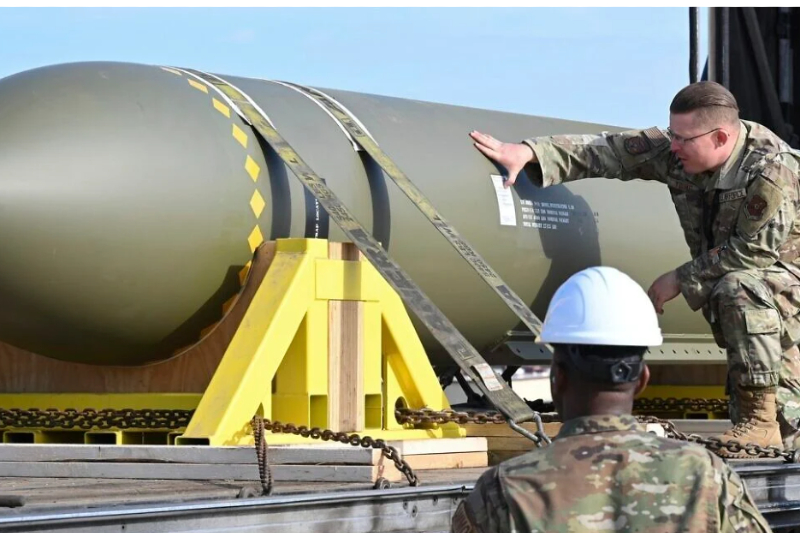
Developed by Boeing in partnership with the Defense Threat Reduction Agency (DTRA) in the early 2000s, the GBU-57 MOP is designed to destroy Hard and Deeply Buried Targets (HDBTs), including underground command centers, laboratories, and nuclear or chemical facilities.
Weighing 30,000 pounds (13,600 kg), with a warhead of 5,740 pounds (2,600 kg) and measuring over 20 feet (6 meters) in length, the MOP can penetrate up to 200 feet of earth or 60 feet of reinforced concrete, making it the most powerful non-nuclear bomb in the US arsenal. Its kinetic energy is equivalent to a 285-ton Boeing 747-400 landing at 170 mph or a 565-ton high-speed train striking at 120 mph.
First Combat Use Against Iran
Operation Midnight Hammer marked the GBU-57’s first combat deployment. Seven B-2 Spirit bombers dropped 14 MOPs on Iran’s nuclear sites in Fordow, Natanz, and Isfahan.
While US officials described the mission as successful, independent assessments indicate mixed outcomes: Fordow suffered significant damage, while Natanz and Isfahan may recover faster than expected.
The operation demonstrated both the MOP’s destructive power and its limitations, including its massive size, restricted aircraft compatibility, and challenges in striking ultra-hardened targets, as well as Iran’s ongoing development of advanced defenses.
The new contract underlines the US military’s continued focus on maintaining strategic capabilities amid rising geopolitical tensions in the Middle East.