
Tarique Rahman Sworn In as Prime Minister: Bangladesh Welcomes a New Era After Two Decades
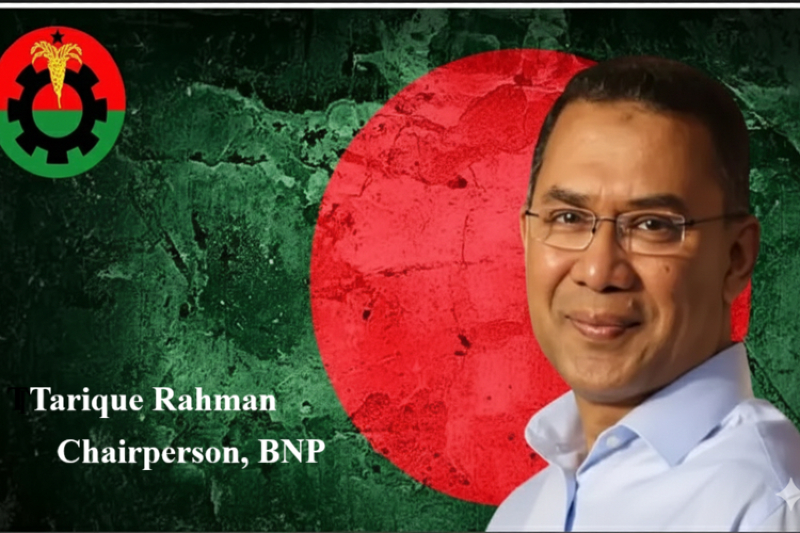
Dhaka, Bangladesh – February 17, 2026: In a historic turn of events, Tarique Rahman, chairman of the Bangladesh Nationalist Party (BNP), was unanimously elected as the parliamentary leader and officially sworn in as the Prime Minister of Bangladesh today, marking the party’s return to power after a 20-year hiatus.
The swearing-in ceremony, held at the South Plaza of the National Parliament, was attended by hundreds of dignitaries, lawmakers, and foreign observers, reflecting the magnitude of this political milestone. This event follows BNP’s landslide victory in the 13th National Parliamentary Elections, where the party secured 209 of 299 declared seats, earning an absolute majority.
Historic Swearing-In Ceremony
The day began at 10:00 a.m. with newly elected MPs taking the parliamentary oath administered by Chief Election Commissioner A.M.M. Nasir Uddin at the National Parliament’s swearing-in hall.
Following party tradition, BNP MPs also held their first parliamentary board meeting, where Tarique Rahman was unanimously elected parliamentary leader, confirming his path to the premiership.
Later in the afternoon, President Mohammad Shahabuddin administered the oath of office to the Prime Minister at 4:00 p.m., alongside the swearing-in of the newly appointed cabinet ministers.
In a break from tradition, the ceremony took place in the open plaza of the Parliament complex, rather than the historic Bangabhaban, accommodating thousands of guests and ensuring maximum transparency.
Security was tight, with 12 platoons of Bangladesh Rifles (BGB) deployed and the entire parliamentary area declared a no-fly zone for drones. Large screens were set up across Dhaka and 64 districts to broadcast the ceremony live, enabling citizens nationwide to witness the historic moment.
A Cabinet Balancing Experience and Fresh Faces
BNP has finalized a 30-member preliminary cabinet, comprising 12 full ministers and 18 state ministers, reflecting a mix of seasoned leaders, technocrats, and emerging young talents. Sources indicate that the cabinet may expand further to around 40 members in coming weeks.
Key cabinet appointments include:
Senior BNP Leaders:
Salahuddin Ahmed – Likely Home Affairs and Law/Parliamentary Affairs
Abdul Moyeen Khan – Potential Education or Foreign Affairs
Gayeshwar Chandra Roy – Local Government and Rural Development
AZM Zahid Hossain – Health and Family Welfare
Abdul Awal Mintoo – Planning and Economic Affairs
Emerging Leaders and Youth:
Anindya Islam – ICT/Digital Development
Zakaria Taher – Transport/Roads & Highways
Shahid Uddin Chowdhury Annie – Youth & Sports and Information
Farzana Sharmin – Women’s Affairs and Education (State Minister)
Alliance Party Representatives:
Andalib Rahman Partha – Telecommunications/ICT
Zonayed Saki – Reform & Governance/Planning
Nurul Haque Nur – Labour & Employment/Social Welfare
The cabinet is being described as competence-driven, emphasizing youth, technocratic expertise, and inclusivity, while retaining experienced leaders in critical portfolios to ensure smooth governance and policy continuity.
Policy and Governance Priorities
Sources within the party suggest that parliamentary accountability will be a cornerstone of the new administration, with ministers directly answerable to MPs. BNP has also committed to:
Transparent governance and active parliamentary oversight
Inclusive policymaking with representation from allied parties and technocrats
Economic revival strategies to accelerate post-pandemic growth
Youth and digital transformation initiatives
Women’s empowerment and social welfare programs
Additionally, BNP MPs have taken a symbolic pledge not to accept duty-free cars or government-allocated plots, signaling a commitment to clean governance and austerity.
Public Reaction and Historical Significance
The return of BNP to power has triggered nationwide celebrations, reflecting optimism among supporters eager for new leadership after two decades. Analysts note that
Tarique Rahman’s government will face immediate challenges, including economic revival, strengthening institutional capacity, and delivering on electoral promises, but the initial focus appears to be on stability, reform, and inclusivity.
Political experts have highlighted that the historic swearing-in—the first outside Bangabhaban in an open parliamentary plaza—symbolizes a more transparent, participatory approach to governance and sets the tone for modernized statecraft in Bangladesh.
Looking Ahead
With BNP holding a decisive majority, the first parliamentary session of the 13th National Assembly is scheduled for February 26, 2026, marking the official start of legislative work under Prime Minister Tarique Rahman’s leadership. Citizens, policymakers, and international observers are watching closely, as the administration begins shaping Bangladesh’s political, economic, and social trajectory for the coming decade.