
Trump Threatens Decimation of Iranian Infrastructure as Tehran Appeals for Global Intervention
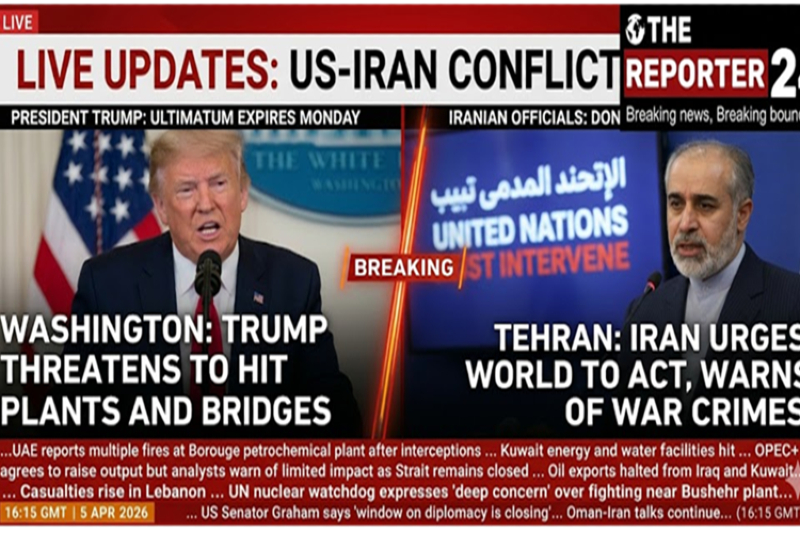
TEHRAN / WASHINGTON — The shadow of a total regional catastrophe deepened on Sunday as U.S. President Donald Trump issued a definitive ultimatum to the Islamic Republic of Iran: reopen the Strait of Hormuz immediately or face the systematic destruction of the nation’s power grids and transportation networks.
In a series of high-stakes declarations, the U.S. administration signaled a pivot toward a "total infrastructure war," a move that has prompted Tehran to urge the international community to intervene against what it terms "atrocious acts of war crimes."
The Tuesday Ultimatum
The focal point of the current escalation centers on a 48-hour deadline imposed by the White House. Following the successful rescue of a wounded U.S. F-15E airman from the Iranian mountains—an operation Trump described as "seldom attempted" due to its extreme danger—the President shifted his rhetoric from tactical military strikes to broad-scale civilian infrastructure targeting.
"Tuesday will be Power Plant Day and Bridge Day, all wrapped up in one," Trump stated, warning that Iran would be "living in hell" if the maritime chokepoint remained closed. The threat specifically targets the backbone of Iranian civilian life, aiming to force a domestic collapse or a total capitulation regarding the Strait.
Tehran’s Global Appeal
In response, the Iranian mission to the United Nations has launched a frantic diplomatic counter-offensive. Labeling Trump’s remarks as "direct and public incitement to terrorize civilians," Iranian officials have called on the UN Security Council and the global conscience to act before the Tuesday deadline.
Tehran maintains that the closure of the Strait is a response to "US-Israeli aggressions," including strikes on the Mahshahr Petrochemical Zone and various academic institutions. Seyyed Mehdi Tabatabaei, a senior official in the Iranian presidency, dismissed the U.S. threats as "obscenities born of desperation," insisting that the waterway will only be secured through a "new legal regime" that includes compensation for war damages.
Infrastructure in the Crosshairs
The war has already moved beyond the borders of the primary combatants, engulfing the entire Persian Gulf in a "tit-for-tat" campaign against vital assets:
The Water and Power Crisis: In the last 24 hours, Iran-aligned forces launched a massive wave of 13 missiles and 31 drones into Kuwait. The strikes hit two critical desalination plants, a devastating blow in a region where 90% of drinking water is laboratory-produced.
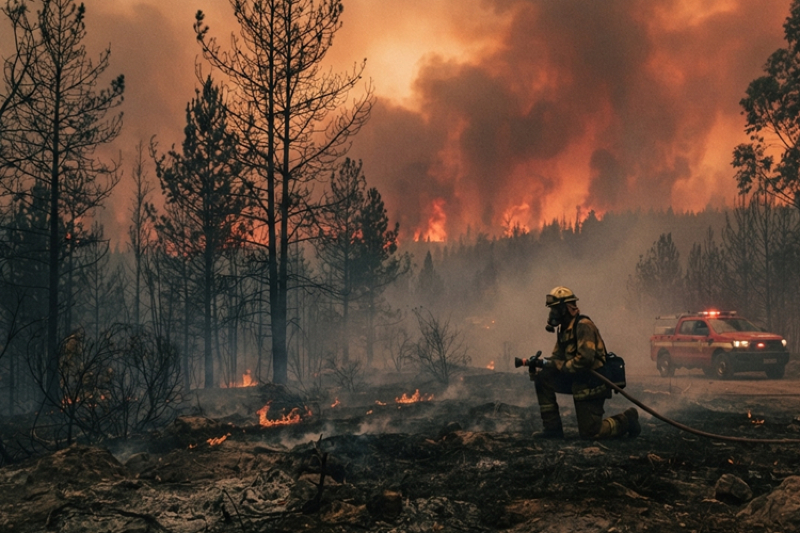
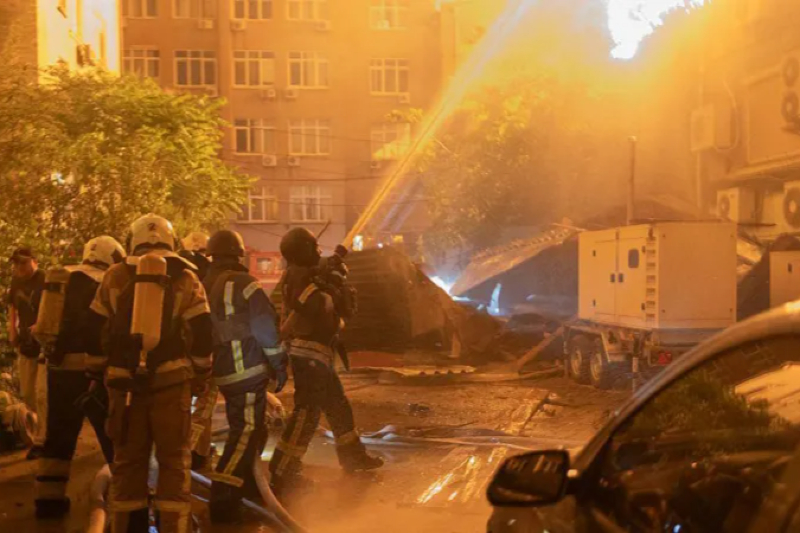
Petrochemical Warfare: The UAE and Bahrain have reported multiple fires at the Borouge and GPIC petrochemical plants following missile interceptions. Falling debris has turned industrial zones into active firefronts, forcing a near-total halt in regional production.
The Nuclear Shadow: The IAEA and WHO have issued urgent warnings following combat activity near the Bushehr nuclear power plant. While radiation levels are currently stable, the "uncivilized behavior" of targeting areas near nuclear reactors has raised the specter of a continental environmental disaster.
Economic Paralysis and the Hormuz Chokepoint
The closure of the Strait of Hormuz—the transit point for nearly 30% of global sea-borne oil—has rendered traditional market stabilizers ineffective. Although eight OPEC+ members, including Saudi Arabia and Russia, agreed on Sunday to a production hike of 206,000 barrels per day, analysts warn that these "extra barrels" are useless if they cannot reach the open sea.
| Strategic Metric | Current Status |
|---|---|
| Strait of Hormuz | Blocked; Maritime Insurance Withdrawn |
| Regional Casualties | 1,461 (Lebanon); Hundreds in Gulf strikes |
| US Deadline | Monday, April 6, 2026 |
| Oil Markets | Exports from Iraq and Kuwait Halted |
A Razor-Thin Margin for Diplomacy
As the countdown to "Tuesday" begins, the only remaining diplomatic channel appears to be a mediated dialogue between Oman and Iran. These talks, occurring at the deputy minister level, represent the final attempt to find a face-saving mechanism for de-escalation.
However, with the U.S. President signaling that he is "deadly serious" and Iran threatening to retaliate against Gulf infrastructure "more forcefully and extensively," the region stands on the precipice of a conflict that could permanently redraw the geopolitical and economic map of the 21st century.