
Tehran Defies Trump’s Tuesday Ultimatum as Iranian Missile Strike Claims Two Lives in Haifa
WASHINGTON & TEHRAN —The geopolitical crisis in the Middle East reached a bloody inflection point on Monday as Iran formally rejected U.S. President Donald Trump’s "Tuesday ultimatum" regarding the Strait of Hormuz.
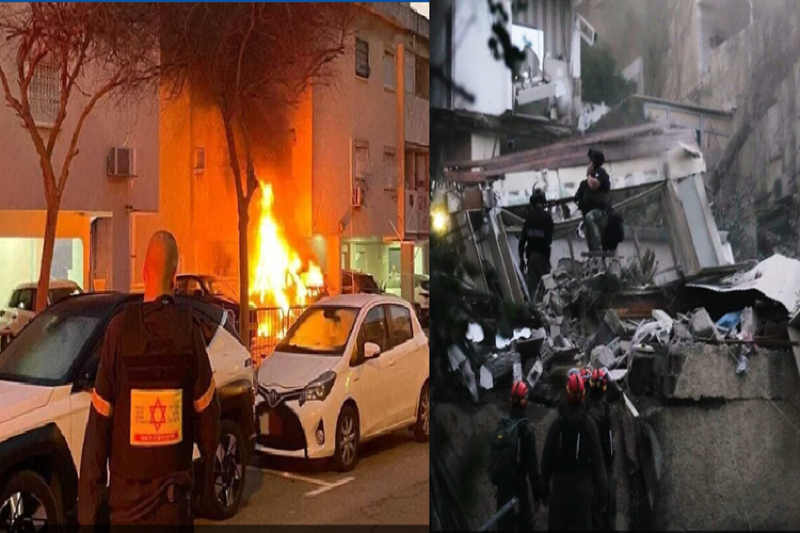
The diplomatic defiance was mirrored by immediate kinetic escalation, as an Iranian missile struck a residential complex in the Israeli city of Haifa, claiming the lives of at least two civilians.
The Haifa Strike and Northern Front Escalation
Search and rescue teams in Haifa spent the early hours of Monday combing through the skeletal remains of an apartment building following a direct hit by an Iranian long-range missile.
Israeli broadcaster Channel 12 confirmed that two bodies were recovered from the rubble, while four others remain wounded and several are still reported missing.
The strike, which reportedly involved a fragmenting warhead that bypassed Israel’s missile defense shield, targeted a strategic hub known for its oil refining and transport infrastructure.
Simultaneously, sirens echoed across northern Israel as the Israeli military warned of multiple incoming "missile salvos" from Iranian territory.
Tehran’s Response to the "Tuesday Deadline"
In Tehran, the atmosphere remained one of fierce resistance. Foreign Ministry spokesperson Esmaeil Baghaei dismissed President Trump’s threat to "level" Iranian power plants and bridges by Tuesday if the Strait of Hormuz is not reopened.
Baghaei characterized the U.S. stance as an "incitement to war crimes," asserting that Iran would not be intimidated by “profanity-laced social media posts.”
A senior adviser to the Iranian leadership, Ali Akbar Velayati, extended the threat further, warning that the "geography of power" had shifted.
He noted that the "unified command of the resistance" now views the Bab al-Mandeb Strait—a critical chokepoint off the coast of Yemen—as equally strategic as Hormuz, suggesting that global energy transit could be choked on two fronts if the U.S. and Israel escalate their raids.
A Region in Flames: Iraq, Kuwait, and Lebanon
The conflict’s footprint continues to expand far beyond the primary combatants:
Iraq: Drone strikes were reported over Sulaimaniyah, while the Iran-aligned Kataib Hezbollah warned that any attempt to reopen the Strait of Hormuz by force would result in the total destruction of all regional oil and gas platforms.
Kuwait: Air defenses in the Gulf nation were active overnight, intercepting "hostile" drones and missiles targeting civilian infrastructure.
Lebanon: Israeli airstrikes targeted a Christian neighborhood in eastern Beirut in what appeared to be an assassination attempt.
The strike killed three people, including a local political leader, sparking fears that the war is increasingly targeting areas previously considered "safe zones."
Diplomatic "Last-Ditch" Efforts
Despite the escalating violence, reports have emerged of frantic back-channel negotiations. Mediators from Pakistan, Egypt, and Turkey are reportedly discussing a 45-day ceasefire proposal.
However, sources describe the chances of a breakthrough before Trump’s Tuesday deadline as "slim," as Tehran seeks ironclad guarantees that any truce would not simply allow the U.S. and Israel to regroup for future attacks.
| Conflict Impact Summary | Reported Status (April 6, 2026) |
|---|---|
| Haifa Casualties | 2 Dead, 4 Wounded, 4 Missing |
| Tehran Province | 13 Killed in Baharestan Strikes |
| Civilian Impact | Over 100,000 sites affected in Iran |
| Global Markets | Asian stocks rise despite energy uncertainty |
As the clock ticks toward the U.S.-imposed deadline, the international community remains on high alert. With China and Russia calling for an immediate cessation of military operations, the world waits to see if the "Tuesday Ultimatum" will mark the start of a total infrastructure war or a final, desperate turn toward diplomacy.