

Natural Fish Production Declining in Rivers Across Khulna Region
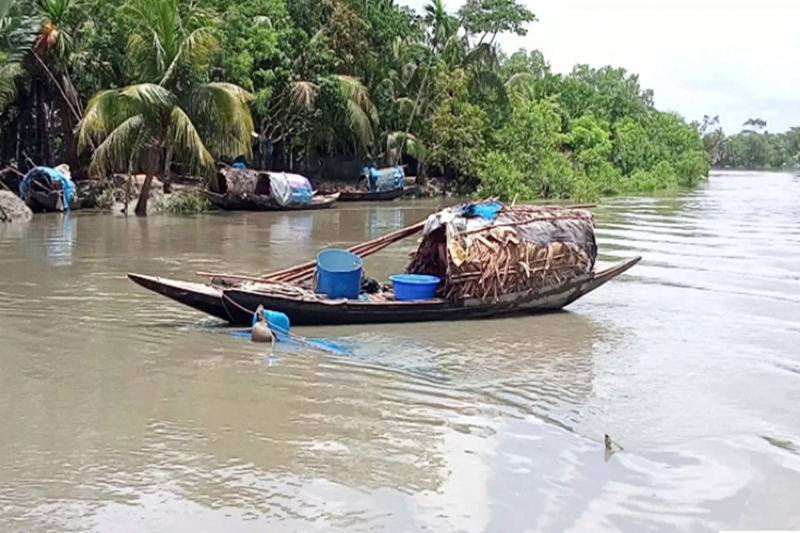
Khulna, March 6: Natural fish production in the rivers of the greater Khulna region—comprising Khulna, Bagerhat, and Satkhira—is steadily declining, raising concerns among fishermen, environmentalists, and fisheries officials.
Experts attribute the downward trend to a combination of factors including climate change, increasing water pollution, excessive fishing, reduced river navigability, and declining water levels. These changes are disrupting the natural breeding and growth cycles of fish in the region’s river systems.
The rivers and canals of the Sundarbans serve as the primary source of fish for the greater Khulna area. However, environmental changes and human activities are affecting the ecological balance of these waterways.
According to Md. Imran Ahmed, Conservator of Forests for the Khulna region of the Sundarbans, the mangrove forest contains around 450 rivers, streams, and canals. These water bodies are home to roughly 210 species of freshwater fish, 24 species of shrimp, 13 types of crabs, 43 varieties of mollusks, and one species of lobster.
Among the notable fish found in these waters are species such as vetki, rupchanda, pangash, loitta, parshe, hilsa, poa, and tapse, along with bagda and golda shrimp. Fish from the Sundarbans rivers naturally migrate into the surrounding river systems of Khulna, Bagerhat, and Satkhira.
However, fisheries officials warn that environmental pressures are reducing fish stocks. Ranjit Kumar Pal, Deputy Director of the Department of Fisheries in Khulna division, said that climate change is affecting the food supply and oxygen levels in the rivers connected to the Sundarbans, making it harder for fish to grow and reproduce.
He also noted that excessive fishing has reduced fish availability in many rivers compared to previous years. Illegal practices by unscrupulous fishermen are worsening the situation. Some fishermen secretly use poison or fine-mesh nets to catch fish, which kills various aquatic species and destroys fish larvae.
The increase in boat traffic in many rivers has also raised pollution levels, further affecting fish breeding grounds.
Another factor contributing to the decline is reduced river depth caused by sedimentation. As a result, fishermen are no longer catching fish in the quantities they once did.
The Khulna region is naturally saline, and in many areas embankments have been built to block saltwater from entering rivers so that farmers can cultivate rice and vegetables. Fisheries officials believe that this shift from fish habitats to agricultural land has also contributed to the reduction in fish production.
Data from the regional office of the Department of Fisheries Bangladesh shows that in the 2024–2025 fiscal year the Khulna region earned significant foreign currency from seafood exports. Frozen bagda shrimp exports generated about $18.69 million, while golda shrimp exports brought in approximately $208.22 million. Frozen white fish exports earned around $894,000, and exports of eel and crab generated roughly $1.86 million.
However, officials warn that if fish production continues to decline, the country’s future export earnings from the region could also be affected.
Khulna District Fisheries Officer Md. Badruzzaman said fishermen operate in around 20 rivers in the coastal district. Major rivers include the Pasur River, Shibsa River, Bhadra River, Rupsa River, Bhairab River, and Kapotaksha River.
The district has around 45,000 registered fishermen, of whom nearly 3,450 depend solely on catching hilsa for their livelihoods.
Local fishermen say illegal activities inside the Sundarbans are a major cause of declining fish stocks. They allege that some fishermen enter protected forest areas and use poison to catch fish and crabs, killing not only adult fish but also larvae.
Abdus Salam Molla, a fisherman from Kalabogi village in Dakop upazila of Khulna, expressed concern over the situation. He said groups of influential fishermen allegedly operate under powerful syndicates and use destructive fishing methods inside the Sundarbans, which ultimately affects fish populations in surrounding rivers.
Fisheries officials believe that stronger coordination between the Department of Fisheries and the Sundarbans forest authorities could help restore natural fish production in the region’s rivers. Efforts to control illegal fishing and protect breeding grounds may also help revive fish stocks in the future.