
Multimillion-Euro Bank Heist in Germany Leaves Thousands of Victims in Shock
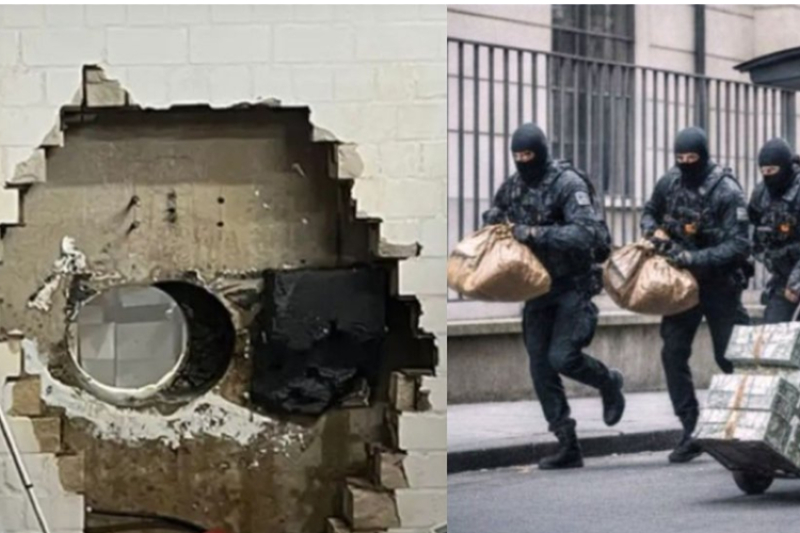
A dramatic bank robbery in western Germany has left authorities scrambling for answers after thieves emptied thousands of safe deposit boxes in what officials describe as one of the most significant criminal cases in the region’s history.
The break-in occurred at a branch of Sparkasse in the city of Gelsenkirchen, located in the state of North Rhine-Westphalia. Investigators believe the crime took place over a quiet weekend shortly after Christmas, between 27 and 29 December.
Authorities estimate that up to €100 million may have been stolen, though the exact amount remains unclear.
How the Heist Unfolded
Police say the suspects likely accessed the bank through a neighboring multi-storey car park in the Buer district. Investigators believe the group tampered with an emergency exit connecting the car park to the bank building, allowing them undetected entry.
Once inside, the burglars allegedly bypassed multiple security systems and reached an archive room near the vault in the basement. Using heavy-duty equipment, they drilled a 40-centimetre-wide hole through a reinforced wall to gain access to the strongroom where approximately 3,250 safe deposit boxes were stored.
Digital records suggest the first box was opened late morning on 27 December and the last early that afternoon, though it is uncertain whether all the activity occurred within a few hours or whether monitoring systems failed to record additional details.
Missed Warning Signs
Early on 27 December, a fire alarm was triggered at the bank, prompting a response from firefighters and a private security firm.
However, officials reported no visible smoke, fire, or structural damage at the time. Because the building was locked and no clear emergency was detected, the alarm was classified as false.
A second alarm on 29 December led responders back to the premises, where they discovered extensive damage inside the vault. More than 500,000 personal items were scattered across the floor, and many had been damaged by water and chemicals.
Police later released surveillance images showing masked individuals in the car park area, along with two vehicles — a black Audi RS 6 and a white Mercedes Citan — both reportedly using fake licence plates.
Victims Face Financial and Emotional Loss
The robbery has left hundreds of customers devastated. Many had stored savings, gold, and family heirlooms inside the bank’s safety deposit boxes, believing they were secure.
Some clients have stated that they lost life savings intended for retirement, while others say irreplaceable family jewellery has disappeared. Legal action has already begun, with at least one customer filing a lawsuit alleging insufficient security measures.
The bank has maintained that it was itself a victim of the crime and that its security systems met modern standards. It also noted that safe deposit box contents are generally insured up to €10,300 per box.
However, verifying losses may prove complicated, as the bank does not keep records of individual box contents.
Political and Public Reaction
The case has sparked broader debate about public safety and institutional accountability. Herbert Reul, the interior minister of North Rhine-Westphalia, has raised questions about how the burglars operated undetected and whether insider knowledge played a role.
Police Chief Tim Frommeyer described the case as one of the largest criminal investigations in the state’s history, acknowledging the scale of financial damage and public frustration.
The incident has also drawn political attention, with some observers arguing that it reflects wider concerns about security and trust in institutions.
Investigation Ongoing
Authorities are appealing for witnesses and continue to examine forensic evidence recovered from the scene. Despite extensive media coverage and public outcry, no arrests have yet been made.
For many victims, officials say, the emotional impact may last far longer than the financial loss, as confidence in long-trusted safeguards has been deeply shaken.