
US and Europe Signal Shift as Leaders Say ‘Old World Order’ Has Ended
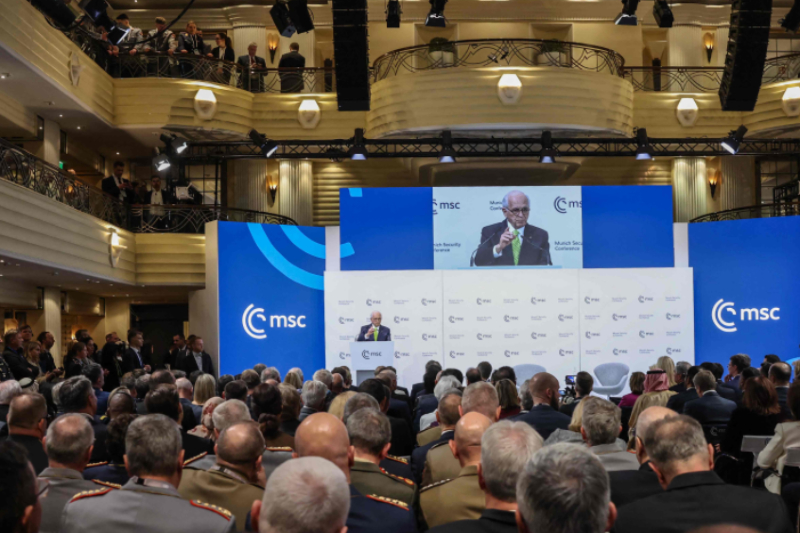
Feb 14, 2026: Senior American and European officials struck a rare note of agreement at the annual gathering of global leaders in Munich, declaring that the post-Cold War international order is no longer intact — even as divisions within the transatlantic alliance were laid bare.
Speaking at the Munich Security Conference, German Chancellor Friedrich Merz said the global system based on rules and shared norms has eroded, warning that Europe must adapt to a new geopolitical era.
US Secretary of State Marco Rubio echoed similar sentiments before arriving in Germany, stating that “the old world is gone” and that countries must reassess their roles in an increasingly competitive global landscape.
Growing Strains in Transatlantic Relations
Despite agreeing that the international environment has fundamentally changed, leaders exposed widening differences between Washington and European capitals.
Merz, leader of Germany’s center-right Christian Democratic Union, cautioned that Europe’s security and freedom can no longer be taken for granted. He criticized Russia’s continued war against Ukraine and urged European nations to invest more heavily in defense and deterrence capabilities.
At the same time, he openly challenged several policies of US President Donald Trump, including increased tariffs, withdrawal from international climate agreements, and approaches to global governance. His remarks drew strong applause from the audience, particularly when he defended free trade and multilateral cooperation.
The Trump administration in 2025 imposed additional tariffs on the European Union and the United Kingdom, and withdrew from the Paris climate accord and the World Health Organization, moves that have fueled tensions across the Atlantic.
NATO and Global Security at the Forefront
Switching briefly to English during his address, Merz stressed that even the United States cannot navigate rising great-power rivalry alone. He highlighted NATO as a strategic advantage not just for Europe, but also for Washington.
On the sidelines of the conference, Merz and Rubio met to discuss the ongoing war in Ukraine and diplomatic efforts involving Russia. According to US officials, Rubio expressed appreciation for Germany’s substantial support for Kyiv, which has amounted to tens of billions of dollars since 2022.
Merz also met with Ukrainian President Volodymyr Zelensky to discuss continued military assistance and cooperation.
A Broader Geopolitical Reset
Beyond Ukraine, the discussions in Munich covered a range of global challenges, including Iran, trade policy and Europe’s economic ties with China. Merz is expected to visit Beijing later this month, signaling Europe’s attempt to balance its strategic relationships.
The conference follows a tense gathering of global leaders earlier this year in Davos, where President Trump criticized European migration policies and argued that the United States had been disadvantaged in its alliances.
While disagreements remain sharp, both sides appear to acknowledge that global power dynamics are shifting. Whether the United States and Europe can redefine their partnership within this new geopolitical framework remains one of the central questions facing Western leaders.