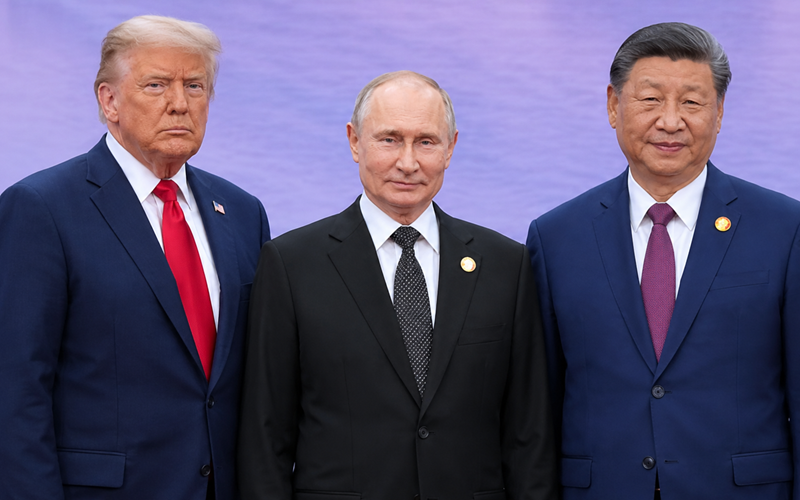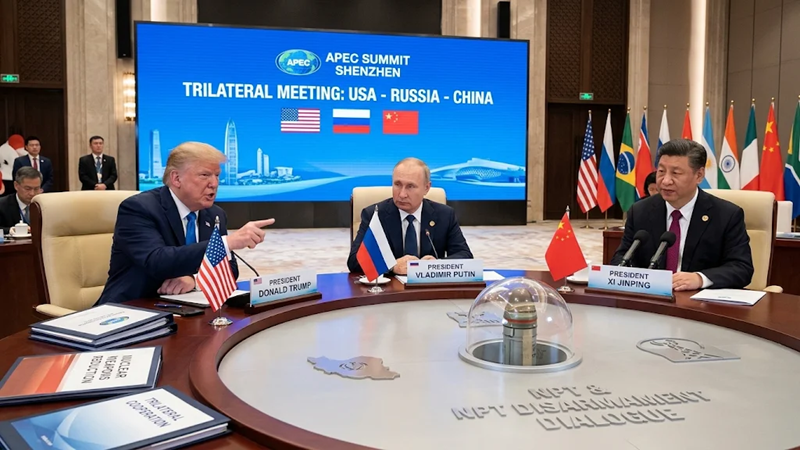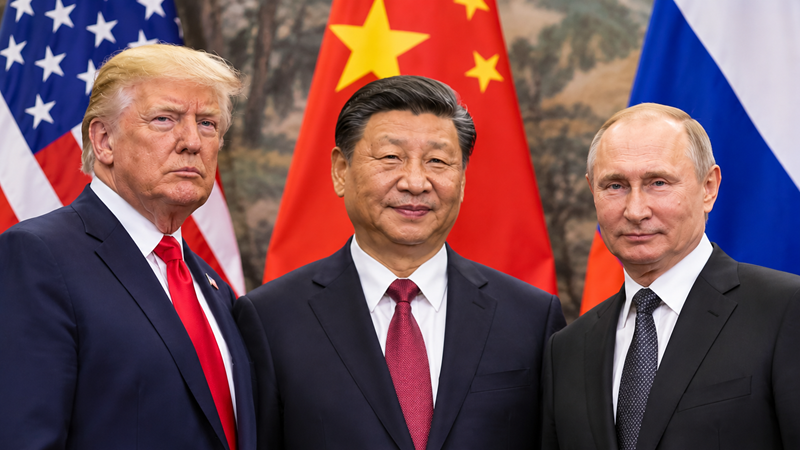
SHENZHEN, China, November 19, 2026: US President Donald Trump, Chinese President Xi Jinping and Russian President Vladimir Putin have concluded a historic trilateral summit in China, agreeing to pursue dialogue on reducing nuclear risks and preventing the spread of nuclear weapons while leaving several major international disputes unresolved.
The meeting, held on Thursday on the sidelines of the Asia-Pacific Economic Cooperation (APEC) summit in Shenzhen, brought together the leaders of three of the world's most influential military and economic powers for an unprecedented formal discussion.
Following the talks, the three governments issued a joint declaration outlining their intentions to cooperate on nuclear security, reform of the United Nations and the stability of international energy supplies.
The declaration represented a diplomatic step towards maintaining communication among the three powers, whose relations have been complicated by the Russia-Ukraine war, disputes involving Iran, trade competition and disagreements over international security.
Nevertheless, the summit ended without a major breakthrough on nuclear arms reductions or a settlement of the Ukraine conflict.
Three Powers Pledge Dialogue on Nuclear Security
Nuclear weapons emerged as a central subject of the meeting, with Trump calling for renewed efforts to reduce the danger of nuclear confrontation.
The three leaders agreed that nuclear war must be avoided and expressed their intention to continue discussions on lowering nuclear risks and preventing proliferation.
Their declaration did not establish specific reductions in nuclear arsenals or announce a binding arms-control treaty.
Trump argued that Washington, Moscow and Beijing have a particular responsibility to address nuclear threats because of their military capabilities and international influence.
However, substantial differences remain over how any future arms-control framework should operate.
The United States and Russia possess much larger nuclear arsenals than China, while Beijing has previously expressed reservations about participating in negotiations structured around the nuclear capabilities of Washington and Moscow.
The summit therefore established a basis for further discussion rather than delivering an immediate disarmament agreement.
Ukraine War Dominates Trump-Putin Discussions
The continuing war between Russia and Ukraine was among the most sensitive issues addressed during the diplomatic engagements.
Before the trilateral summit, Trump held a separate meeting with Putin, during which the two leaders discussed the conflict and the prospects for a negotiated settlement.
Trump subsequently indicated that Ukraine had occupied a substantial part of their conversation.
Putin also confirmed discussing the conflict with both Trump and Xi.
According to Kremlin foreign policy aide Yury Ushakov, the Trump-Putin meeting proceeded positively, although no significant announcement followed.
Despite the diplomatic exchanges, the leaders did not announce a ceasefire, a negotiated peace agreement or a concrete timetable for ending the fighting.
Ukraine was not represented at the three-way meeting, raising questions about how discussions among major powers might affect a conflict in which Kyiv is a principal party.
China Hosts Unprecedented Diplomatic Gathering
The summit provided China with an opportunity to host a major diplomatic encounter involving the American and Russian presidents.
Xi described the meeting as an important development in relations among the three countries and emphasised the need for strategic stability and international cooperation.
Trump arrived in Shenzhen on Wednesday and received an unusually prominent welcome from the Chinese president.
Xi personally greeted the American leader at the airport, an arrangement widely interpreted as a significant diplomatic gesture.
Putin also arrived in China ahead of the summit and participated in bilateral engagements before joining the three-way discussions.
The leaders subsequently met at Kylin Villa, where they held talks lasting more than an hour.
Although the gathering demonstrated a willingness to maintain high-level engagement, analysts cautioned that the symbolism of the meeting should not be mistaken for the resolution of longstanding disagreements.
Washington and Beijing Signal Improvement in Relations
Trump and Xi also held bilateral talks focusing on the relationship between the world's two largest economies.
The Chinese government characterised recent developments in bilateral relations as positive, highlighting efforts to establish a more stable framework for cooperation.
Xi emphasised mutual respect, fairness and reciprocity as important principles for managing relations between Beijing and Washington.
Trump, meanwhile, praised aspects of China's economic development and expressed optimism about the prospects for cooperation.
Trade, tariffs and agricultural exports were among the issues discussed.
The American president indicated that he wanted China to expand opportunities for US agricultural producers.
Despite the warmer diplomatic atmosphere, the two countries continue to face differences over trade policy, technology and strategic competition.
Leaders Support UN Reform and Stable Energy Supplies
The joint declaration extended beyond nuclear security to include international institutions and energy markets.
The United States, Russia and China expressed support for reforms intended to improve the United Nations' ability to respond to global challenges.
As permanent members of the UN Security Council, the three countries hold considerable influence over international peace and security decisions.
The declaration also addressed energy cooperation, with the governments expressing an intention to increase the production and availability of refined petroleum products.
They emphasised the importance of maintaining stable international energy flows.
The commitments come amid continuing concerns over geopolitical tensions, energy security and the economic consequences of conflicts affecting major supply routes.
However, the declaration did not specify production targets, implementation schedules or detailed arrangements for the proposed cooperation.
International Criminal Court Draws Criticism
Another notable element of the summit concerned the International Criminal Court (ICC).
Trump criticised the institution during the trilateral discussions and raised concerns about what he considered excessive interference by international bodies in matters of national sovereignty.
The joint declaration emphasised state consent and the legal immunities of state officials while expressing opposition to abuses of jurisdiction by international criminal institutions.
The position is likely to generate debate among governments and international legal experts, particularly over the relationship between state sovereignty and accountability for serious international crimes.
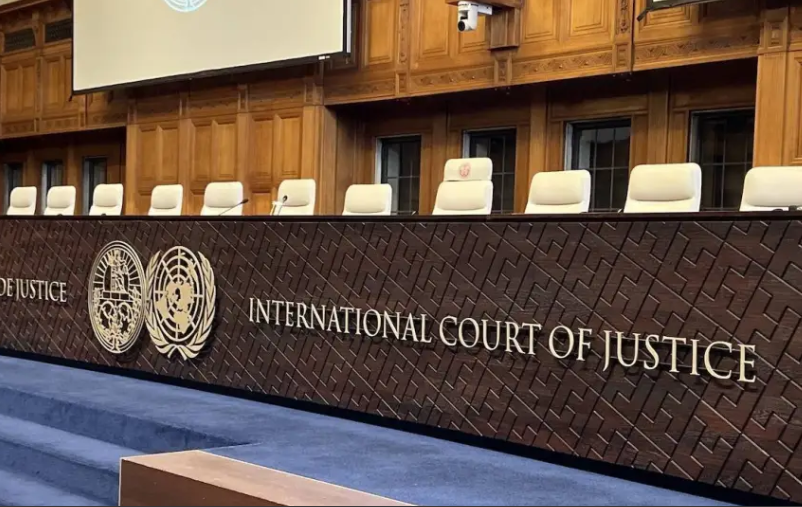
The ICC, which investigates and prosecutes individuals under its jurisdiction, is distinct from the International Court of Justice, which primarily resolves legal disputes between states.
The declaration did not establish any change to the ICC's existing treaty framework or jurisdiction.
Trump Faces Criticism Over Friendly Remarks About Putin
Trump's warm public exchanges with Putin also attracted criticism.
During their meeting, the American president referred to the Russian leader as a friend, prompting objections from political figures in the United States and Europe.
Democratic Senator Tim Kaine criticised the description, arguing that diplomatic engagement with a foreign leader should not be confused with political friendship.
Polish Prime Minister Donald Tusk also rejected the characterisation, stressing his government's position towards Putin.
The reactions reflected continuing concerns among Ukraine's supporters about the direction of Washington's engagement with Moscow.
Trump has maintained that direct communication with Putin is important for efforts to end the war.
Press Access Dispute Overshadows Part of Summit
The diplomatic gathering also became the centre of a dispute involving journalists covering the American president.
According to reports from the US travelling press pool, Chinese officials prevented Bloomberg journalist Annmarie Hordern from attending the trilateral meeting after she asked Trump a question during an earlier session with Xi.
The White House reportedly sought her inclusion, but Chinese officials maintained their objection.
The incident highlighted tensions over press access during tightly controlled diplomatic events.
No indication emerged that the disagreement disrupted the leaders' discussions.
Diplomatic Milestone Without Major Agreements
The Shenzhen summit brought together three leaders whose governments exercise enormous influence over nuclear security, international trade and geopolitical conflicts.
Their declaration demonstrated a shared willingness to maintain dialogue on several issues, including nuclear risks and the functioning of international institutions.
However, the absence of binding arms-control commitments or a concrete peace initiative for Ukraine underscored the limits of the meeting.
The future significance of the summit will depend on whether the governments translate their statements into sustained negotiations and measurable agreements.
For now, the meeting stands as a major diplomatic event that reopened channels for cooperation without resolving the fundamental disputes dividing Washington, Beijing and Moscow.