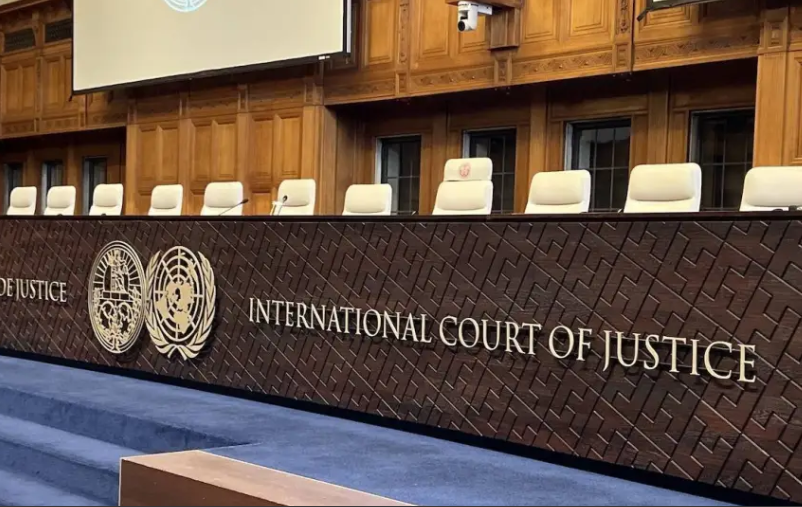
THE HAGUE, November 19, 2026: The International Court of Justice (ICJ) has ruled that Myanmar committed genocide against its Rohingya Muslim minority, delivering a historic judgment that establishes the country's international legal responsibility for atrocities committed in northern Rakhine State.
In a decision with far-reaching implications for international justice, the United Nations' principal judicial organ found that Myanmar had violated several obligations under the 1948 Convention on the Prevention and Punishment of the Crime of Genocide.
The court ordered Myanmar to provide reparations to the Rohingya, take steps to investigate suspected perpetrators, strengthen its domestic legal framework and ensure that genocidal acts are not repeated.
The judgment also addressed the destruction of evidence, failures to prevent and punish genocide, and the use of sexual violence against Rohingya women and girls.
The ruling represents the first finding by the ICJ that a state bears responsibility for committing genocide, according to the reported proceedings.
It follows years of international legal action arising from Myanmar's 2017 military operations, which drove more than 700,000 Rohingya into neighbouring Bangladesh.
However, while the judgment is final and binding on Myanmar, the court has no independent enforcement force capable of compelling the country to implement its orders.
Court Finds Genocidal Intent Behind Military Operations
Announcing the judgment, ICJ President Judge Yuji Iwasawa outlined the court's conclusion that Myanmar's actions demonstrated an intention to destroy a substantial part of the Rohingya population.
The judges examined the nature, scale and consequences of military operations in northern Rakhine State, where thousands of people were killed and entire communities were displaced.
Myanmar had maintained that its security forces were responding to attacks by armed groups rather than carrying out a campaign of genocide.
The court rejected that explanation as insufficient to account for the scale and character of the violence.
Its findings established that the operations went beyond legitimate security measures and demonstrated the specific intent required to constitute genocide under international law.
The central genocide finding was adopted by nine votes to six.
The court also concluded, by the same margin, that Myanmar had failed to prevent genocide committed by individuals operating alongside its security forces.
Sexual Violence Recognised as Part of Genocidal Conduct
One of the judgment's particularly significant findings concerned sexual and gender-based violence against the Rohingya.
The court examined evidence of rape, gang rape and mass rape involving Rohingya women and girls.
It found that such violence caused severe physical injuries and psychological trauma, with consequences affecting reproductive capacity and family life.
The judges also considered restrictions on marriage and childbirth imposed on members of the Rohingya community.
The findings underscore that genocide is not limited to mass killings. Acts causing serious bodily or mental harm, including sexual and reproductive violence, can also constitute genocide when committed with the legally required intent to destroy a protected group.
Human rights lawyers welcomed this aspect of the judgment as an important recognition of the role of sexual violence in campaigns of group destruction.
Myanmar Ordered to Investigate and Punish Suspected Perpetrators
The ICJ found that Myanmar had failed to fulfil its obligations to punish genocide and other prohibited acts under the Genocide Convention.
By 11 votes to four, the judges determined that the country had violated its duty to punish such offences.
In a separate ruling adopted by 13 votes to two, the court directed Myanmar to take immediate and effective measures to investigate individuals reasonably suspected of committing acts prohibited under Article III of the convention.
The judgment therefore places responsibility on Myanmar to pursue accountability through appropriate legal processes.
However, the ICJ's decision does not itself convict individual military commanders, political leaders or other suspects.
The court determines disputes concerning state responsibility, rather than conducting criminal trials against individuals.
Court Orders Legal Reforms and Guarantees Against Repetition
The judges also found serious deficiencies in Myanmar's domestic implementation of the Genocide Convention.
By 14 votes to one, the court ruled that Myanmar had failed to enact legislation necessary to give effect to the convention.
It ordered the country to address continuing violations of its legislative obligations by introducing the required legal measures.
Another ruling, adopted by nine votes to six, directed Myanmar to provide assurances and guarantees that similar violations would not occur again.
These measures are intended to address not only past atrocities but also the institutional and legal conditions that could permit further abuses.
Destruction of Evidence Constituted Separate Violation
The court determined that Myanmar had breached its obligation to prevent the destruction of evidence and ensure the preservation of material relevant to allegations of genocide.
The finding was adopted by 11 votes to four.
Evidence preservation is particularly important in international atrocity cases because investigations may depend on documents, witness accounts, physical remains and records of military operations.
The ruling adds another dimension to Myanmar's legal responsibility by recognising failures affecting the investigation and documentation of the alleged crimes.
Reparations and Restitution Ordered for Rohingya Victims
Among the judgment's most consequential elements are the orders concerning remedies for the Rohingya.
By 10 votes to five, the court ruled that Myanmar must adopt measures of restitution.
It also found, by the same margin, that Myanmar has an obligation to compensate members of the Rohingya community.
The judges determined that the amount and arrangements for compensation or other reparations should be settled by the ICJ.
Restitution generally concerns restoring victims, as far as possible, to the position they occupied before the wrongful acts occurred.
Compensation addresses losses and injuries that cannot adequately be remedied through restitution alone.
Philippe Sands KC, a member of The Gambia's legal team, said the judgment envisaged a two-year period for facilitating the Rohingya's return to their homes.
He noted that implementation would be particularly difficult because many of those homes had been destroyed.
According to his explanation, a further assessment of reparations would be necessary if restitution could not be achieved.
The precise scope and timetable of these obligations will depend on the operative provisions of the written judgment and subsequent proceedings.
Court Rejects Separate Allegation of Direct Public Incitement
Although the ICJ found Myanmar responsible for genocide and multiple related violations, it did not accept every allegation presented against the country.
By 14 votes to one, the court found that Myanmar had not committed the separately alleged violation involving direct and public incitement to genocide against the Rohingya in northern Rakhine State.
This distinction is legally significant.
The court's conclusion on incitement does not negate its findings concerning genocide, failure to prevent and punish prohibited acts, or other violations of the convention.
Instead, it reflects the judges' separate assessment of the legal requirements and evidence relating to each alleged breach.
The Gambia's Seven-Year Legal Battle
The case was initiated by The Gambia in November 2019 under the Genocide Convention.
The West African country accused Myanmar of violating its international obligations through atrocities committed against the Rohingya.
The proceedings became a major test of whether a state not directly affected by the atrocities could pursue legal responsibility for violations of obligations owed under the convention.
The judgment follows years of legal arguments, documentary evidence and testimony concerning Myanmar's military operations and their consequences.
Gambian President Adama Barrow welcomed the outcome as a historic achievement for international justice.
He paid tribute to Rohingya survivors and witnesses whose accounts contributed to the proceedings.
The ruling also drew a positive response from Rohingya communities living in refugee camps in Bangladesh.
In Cox's Bazar, refugees gathered to follow the judgment and expressed appreciation for the support provided by Bangladesh, The Gambia and the Organisation of Islamic Cooperation.
Community representatives nevertheless emphasised that their ultimate objective remains a safe return to Myanmar.
United Nations Calls for Compliance and Accountability
UN Secretary-General António Guterres welcomed the decision as an important demonstration of international justice.
He stressed that the judgment is binding, final and not subject to appeal.
Guterres called on Myanmar to fulfil its obligations and emphasised the importance of ending impunity for serious international crimes.
UN High Commissioner for Human Rights Volker Türk also urged the international community to ensure that the judgment produces practical results.
He called for support for reparations and assistance programmes for Rohingya survivors.
The United Kingdom announced diplomatic measures following the ruling, including the expulsion of Myanmar's defence attaché and the summoning of its chargé d'affaires.
British political figures also urged further sanctions against Myanmar's military and greater international assistance for Rohingya refugees.
Implications for Other Genocide Cases
The judgment is expected to attract close attention in other proceedings involving allegations of genocide.
Legal observers have pointed to its treatment of genocidal intent, particularly the circumstances in which intent can be established through patterns of conduct rather than explicit written instructions.
The court's reasoning is also significant because it recognises that genocidal intent may coexist with other objectives, including military or security-related aims.
The decision is being closely examined in connection with South Africa's separate case against Israel concerning allegations of genocide in Gaza.
Israel rejects those allegations.
International lawyers have cautioned that the Myanmar ruling does not predetermine the outcome of the proceedings against Israel or any other state.
Each case must be assessed independently on its evidence, legal arguments and applicable standards.
Is the ICJ Judgment Legally Binding?
The ICJ's judgment is legally binding on Myanmar and The Gambia as parties to the case.
Under Article 94(1) of the United Nations Charter, UN member states undertake to comply with decisions of the ICJ in cases to which they are parties.
Article 60 of the ICJ Statute further provides that the court's judgments are final and without appeal.
Myanmar is therefore under an international legal obligation to comply with the court's orders concerning reparations, investigations, legislative reforms, evidence preservation and guarantees against future violations.
Failure to implement the judgment would not erase those obligations.
However, the legal force of an international judgment and the practical ability to enforce it are separate matters.
What Mechanism Exists to Enforce the Ruling?
The ICJ does not possess its own police force or other coercive machinery to implement judgments.
Under Article 94(2) of the UN Charter, a party may bring another party's failure to comply with an ICJ judgment before the United Nations Security Council.
The Security Council may then make recommendations or decide on measures intended to give effect to the judgment.
However, such action is not automatic.
Decisions are subject to the council's voting procedures and political dynamics, including the veto powers of its five permanent members.
As a result, the implementation of the Myanmar judgment could depend heavily on international diplomacy, pressure from governments, multilateral institutions and decisions taken within the United Nations system.
Individual countries may also consider lawful diplomatic or economic measures within their respective legal frameworks.
The ICJ itself cannot imprison Myanmar's military commanders or directly execute compensation orders against the country's assets.
Individual criminal responsibility would have to be pursued through competent national or international criminal jurisdictions, including the International Criminal Court where jurisdictional requirements are satisfied.
Judgment Brings Recognition, but Repatriation Remains Unresolved
For Rohingya survivors, the judgment provides authoritative international recognition of atrocities they have described for nearly a decade.
It also creates a legally binding basis for demanding compliance with the court's orders and pursuing remedies for victims.
Yet the decision does not automatically secure citizenship, rebuild destroyed villages or guarantee the safe return of refugees from Bangladesh.
Those objectives require further legal, political, administrative and security measures.
The central challenge now is whether Myanmar will implement the court's directions and whether the international community can help translate the judgment into meaningful protection, accountability and reparations.
The ruling establishes Myanmar's legal responsibility for genocide, but its lasting significance will depend on whether the orders are implemented and the Rohingya can ultimately exercise their rights in safety and dignity.