International Desk | The Reporter 24
November 24, 2026: Israeli caretaker Prime Minister Benjamin Netanyahu is reportedly pressing US President Donald Trump to authorise fresh military strikes against Iran, as disagreements intensify within Israel over the urgency of the Iranian threat and the country's unresolved political leadership.
Israel's public broadcaster Kan reported that Netanyahu had urged Trump to initiate renewed military action against Iran as soon as possible.
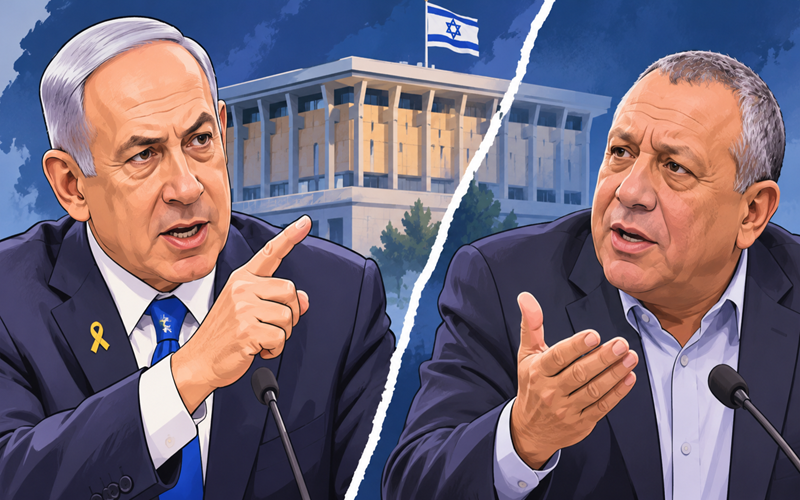
However, opposition leader Gadi Eisenkot has disputed Netanyahu's assessment of an immediate security threat, arguing that there is no urgent military necessity to attack Iran before a new Israeli government takes office.
The proposed military action has also reportedly encountered resistance within Israel's defence establishment, with intelligence officials warning that renewed hostilities could develop into a wider regional conflict.
The developments come at a politically sensitive moment for Netanyahu, who lost his parliamentary majority in Israel's October 27 election and remains in office as caretaker prime minister while opposition parties attempt to form an alternative government.
Several opposition figures have accused Netanyahu of exaggerating security threats to delay the transfer of power. Netanyahu, in turn, has accused his political opponents of downplaying serious national security concerns for political advantage.
Netanyahu Insists Iran Poses an Immediate Threat
Addressing a meeting of his Likud party at the Israeli parliament, the Knesset, on Monday, Netanyahu argued that Israel faced serious and immediate security challenges requiring national political unity.
According to The Times of Israel, he accused political rivals of deliberately understating the dangers confronting the country for partisan reasons.
Netanyahu maintained that Israel's ability to confront external threats depended on cooperation among its political forces.
He also renewed his appeal for a national unity government, presenting political consensus as essential to safeguarding the country's security.
His remarks followed reports that he had been advocating further military operations against Iran despite reservations among Israeli security officials.
Opposition politicians have questioned whether the proposed military action is driven entirely by security considerations or partly by Netanyahu's domestic political circumstances.
Those accusations remain contested, and Netanyahu has maintained that his position is based on Israel's national security requirements.
Eisenkot Rejects Need for Immediate Military Action
Gadi Eisenkot, chairman of the Yashar party and a former chief of staff of the Israel Defense Forces (IDF), challenged Netanyahu's assessment during a parliamentary faction meeting on Monday.
Eisenkot said he did not believe Iran presented an immediate threat that justified launching military operations before the formation of a new government.
Instead, he identified Iran's remaining stockpile of enriched uranium as the principal security concern requiring attention.
According to Eisenkot, approximately 440 kilograms of enriched uranium had yet to be destroyed or removed.
He argued that addressing the nuclear material should take priority over initiating another military confrontation.
The quantity and status of the uranium stockpile cited by Eisenkot were not independently verified in the reports reviewed.
The disagreement reflects competing assessments within Israel over how to address Iran's nuclear programme and whether renewed military action is necessary at this stage.
Israeli Military Officials Reportedly Warn of Regional War
Netanyahu's reported proposal has also exposed differences between his political leadership and sections of Israel's military establishment.
According to Israel's Channel 12, military intelligence officials warned that a unilateral Israeli attack on Iran could trigger hostilities across several fronts, potentially involving Lebanon, Syria and Gaza.
The reported assessment differs from the more optimistic expectations attributed to Netanyahu and Israel's external intelligence agency, Mossad, regarding the possibility of containing a renewed confrontation.
Military officials reportedly expressed concern that another conflict could impose substantial security and humanitarian costs while drawing additional regional actors into the fighting.
The competing assessments have raised questions about the potential consequences of military escalation and Israel's ability to prevent a broader regional confrontation.
Trump Sends Conflicting Signals on Renewed Hostilities
Washington's position on further military operations against Iran remains uncertain.
Trump has made contradictory public statements about the possibility of renewed fighting, at times issuing warnings against Iran while also suggesting that the previous conflict had effectively concluded.
The US president recently referred to an unsubstantiated allegation concerning a possible Iranian radiological weapon plot and warned that Washington would respond militarily if such a threat materialised.
However, senior US administration officials reportedly said there was no credible or imminent threat to the American homeland.
Following a meeting with Qatar's prime minister, Trump also indicated that major renewed military operations were unlikely, describing the war as effectively over.
Some White House officials reportedly favour allowing economic pressure generated by US-led sanctions against Iran to take effect before considering further military measures.
The available reports do not establish that Washington has approved Netanyahu's request for fresh strikes.
Political Pressure Mounts on Netanyahu and Trump
The reported discussions over Iran come as both Netanyahu and Trump face political difficulties at home.
In Israel, Netanyahu's loss of his parliamentary majority in the October 27 election has left him dependent on negotiations over the formation of a new government.
Opposition parties are attempting to establish a coalition that could end his tenure as prime minister.
In the United States, Republican setbacks in the recent midterm elections have intensified disagreements over the administration's foreign policy.
Vice President JD Vance has publicly attributed the Republican electoral losses to the war, highlighting differences within the American leadership over military involvement.
The domestic political pressures confronting both leaders have added another dimension to discussions about renewed military action against Iran.
However, the coincidence of electoral setbacks and military discussions does not, by itself, establish that political considerations are driving decisions on Iran.
Opposition Accuses Netanyahu of Seeking Conflict for Political Survival
Several Israeli opposition leaders have questioned Netanyahu's motives for advocating renewed military action.
Avigdor Liberman warned that the caretaker prime minister could consider launching an attack on Iran without American approval.
Liberman described such a potential operation as unjustified under the prevailing circumstances and alleged that it would be politically motivated.
Yair Golan, chairman of the left-wing Democrats party, also accused Netanyahu of attempting to draw Israel into another war with Iran while aggravating tensions in the occupied West Bank.
Golan argued that prolonged negotiations over government formation could leave Netanyahu in a position to initiate military operations that might endanger soldiers and civilians.
These allegations represent the positions of Netanyahu's political opponents and have not been independently established as his actual motives.
Netanyahu has rejected suggestions that security concerns should be subordinated to political disagreements, maintaining that Israel faces serious external threats.
Dispute Over Unity Government Divides Israeli Opposition
Alongside the disagreement over Iran, negotiations to establish a new Israeli government have exposed divisions within the opposition alliance led by Eisenkot.
Former prime minister Naftali Bennett, chairman of the B'Yachad party, has expressed a preference for a national unity government involving Likud rather than a coalition dependent on either Arab-majority parties or ultra-Orthodox political groups.
Bennett proposed a rotating premiership arrangement under which Eisenkot would initially serve as prime minister.
He has ruled out participating in a government headed by Netanyahu but remains open to cooperation with Likud under Eisenkot's leadership.
Bennett reportedly held a two-hour meeting with Netanyahu last week without informing his opposition allies beforehand.
Representatives of Yashar and Likud subsequently held approximately four hours of negotiations on Sunday, with further discussions reportedly under consideration.
However, the negotiations have yet to produce a confirmed agreement on government formation.
Golan Opposes Any Power-Sharing Arrangement With Netanyahu
Golan has strongly criticised Bennett's efforts to establish a unity government involving Likud and Netanyahu.
The Democrats leader argued that the election had given opposition parties a mandate to replace Netanyahu rather than negotiate arrangements that could prolong his political influence.
He urged Bennett to abandon proposals that would allow Netanyahu to remain in a position of authority, including through a rotating premiership.
Golan also warned that extended coalition negotiations could increase the risk of military escalation.
He called for opposition parties to establish a clear coalition strategy, identify potential parliamentary partners and agree on a timetable for forming a government by the end of the week.
Bennett nevertheless reaffirmed his support for a unity arrangement led initially by Eisenkot, while warning Netanyahu against using negotiations merely to delay the formation of a government.
Arab Parties Could Play Decisive Role in Government Formation
Israel's Arab-majority political parties have emerged as potentially influential players in the country's post-election negotiations.
The Joint List and Ra'am secured a combined 19 parliamentary seats in the October election, giving them considerable influence over possible coalition arrangements.
Eisenkot's four-party opposition bloc could potentially rely on external parliamentary support from these parties to establish a minority government if other coalition options fail.
However, the possibility has generated disagreements within the opposition alliance.
Netanyahu has strongly opposed any government dependent on Arab-majority parties, repeatedly accusing some of their lawmakers of supporting terrorism or holding positions hostile to the Jewish state.
These are Netanyahu's political accusations and should not be treated as established findings against the parties or their members.
Golan, by contrast, has expressed support for cooperation with Ra'am leader Mansour Abbas, arguing that rejecting such an arrangement could help Netanyahu remain in power.
The dispute illustrates the competing political calculations complicating efforts to establish a parliamentary majority.
Military Conscription and October 7 Inquiry Remain Sticking Points
Other major disagreements concern military conscription and accountability for the security failures surrounding the Hamas-led attack on Israel on October 7, 2023.
Eisenkot has insisted that his party will not compromise on establishing an official state commission of inquiry into the attack.
He has also maintained his demand for universal military conscription, an issue that has long divided Israeli political parties.
Netanyahu has called for greater flexibility on the conscription question, particularly regarding Israel's ultra-Orthodox Jewish community.
He maintains that the ultra-Orthodox parties, Shas and United Torah Judaism, should participate in any prospective unity government.
These disagreements present additional obstacles to a coalition agreement between Likud and the opposition.
Renewed Conflict Could Have Far-Reaching Regional Consequences
The possibility of further military confrontation between Israel and Iran has implications extending well beyond the two countries.
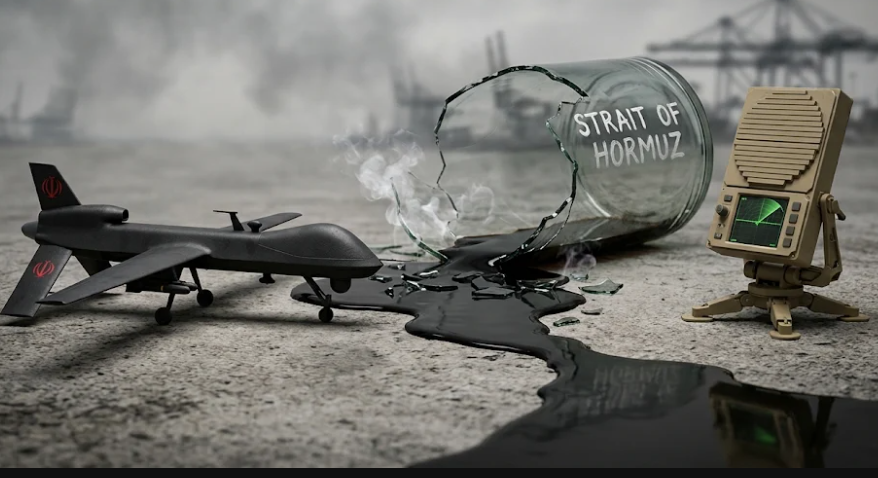
A renewed conflict could heighten tensions across the Middle East, threaten regional stability and create additional risks for civilian populations, international energy markets and maritime trade.
The reported concerns within Israel's military establishment underline the uncertainty surrounding the potential scale and consequences of another confrontation.
The source reports did not include an official Iranian response to Netanyahu's latest reported request for renewed military action.
Nor did they establish that a final decision to launch fresh strikes had been taken by either Israel or the United States.
For now, Israel faces two interconnected challenges: determining its security policy towards Iran and resolving the political deadlock preventing the formation of a new government.
Whether Netanyahu's reported military proposal receives American backing, and whether opposition parties can establish an alternative parliamentary majority, could significantly influence the direction of Israeli politics and wider Middle Eastern security in the coming weeks.