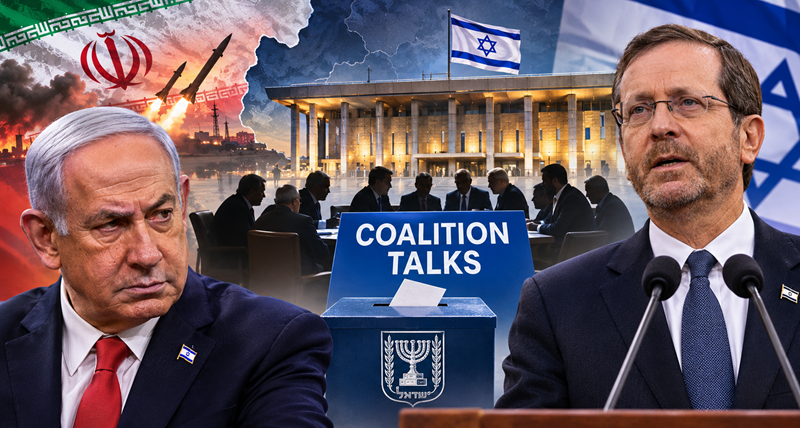
JERUSALEM, November 1, 2026: Israel's political uncertainty has intensified as President Isaac Herzog prepares to begin formal consultations on forming a new government, with divisions emerging among Prime Minister Benjamin Netanyahu's traditional allies and opposition parties exploring ways to build an alternative coalition.
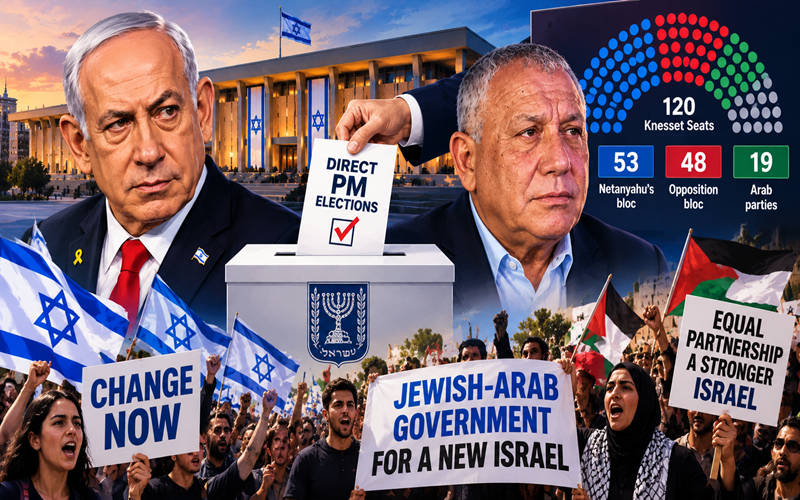
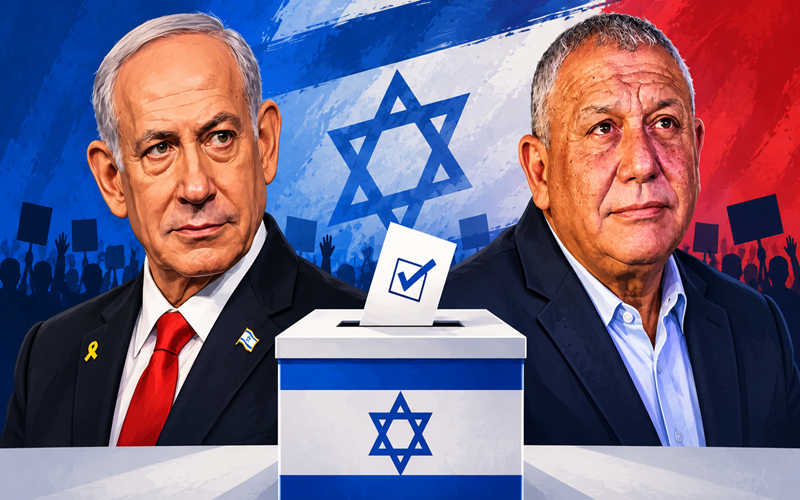
Following last week's inconclusive parliamentary election, neither Netanyahu's right-wing alliance nor the opposition grouping associated with former military chief Gadi Eisenkot has secured the 61 seats required for a majority in the 120-member Knesset.
The political deadlock has prompted renewed discussions among party leaders, while the ultra-Orthodox United Torah Judaism (UTJ) party is reportedly considering declining to recommend any candidate for prime minister.
Meanwhile, Netanyahu's Likud party has ruled out a power-sharing arrangement involving a rotating premiership, further narrowing the options for a negotiated settlement.
Herzog to Begin Coalition Consultations on Wednesday
President Herzog will begin meeting representatives of the parties elected to Israel's 26th Knesset on Wednesday, according to an announcement from the President's Residence.
The consultations are intended to help the president determine which lawmaker has the strongest prospect of assembling a governing coalition.
Eyal Shviki, director general of the President's Residence, said invitations had been sent to the leaders of all elected parliamentary factions.
He urged them to participate constructively and consider compromises that could prevent another general election.
The president has emphasized that the political parties should approach the discussions with flexibility and a willingness to consider different possibilities.
The meetings will take place amid considerable uncertainty because neither major political bloc has demonstrated that it can command a parliamentary majority.
Under Israel's parliamentary system, the president consults the elected factions before assigning the task of forming a government to a lawmaker considered capable of securing sufficient support.
The process could involve weeks of negotiations, particularly if the parties maintain their existing political positions.
Ultra-Orthodox Party Reconsiders Its Position
One of the most significant developments concerns United Torah Judaism, a longstanding ally of Netanyahu.
Senior UTJ figures have reportedly been discussing whether the party should refrain from endorsing any candidate during the presidential consultations.
Hebrew-language media reported that party chairman Yaakov Asher met fellow lawmakers Yitzhak Goldknopf and Meir Porush to consider the faction's position.
According to reports citing party sources, UTJ may choose not to recommend either Netanyahu or Eisenkot.
Such a decision would represent a notable departure from its traditional alignment with Netanyahu's political camp.
The party has expressed frustration over the failure of the outgoing coalition to pass legislation exempting ultra-Orthodox yeshiva students from compulsory military service.
The conscription issue has become a major source of tension between religious parties and other sections of Israeli society.
Despite participating in Netanyahu's governing alliance for four years, UTJ did not secure the legislation it had sought.
The unresolved dispute now appears to be influencing its approach to the next government.
Party officials reportedly indicated that they had not received a concrete coalition proposal from Eisenkot and therefore had no specific offer to evaluate.
Whether UTJ ultimately supports Netanyahu, considers an alternative arrangement or remains neutral could influence the outcome of the coalition negotiations.
Likud Rejects Rotating Premiership
Netanyahu's Likud party has reportedly rejected the possibility of a rotation agreement under which two political leaders would take turns serving as prime minister.
The position was communicated by the party's parliamentary whip as speculation continued over potential compromises to resolve the deadlock.
A rotation arrangement could theoretically allow rival political factions to participate in a shared government without permanently surrendering their leadership ambitions.
However, Likud's opposition to such a formula suggests Netanyahu's party is unwilling to pursue that option at present.
The refusal could make negotiations more difficult, particularly if neither political camp can attract enough additional lawmakers to form a conventional majority coalition.
Israel has previously used power-sharing arrangements involving rotating prime ministers, but the latest discussions have yet to produce an agreed framework.
Eisenkot's Opposition Bloc Explores Coalition Options
Opposition politicians are also intensifying their discussions as they seek to establish whether a government can be formed without Netanyahu.
Gadi Eisenkot, leader of the Yashar party, is expected to hold further meetings with potential political partners.
Reports indicate that Avigdor Lieberman, a prominent opposition figure, has been preparing to meet Eisenkot following the election.
Lieberman is also expected to hold discussions with Yair Lapid as opposition leaders assess possible coalition arrangements.
The negotiations are complicated by ideological differences among parties opposed to Netanyahu.
Although they share an interest in replacing the incumbent prime minister, they disagree on several important issues, including security policy, relations with Arab parties and the composition of a future government.
The central challenge is whether these parties can establish a common political programme capable of attracting a parliamentary majority.
Golan Holds Talks with Arab Party Leaders
Yair Golan, leader of the left-wing Democrats party, has reportedly opened discussions with leaders of the Joint List as part of efforts to establish an alternative government.
The talks reflect growing interest among some opposition politicians in securing parliamentary support from Arab-led factions.
Arab parties emerged from the election with significant representation, potentially giving them an important role in determining the next government's composition.
However, cooperation between Jewish-led opposition parties and Arab factions remains politically contentious.
Several opposition figures have previously rejected arrangements that would depend on Arab parliamentary support.
Golan has advocated a more inclusive approach, arguing that political change requires cooperation across Israel's Jewish and Arab communities.
His position contrasts with those of right-wing opposition politicians who remain reluctant to participate in such an arrangement.
The disagreement could become decisive during the coalition negotiations.
US Ambassador Expresses Concern Over Arab Party Participation
US Ambassador to Israel Mike Huckabee has expressed reservations about the possibility of Arab lawmakers joining a governing coalition, particularly those who did not condemn the Hamas-led attacks of October 7, 2023.
According to remarks reported by The Times of Israel, Huckabee described such participation as troubling.
His comments came as Israeli politicians considered whether Arab-led parties could help establish a government opposed to Netanyahu.
Huckabee also argued that Israel's political left had substantially weakened since the October 2023 attacks.
The ambassador's remarks add an international dimension to an already sensitive domestic political debate.
Nevertheless, the composition of Israel's next government will ultimately depend on parliamentary negotiations and the country's constitutional procedures.
Iran Crisis Adds Pressure to Government Formation
The coalition discussions are unfolding amid renewed concerns about a possible military confrontation involving Iran.
Golan has questioned whether Netanyahu possesses sufficient public confidence and moral authority to lead another military campaign against Tehran.
His criticism comes as diplomatic efforts continue to prevent renewed hostilities between the United States and Iran.
Iranian Foreign Minister Abbas Araghchi has said the outcome of ongoing negotiations will depend on Washington's responses to Iranian concerns.
In an interview circulated through his Telegram channel, Araghchi said Tehran remains prepared to pursue diplomacy while maintaining its ability to defend itself.
He expressed hope that the United States would choose negotiations rather than further confrontation.
Araghchi also confirmed that Iranian negotiators were in Qatar to discuss a proposal that could allow the Strait of Hormuz to reopen within two days if certain Iranian conditions were satisfied.
However, he said no direct negotiations were taking place between Iranian and American officials.
His statement contrasts with earlier media reports suggesting that a US delegation might participate in direct talks in Doha.
The continuing uncertainty over Iran has added urgency to Israel's political discussions, with national security likely to remain a major consideration in negotiations over the next government.
Protests and Public Campaigns Demand Political Change
Public pressure for a change of government has also intensified following the election.
A billboard displayed in Tel Aviv on November 1 highlighted the combined parliamentary strength of parties outside Netanyahu's political alliance.
The campaign emphasized that 67 parliamentary seats had gone to parties opposed to the incumbent governing bloc.
Supporters of an alternative coalition argue that the election has created an opportunity to replace Netanyahu through cooperation among Jewish and Arab political representatives.
However, the existence of a numerical majority outside the governing alliance does not guarantee that those parties can agree on a common government.
Their differences over security, national identity, military conscription and political leadership remain significant obstacles.
Ultra-Orthodox Conscription Remains a Major Obstacle
The dispute over military service exemptions for ultra-Orthodox men is expected to remain central to coalition negotiations.
Religious parties have sought legal arrangements allowing yeshiva students to continue religious studies without compulsory enlistment.
Opponents argue that military obligations should be shared more equally, particularly after years of conflict and increased demands on Israel's armed forces.
Protests by ultra-Orthodox demonstrators against conscription have continued, including gatherings outside the military recruitment centre at Tel Hashomer.
The controversy has placed Netanyahu's traditional alliance under strain.
UTJ's reported dissatisfaction over the failure to secure exemption legislation illustrates how the issue could affect negotiations over the next government.
Any prospective coalition involving religious parties would likely need to address the matter.
Thirteen Foreign Nationals Deported Following West Bank Incident
Separately, Israeli authorities have deported 13 foreign nationals accused of violating a military order restricting access to an area of the occupied West Bank.
Another foreign national was awaiting deportation following an incident near the Palestinian village of Lubban al-Gharbiya in the Ramallah area.
Israeli police said security forces detained 14 foreign nationals after receiving reports of a confrontation near a farm.
According to police, the individuals were suspected of entering a closed military zone in violation of an official order.
After questioning, their cases were referred to the Population and Immigration Authority for further proceedings.
However, lawyer Alon Sapir disputed aspects of the authorities' account.
He said the group originally consisted of 15 foreign nationals who had travelled to the area to assist Palestinian farmers during the olive harvest.
According to Sapir, Israeli soldiers presented a military closure order when they arrived, and the order had been issued that same day.
One Australian woman was reportedly removed from the area but was not deported, while a Portuguese journalist was among those expelled.
Video circulating online appeared to show two settlers, including one carrying a rifle, escorting members of the group away from the area.
The Israeli military had not issued a response to the allegations at the time of reporting.
The incident highlights continuing tensions in the West Bank during the annual olive harvest, when international volunteers sometimes accompany Palestinian farmers.
Israel Faces Difficult Negotiations Ahead
The coming presidential consultations will provide the first formal indication of which political leader has the best prospect of forming Israel's next government.
Netanyahu remains dependent on support from his traditional right-wing and religious allies, but dissatisfaction within UTJ could complicate his position.
Eisenkot and other opposition leaders are attempting to identify an alternative parliamentary arrangement, although disagreements over Arab party participation remain unresolved.
Likud's rejection of a rotating premiership has removed another potential compromise from consideration.
At the same time, the prospect of renewed confrontation with Iran has intensified debate over political leadership and national security.
With no bloc holding a clear majority, Israel faces the possibility of prolonged coalition negotiations and, if those efforts fail, another election.
President Herzog's consultations on Wednesday will therefore mark an important stage in determining whether the divided Knesset can produce a functioning government.