MADRID, October 29: Leaked audio recordings have raised serious questions about a possible failure in railway traffic coordination that contributed to Spain's deadly high-speed train collision, which killed at least 69 people and injured dozens more.
The recordings suggest that railway controllers authorised a passenger train to proceed at normal speed despite having received information that another train remained stationary on the same track approximately 25 kilometres ahead.
The recordings, published by Spanish media outlets including El País and RTVE, reveal exchanges between the drivers of two high-speed trains and a railway control centre in Madrid shortly before Wednesday's collision near Urda in Toledo province.
The conversations have intensified scrutiny of decisions made by railway traffic controllers following a malfunction in the automatic signalling system, which had initially forced several trains to halt.
Investigators are examining whether the control centre failed to properly coordinate information about the stationary train before allowing another service to resume its journey.
Although the recordings suggest a potentially serious operational failure, authorities have not yet established the definitive cause of the collision.
Audio Recordings Raise Questions Over Control Centre Decisions
Three recorded conversations between railway controllers and the drivers of the two trains provide new insight into the events leading up to the disaster.
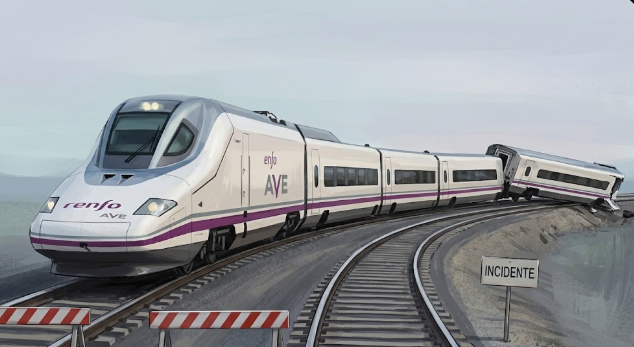
The first train, operated by private railway company Iryo, was carrying 147 passengers from Madrid towards Seville. A second train, operated by state-owned Renfe, was travelling behind it with 397 passengers.
A reported computer malfunction disrupted the automatic signalling system, forcing trains operating along the affected section to stop.
In one recording, the Iryo driver informed the Madrid control centre that the train had lost communication with its onboard train-control system and remained stationary near the entry signal at Urda.
The controller subsequently instructed the driver to resume the journey.
However, the Iryo driver contacted the control centre again, explaining that the train's safety system would not permit it to move.
The conversation indicated that the train remained stationary despite the earlier instruction.
In a separate exchange, the controller authorised the following Renfe train to continue under an alternative signalling arrangement known as the Lateral Signalling Block, used when normal automatic signalling or data transmission systems are unavailable.
The Renfe driver specifically asked whether the train could continue at normal speed.
The controller confirmed that it could.
The Renfe train subsequently struck the rear of the stationary Iryo service, causing extensive destruction and multiple fatalities.
Possible Failure to Coordinate Critical Safety Information
The recordings suggest that the control centre had received information about the stationary Iryo train while the following Renfe service was being permitted to resume its journey.
This has raised questions about whether critical safety information was properly assessed, shared and acted upon by railway traffic management personnel.
The central issue is not necessarily a lack of communication between the drivers and controllers, as the recordings confirm that conversations took place.
Instead, investigators are focusing on whether the control centre adequately verified that the railway line was clear before authorising the approaching train to proceed.
The investigation must determine whether the same controller handled both trains, whether relevant information was available to the personnel issuing instructions and whether the alternative signalling procedures were correctly applied.
Authorities must also establish the precise timing of the conversations and the speed at which the Renfe train was travelling immediately before impact.
The available evidence raises the possibility of a breakdown in operational coordination following the signalling malfunction, although it does not establish that any individual controller was solely responsible.
Transport Minister Questions Decision to Resume Normal Operations
Spanish Transport Minister Óscar Puente described the decision to permit train movements without speed restrictions as inexplicable.
According to the minister, the automatic signalling failure had initially brought several railway services to a halt.
However, the subsequent authorisation for the Renfe train to continue its journey has emerged as a central issue in the investigation.
The minister indicated that an erroneous operational decision may have contributed to the collision.
Investigators are expected to review electronic signalling records, railway traffic instructions, train operating data and communications between drivers and controllers.
The findings will help determine whether the disaster resulted from human error, technical failure, inadequate safety procedures or a combination of factors.
Death Toll Climbs to 69 as Rescue Teams Continue Recovery Operations
At least 69 people have been confirmed dead following the collision, while dozens of passengers sustained injuries.
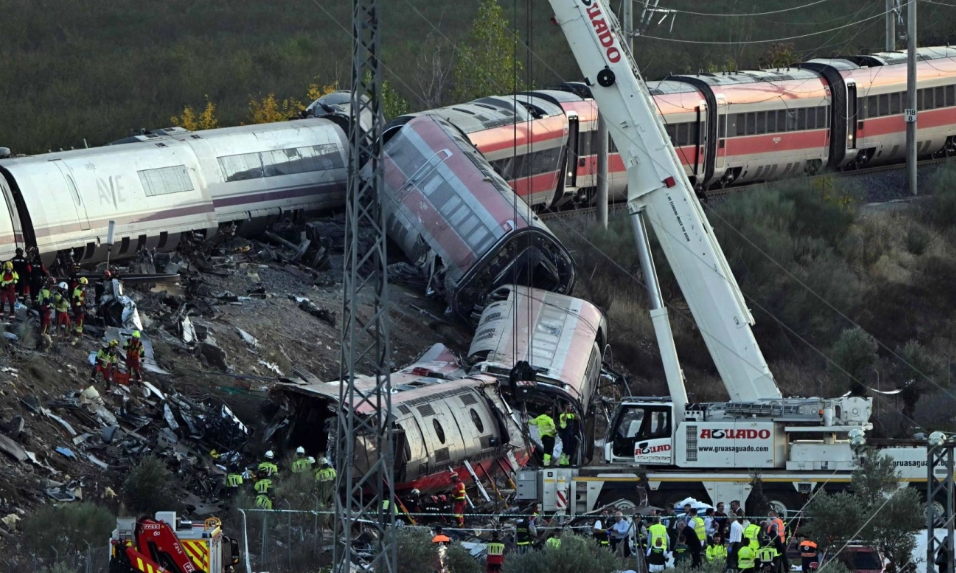
The force of the impact derailed several carriages, leaving sections of both trains severely damaged.
Some carriages reportedly plunged down an embankment, complicating efforts to reach trapped passengers.
Survivors described terrifying scenes inside the damaged trains, with passengers crying, bleeding and struggling to escape.
Witnesses also reported smoke filling carriages, while one carriage caught fire.
Emergency workers operated throughout the night under powerful floodlights, cutting through twisted metal and removing debris to recover victims.
Spain's Civil Guard said more than 900 personnel from different specialist departments had been deployed to support rescue, recovery and identification operations.
Helicopters, drones and specialist search teams were also mobilised.
Authorities have urged families searching for missing relatives to visit designated assistance centres, where DNA samples can be collected to help identify victims.
Prime Minister Promises Thorough Investigation
Prime Minister Pedro Sánchez visited the crash site and pledged a comprehensive investigation into the circumstances surrounding the disaster.
He said authorities were working continuously to support the families of victims and establish exactly how the collision occurred.
The government has also promised to review safety measures to prevent similar incidents.
Spain has declared three days of national mourning following the tragedy, one of the deadliest railway accidents in Europe's recent history.
The prime minister's assurances came as public anger intensified over the apparent inability of the railway system to prevent a collision involving two trains operating on the same track.
Leaked Recordings Spark Political Controversy
The publication of the conversations has generated controversy among Spanish political leaders.
Alberto Ibáñez, a lawmaker representing the left-wing Sumar platform, condemned the unauthorised release of the recordings.
Irene Montero, the prime ministerial candidate for the left-wing Podemos party, warned against attributing responsibility for the disaster to a single railway employee.
She argued that railway workers and safety experts had repeatedly expressed concerns about the liberalisation of Spain's railway sector.
Her comments reflected growing debate over whether the collision exposed broader weaknesses in railway management and safety oversight.
Meanwhile, opposition leader Alberto Núñez Feijóo demanded greater transparency about the condition and management of Spain's railway infrastructure.
Protesters Demand Resignations Over Railway Disaster
Around 1,500 people gathered outside Spain's Ministry of Transport in Madrid, according to Spanish public broadcaster TVE, demanding accountability for the accident.
Many demonstrators called for the resignations of Prime Minister Sánchez and Transport Minister Puente.
The demonstration turned confrontational when some protesters threw bottles and flares, prompting police to use tear gas to disperse the crowds.
No injuries or arrests were reported.
The Spanish Union of Railway Drivers, Semaf, also proceeded with a previously planned strike on Thursday, saying the industrial action was intended to defend railway safety.
Most political parties suspended public campaigning ahead of the November 29 general election as the country observed national mourning.
However, the far-right Vox party continued its political activities.
Party leader Santiago Abascal argued that mourning should not be used to discourage criticism of the government's management of railway infrastructure.
Investigation Focuses on Whether Collision Could Have Been Prevented
The newly disclosed recordings have placed railway traffic management decisions at the centre of the investigation.
The conversations indicate that the control centre was informed about the stationary Iryo train and that the following Renfe service received permission to continue at normal speed.
However, investigators must establish whether the warning was available to the person issuing the clearance, whether operational procedures were followed and whether the signalling failure affected the information available to controllers and drivers.
The inquiry will also examine whether additional safeguards should have prevented the Renfe train from approaching an occupied section of track.
The distinction is significant because the recordings do not necessarily establish a communication breakdown between the train drivers and the control centre. Rather, they raise concerns about how information received by railway personnel was interpreted, coordinated and translated into operational instructions.
For investigators, the central question is whether a failure in traffic control procedures allowed a moving train to approach a stationary passenger service without adequate protection.
Until the investigation is completed, the precise cause and responsibility remain undetermined.
For the families of the 69 victims, however, the most urgent question is whether the tragedy could have been prevented if the warnings and safety information available before the collision had been handled differently.