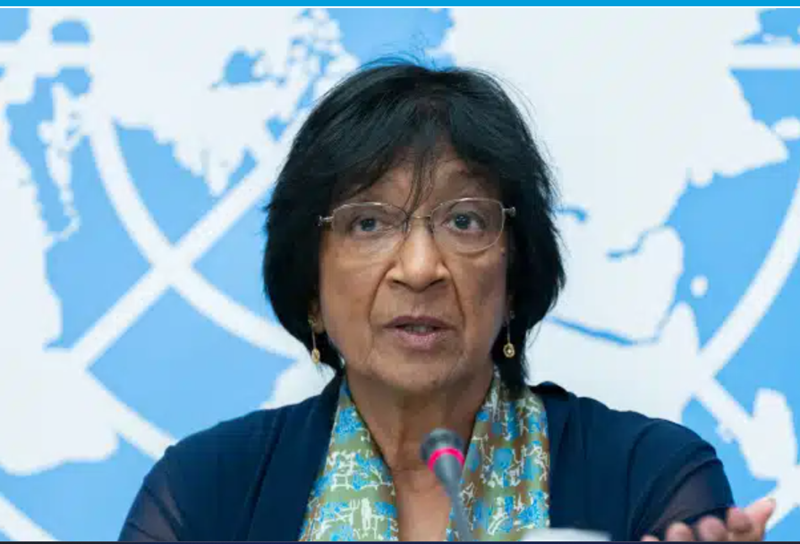
OSLO, Oct 9: Navanethem "Navi" Pillay, a prominent South African jurist and former United Nations High Commissioner for Human Rights, has been named the recipient of the 2026 Nobel Peace Prize for her lifelong dedication to advancing international law, justice, and human rights.
Nobel Committee’s Citation and Defense of International Law
The Norwegian Nobel Committee commended Pillay for playing a pivotal role in prosecuting genocide, war crimes, and crimes against humanity throughout her career.
Committee Chair Jørgen Watne Frydnes emphasized that the award serves as a defense of the post-WWII legal order.
Pillay's Reaction
Learning of the announcement while in Nuremberg, Pillay initially joked with colleagues that the news "must be a joke" and remarked that, as a judge, she felt compelled to verify the facts.
A Career Built on Justice
Anti-Apartheid Roots: A native of Durban, South Africa, Pillay began her legal career defending anti-apartheid activists and challenging systemic discrimination.
International Tribunals: She served as president of the International Criminal Tribunal for Rwanda (ICTR) in the late 1990s and early 2000s and later as a judge on the International Criminal Court (ICC).
She currently sits on the International Court of Justice (ICJ) in the case concerning Myanmar. UN Leadership: Pillay served as the UN High Commissioner for Human Rights from 2008 to 2014.
Reactions and Political Friction
South African Praise: South African President Cyril Ramaphosa lauded Pillay as a principled defender of humanity, noting she is the fifth South African to receive the honor.
Israeli Opposition: The award drew sharp criticism from Israel's Foreign Ministry, which called it a "weaponization" of the prize. The backlash stems from Pillay’s recent role leading a UN Independent Commission of Inquiry, which concluded that Israeli actions in Gaza constituted genocidal acts—a charge Israel fiercely rejects.
Committee Neutrality: When asked if President Trump was considered for nomination, Frydnes declined to comment, reaffirming the committee's long-standing policy of non-disclosure regarding nominees.
Pillay becomes the latest South African Nobel Peace laureate, joining figures such as Albert Luthuli, Desmond Tutu, Nelson Mandela, and F.W. de Klerk.