
Rapper-Turned-Politician Balendra Shah Leads Historic Election Win in Nepal
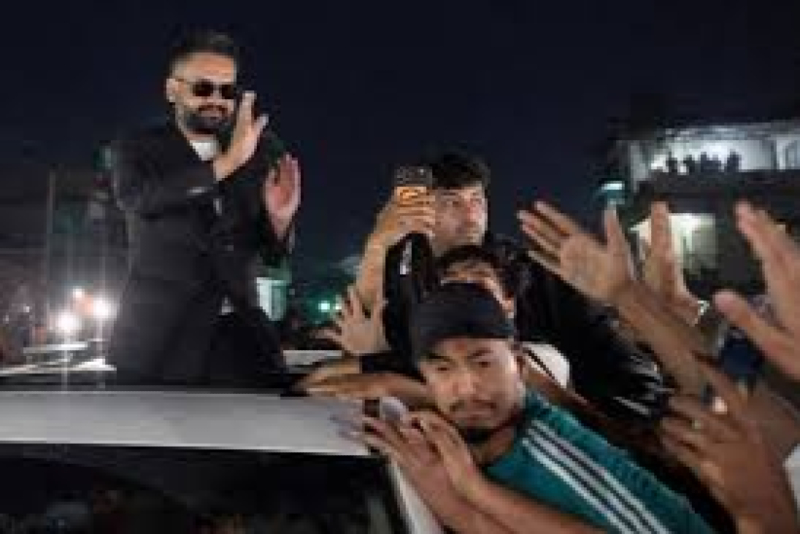
Nepal’s political landscape has shifted dramatically after the Rastriya Swatantra Party (RSP) secured a sweeping victory in the country’s latest parliamentary election. The party won 182 seats, emerging as the largest force in the lower house and achieving one of the most decisive victories by a single party in decades.
The result puts rapper-turned-politician Balendra Shah in a strong position to become the next national leader. However, the party fell just two seats short of the two-thirds majority required to fully dominate the parliament.
Election officials reported that around 60% of nearly 19 million eligible voters took part in the vote, reflecting strong public interest following a turbulent year in Nepal’s politics.
Established Parties Suffer Major Setback
Traditional political parties faced heavy losses in the election. The Nepali Congress finished a distant second with 38 seats, while the Communist Party of Nepal (UML) secured 25 seats.
Former prime minister KP Sharma Oli also suffered a major defeat in the Jhapa-5 constituency, losing to Shah in what had long been considered one of his political strongholds. Another high-profile casualty was Gagan Thapa, leader of the Nepali Congress, who also lost his seat to an RSP candidate.
Youth Anger Shapes Election Outcome
Analysts say the election result reflects a powerful demand for change among younger voters. The vote came months after nationwide protests driven largely by youth groups frustrated with unemployment, economic stagnation and political privilege.
The demonstrations initially began as opposition to a government social media ban but quickly grew into a wider movement criticizing corruption and inequality in the political system. Violent clashes during the protests left 77 people dead, intensifying public dissatisfaction with the ruling leadership.
A New Chapter for Nepal’s Politics
The RSP’s success is particularly notable because Nepal’s mixed electoral system — combining first-past-the-post and proportional representation — usually prevents any single party from dominating parliament.
Founded only in 2022, the party has quickly transformed from a newcomer into the country’s most powerful political force. A new government is expected to be formed within the coming week, potentially marking the beginning of a new political era in Nepal.