
Diplomatic Shuttle: Iran Turns to Russia as U.S. Blockade Tightens and Ceasefire Hopes Falter
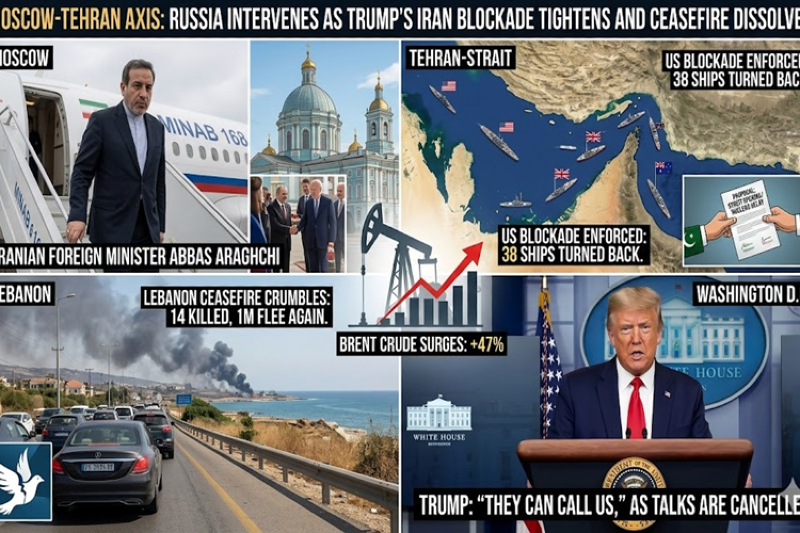
TEHRAN/ ST. PETERSBURG — The conflict between Iran and the U.S.-led coalition took a sharp geopolitical turn on Monday as Iranian Foreign Minister Abbas Araghchi arrived in Russia for high-stakes consultations with President Vladimir Putin.
The visit comes at a critical juncture, with Tehran seeking a "diplomatic shield" while the U.S. maintains a suffocating naval blockade.
The Moscow-Tehran Axis Strengthens
Araghchi’s arrival in St. Petersburg—on a flight symbolically numbered "Minab 168" to commemorate children killed in earlier strikes—underscores the deepening alliance between the two nations.
Russian officials have positioned themselves as a counterweight to Washington’s pressure campaign.
Mikhail Ulyanov, Russia’s envoy in Vienna, sharply criticized the American strategy, stating that "blackmail and ultimatums" simply do not work with Iran.
Russian lawmakers added that the U.S. appeared "militarily unprepared" for a prolonged conflict, having underestimated Iran’s ability to move its strategic missile and drone assets into hardened underground facilities.
Trump’s "Call Me" Diplomacy Amidst a Blockade
In Washington, President Donald Trump remains defiant, oscillating between military pressure and an open invitation for dialogue.
"They can come to us, or they can call us," Trump remarked, even as he canceled a high-level diplomatic mission to Pakistan that was intended to broker a truce.
Despite the rhetoric of "open doors," the military reality remains intense:
Naval Blockade: U.S. Central Command (CENTCOM) confirmed that its forces turned back 38 ships in the last 24 hours, maintaining a total blockade of Iranian ports.
Strait of Hormuz: Iran has reportedly offered a new proposal via Pakistani mediators to reopen the strategic waterway, suggesting that nuclear negotiations be postponed to a later date in exchange for ending the maritime siege.
Ceasefire Crumbles in Lebanon
While eyes are on the Iran-U.S. standoff, the regional fallout continues to escalate in Lebanon. A U.S.-brokered ceasefire is now being described as "existing in name only."
Rising Casualties: Israeli strikes in southern Lebanon killed at least 14 people on Sunday, including two children.
Mass Displacement: Over a million people who had briefly returned to their homes are now fleeing north again after fresh evacuation orders.
Hezbollah Response: The group claimed several retaliatory strikes on Israeli positions, citing "persistent violations" of the truce by Israel since its inception.
Economic Impact: Oil and Markets
The diplomatic impasse is reverberating through global markets. Brent crude prices surged by over 2%, sitting at approximately $107.35 per barrel—a staggering 47% increase since the war began.
Analysts warn that Iran’s economy, already battered by years of sanctions, is being pushed to the brink by the current blockade and the destruction of industrial infrastructure.
The Path Ahead
As Araghchi prepares to meet Putin, the regional landscape remains a powder keg. While mediators in Pakistan remain "hopeful" that a second round of talks can be salvaged, the involvement of Gulf nations—who are demanding a seat at the table to avoid the perceived mistakes of the 2015 nuclear deal—adds another layer of complexity to any potential settlement.
👉 Read More
https://thereporter24.com/news/three-former-us-presidents-rejected-iran-war-proposal-trump-reportedly-showed-support
https://thereporter24.com/news/belgium-intercepts-illegal-uk-arms-consignments-bound-for-israel