
Gulf Infrastructure Hit as Iran Accuses US-Israel of ‘Secret Ground War Plans’; Houthis Intensify Attacks
The escalating conflict involving Iran, Israel and the United States is entering a more dangerous phase, marked by direct strikes on critical infrastructure across the Gulf, renewed missile exchanges, and warnings of a potential ground invasion.
Tensions surged after Iran targeted major industrial facilities in the Gulf, including sites linked to Emirates Global Aluminium and Aluminium Bahrain.
The attacks came in apparent retaliation for Israeli strikes on Iranian steel plants, highlighting a pattern of “like-for-like” escalation that is increasingly threatening global supply chains.
Analysts warn that the Gulf region accounts for a significant share of the world’s aluminium output, raising fears of wider economic disruption if attacks continue.
Iran Threatens to Target US, Israeli Universities
In a sharp escalation, Iran has warned it could target American and Israeli-affiliated universities across the region in retaliation for strikes on a major campus in Tehran.
Iranian authorities accused United States and Israel of attacking a leading science and technology university, describing it as an assault on the country’s academic and research infrastructure. Officials signalled that institutions linked to the US and Israel could be considered potential targets unless the attacks on Iranian educational facilities cease, raising alarm over the widening scope of the conflict to civilian and academic spaces.
Iran Alleges ‘Deceptive Diplomacy’ by US
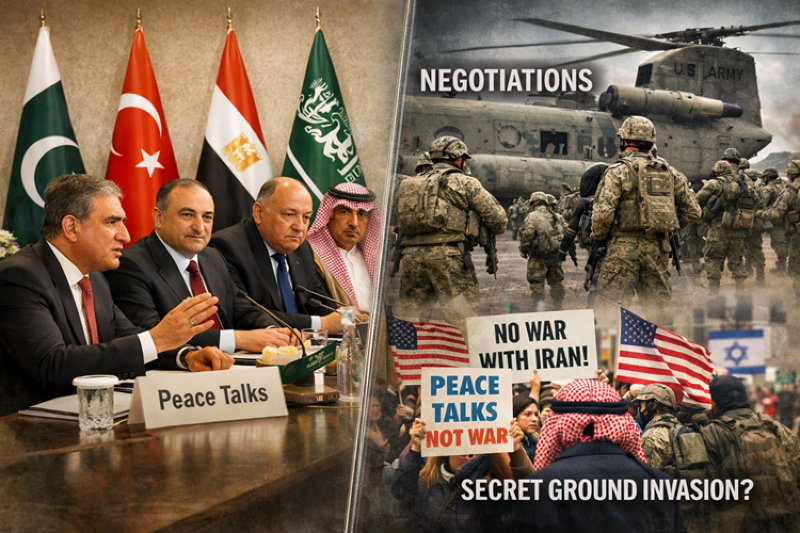
Amid reports of Washington expressing openness to negotiations, Iran’s Parliament Speaker Mohammad Bagher Ghalibaf accused the US of duplicity, claiming that calls for dialogue are being used to mask preparations for a ground offensive.
According to Iranian state media, Ghalibaf said Tehran is prepared for any such move, warning that Iranian forces are ready to confront US troops if deployed. His remarks came as reports emerged of approximately 3,500 additional American personnel arriving in the region aboard the amphibious assault ship USS Tripoli.
Houthis Expand Regional Front
The Iran-aligned Houthi movement has intensified its involvement, launching fresh missile and drone attacks towards Israel. The group declared it would continue its operations until Israeli military actions cease, effectively opening another active front in the conflict.
Security agencies have raised concerns that further Houthi escalation—particularly in the strategic Bab al-Mandab Strait—could severely disrupt global shipping routes, compounding economic risks already heightened by the Gulf infrastructure strikes.
Missile Exchanges and Regional Spillover
Iran has continued launching missiles towards southern Israel, with Israeli air defence systems intercepting most incoming projectiles. Air raid sirens reportedly sounded dozens of times across Israeli cities within a 24-hour period, reflecting the intensity of the ongoing exchanges.
Meanwhile, the conflict’s spillover is being felt across neighbouring countries. In Baghdad and the Kurdish region of Erbil, drones and rockets have targeted US-linked sites, fuelling fears among locals that Iraq is being drawn deeper into the war.
Internet Blackout Deepens Inside Iran
Inside Iran, digital connectivity has nearly collapsed, with monitoring groups reporting internet access reduced to around one percent of normal levels. The blackout, now entering its 30th day, has left many citizens struggling to access independent information, contributing to confusion and conflicting narratives about the war’s progress.
Diplomatic Push for De-escalation
Amid rising tensions, foreign ministers from Pakistan, Turkiye, Egypt and Saudi Arabia convened in Islamabad to explore options for de-escalation.
However, with attacks intensifying across multiple fronts and rhetoric hardening, prospects for immediate diplomatic breakthroughs remain uncertain.
Growing Risk of Wider War
From strikes on industrial hubs in the Gulf to expanding proxy involvement and warnings of ground operations, the conflict is rapidly evolving beyond a contained confrontation. With each side escalating both militarily and rhetorically, the risk of a broader regional war—and its global economic consequences—continues to rise.