
US Strikes Iranian Radar Sites Following Multi-Angle Missile and Drone Attacks
MANAMA — Direct military conflict between the United States and Iran escalated sharply over the weekend, with both nations trading heavy strikes around the strategic Strait of Hormuz.
The latest flare-up comes as delicate diplomatic efforts to finalize a permanent peace agreement hit a major roadblock.
The tension further rippled across the region early Monday when neighboring Kuwait announced that its military was actively intercepting a wave of incoming drone and missile strikes.
US Launched Preemptive Strikes on Iranian Infrastructure
U.S. Central Command (Centcom) confirmed it conducted multiple "self-defense strikes" targeting critical Iranian military installations on Saturday and Sunday.
The operations focused on the coastal city of Goruk and Qeshm Island, an Iranian territory situated directly within the Strait of Hormuz.
According to military officials, U.S. fighter jets successfully neutralized:
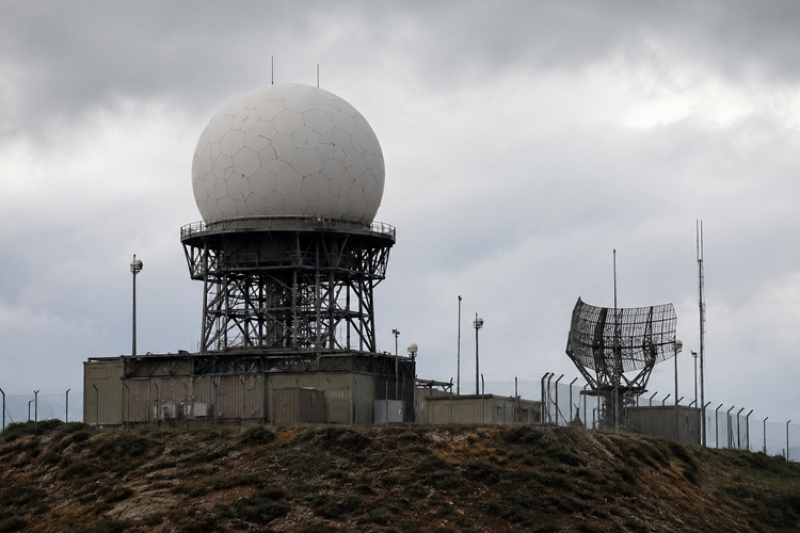
Radar installations and drone command-and-control hubs.
Active air defense systems.
A ground control network and two unmanned aerial vehicles (UAVs) deemed an imminent threat to international maritime shipping.
Centcom stated the incursions were a direct response to recent "aggressive Iranian actions," which included the downing of an American surveillance drone flying over international airspace. No U.S. casualties or injuries were reported during the operations.
Tehran Retaliates, Targeting Regional Bases
In response, the Islamic Revolutionary Guard Corps (IRGC) announced it had launched retaliatory strikes against an airbase utilized by American forces.
Tehran claimed the targeted facility was the launch point for a recent U.S. assault on an Iranian communications tower located on Sirri Island in the Persian Gulf.
Iran's semi-official Fars news agency quoted IRGC officials warning that any future American operations would trigger a "completely different" and far more severe military response.
Concurrently, the military in Kuwait—which hosts a substantial U.S. military footprint—confirmed its air defense systems were engaged in repelling hostile aerial attacks on Monday morning.
While Kuwaiti officials did not explicitly name the origin of the missiles and drones, the country's infrastructure was previously targeted by Iran last week following a prior round of U.S. airstrikes.
Diplomatic Breakthrough Stalls Over Last-Minute Demands
The violent escalation directly coincides with a breakdown in high-level negotiations intended to transition an April 8 temporary ceasefire into a lasting peace accord.
| Proposed Agreement Terms | Current Points of Contention |
|---|---|
• A 60-day binding cessation of hostilities.
• Full reopening of the blockaded Strait of Hormuz.
• A structured framework to resume Iranian nuclear talks. | • Late adjustments requested by the Trump administration.
• Demands regarding strict maritime security protocols in the Strait.
• Mandates surrounding the complete removal of highly enriched uranium. |
On Sunday, Iran's chief diplomat dug in, asserting that Tehran would completely reject any framework that fails to fully guarantee and protect Iranian sovereign rights.
Despite the setback and the ongoing exchange of fire, President Trump expressed optimism on his Truth Social network
Monday morning, claiming that Iran remains eager to finalize an agreement. He stated the final terms would be "a good one for the USA" and urged observers to remain calm, promising a favorable resolution.
Economic Fallout
The continued militarization and closure of the Strait of Hormuz remain a critical concern for the global economy.
The shipping channel typically facilitates the transit of roughly 20% of the world's petroleum and liquefied natural gas (LNG).
The prolonged de facto trade blockade continues to exert significant upward pressure on global energy markets and fuel prices.