
Trump Pauses Planned Strikes on Iran for Five Days Amid Diplomatic Signals
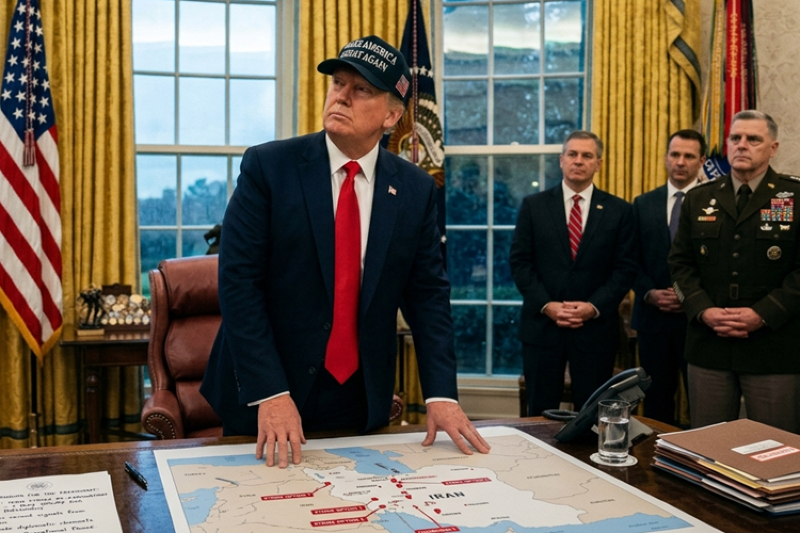
U.S. President Donald Trump has announced a temporary halt to planned military strikes on Iran’s energy infrastructure, offering a five-day window for diplomacy as tensions continue to grip the Middle East.
In a statement, Trump said recent exchanges with Tehran had been “constructive,” suggesting there may be a path toward easing hostilities. The pause comes just as a 48-hour deadline set by Washington—demanding the reopening of the Strait of Hormuz—was due to expire.
Iran Denies Talks, Claims US Retreat
Despite Trump’s remarks, Iranian media outlets have denied that any direct or indirect negotiations have taken place. Sources cited by state-linked agencies claimed Washington stepped back after Tehran warned of strong retaliation, including potential strikes on regional energy infrastructure.
Iran’s National Defence Council has also warned that any attack on its territory, particularly coastal areas or islands, could trigger the mining of key maritime routes in the Persian Gulf, a move that would severely disrupt global shipping.
Diplomatic Efforts Intensify
Behind the scenes, diplomatic activity has surged. Officials from multiple countries have reportedly engaged in urgent discussions with both Washington and regional stakeholders, aiming to prevent further escalation. These talks continued despite the ongoing Eid holiday, highlighting the seriousness of the crisis.
Analysts say the situation remains fragile, with both sides signaling readiness for confrontation while leaving room for negotiation.
Oil Prices Drop After De-escalation Signal
Global markets reacted swiftly to the announcement. Oil prices, which had surged above $100 per barrel amid fears of supply disruptions, dropped sharply following news of the delay. The earlier spike had been driven by concerns that instability around the Strait of Hormuz could choke a major portion of the world’s oil supply.
Conflict Spreads Across Region
Meanwhile, violence continues across multiple fronts. In southern Lebanon, air strikes have targeted key infrastructure, including bridges over the Litani River, complicating civilian movement and raising humanitarian concerns. Regional actors, including Egypt, have condemned such attacks, describing them as collective punishment.
In Israel, security alerts forced evacuations at Ben Gurion Airport after missile warnings, while military operations near the Lebanon border have intensified, with both sides reporting ongoing exchanges of fire.
Global Concerns Mount
International powers have voiced alarm over the growing risk of a wider conflict. Russia warned that strikes near nuclear facilities such as the Bushehr plant could have dangerous consequences, while China urged all parties to return to dialogue to avoid what it described as a “vicious cycle” of escalation.
With tensions still high and conflicting narratives emerging from Washington and Tehran, the coming days are likely to be critical in determining whether diplomacy can prevail—or whether the region moves closer to a broader confrontation.