
Trump Compares First Strikes on Iran to Japan’s Pearl Harbor Attack in Oval Office Meeting
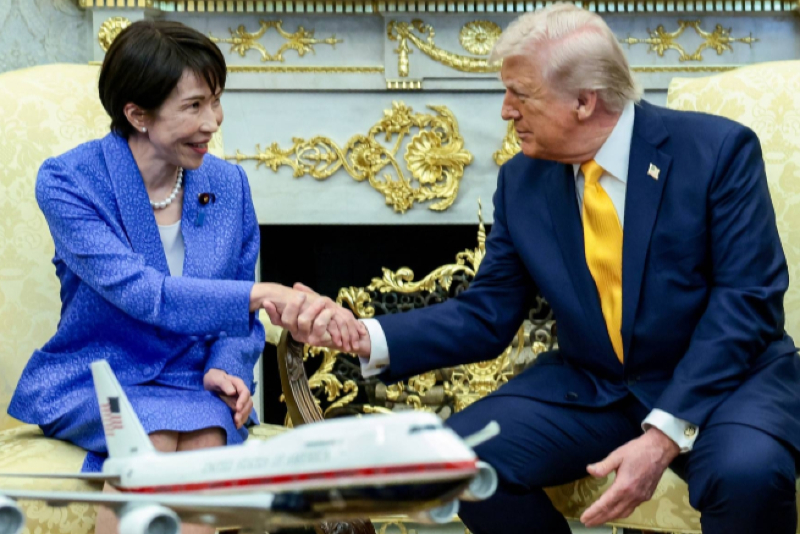
Washington, D.C. – In a candid Oval Office exchange with Japanese Prime Minister Sanae Takaichi, U.S. President Donald Trump compared the surprise U.S. strikes on Iran to Japan’s attack on Pearl Harbor during World War II. The remark came as Trump explained why he did not notify U.S. allies prior to the initial strikes.
“We didn’t tell anyone about it because we wanted a surprise. Who knows better about surprise than Japan?” Trump said, adding with a hint of irony, “Why didn’t you tell me about Pearl Harbor?” His comment drew a noticeable reaction from Prime Minister Takaichi, whose smile faded and eyes widened.
Element of Surprise Enabled Greater Impact
Trump defended his decision not to alert allies, saying, “One thing you don't want to signal too much, you know, when you go in. We went in very hard.” He emphasized that the secrecy allowed U.S. forces to strike “much more” of Iran’s defenses than anticipated during the opening days of the operation. Pentagon officials confirmed that over 7,000 targets were hit and 120 Iranian naval vessels were damaged or sunk.
“If I go and tell everybody about it, there’s no longer a surprise,” Trump added, underscoring the strategic advantage he claimed was gained from the initial secrecy.
Takaichi’s Response and Diplomatic Context
Prime Minister Takaichi appeared cautious throughout the discussion. While the two leaders exchanged pleasantries and mutual respect, Trump’s Pearl Harbor reference created a tense moment. The meeting was intended to solidify Japan’s role in supporting U.S. initiatives in the Middle East, particularly the security of the Strait of Hormuz, a vital route for global oil transport.
Trump further explained the strategic importance, noting that a significant portion of Japan’s oil supply passes through the Strait. “So that’s a big reason to step up. They are really stepping up to the plate,” he said.
The meeting also covered broader discussions on trade, energy cooperation, and regional security. A $40 billion nuclear reactor deal is expected to be announced following the talks, involving the construction of advanced small modular reactors in Tennessee and Alabama, with U.S. company GE Vernova and Japan’s Hitachi participating.
Historical Echoes in Contemporary Strategy
Trump’s Pearl Harbor analogy drew attention given the historical weight of the December 7, 1941, attack, which propelled the U.S. into World War II. By invoking it, Trump highlighted the value he placed on the element of surprise in military strategy, while simultaneously illustrating the tension in U.S.-Japan diplomatic relations regarding Middle East operations.
The Oval Office meeting underscores the delicate balance in U.S. foreign policy, where historical references, modern military strategy, and alliance management intersect, all amid ongoing conflict in Iran.