
Regional War Erupts as Iran Seals Hormuz, Attacks US Embassy in Riyadh (Follow slider for updates)
The military confrontation between Iran and a U.S.–Israeli coalition has escalated into a full-scale regional war, paralyzing key global energy routes and pushing the Middle East into its most dangerous crisis in decades.
The conflict intensified after the reported killing of Iran’s Supreme Leader, Ali Khamenei, in a joint strike last week.
Hormuz Closure Shakes Global Markets
Iran’s powerful Islamic Revolutionary Guard Corps (IRGC) has declared the Strait of Hormuz “closed,” warning that any vessel attempting to cross the vital waterway would face attack. Roughly 20% of the world’s oil supply transits through the narrow strait, making it one of the most critical chokepoints in global trade.
The blockade has already rattled energy markets. Brent crude prices climbed toward $80 per barrel, with analysts warning they could spike to $100 if disruptions persist. Asian economies, particularly China, India and South Korea, are bracing for supply shortages as refiners scale back operations.
Qatar, one of the world’s top liquefied natural gas exporters, suspended LNG production following drone and missile threats, prompting countries like India to reduce domestic gas allocations by up to 30%.
US Interests Targeted in Gulf
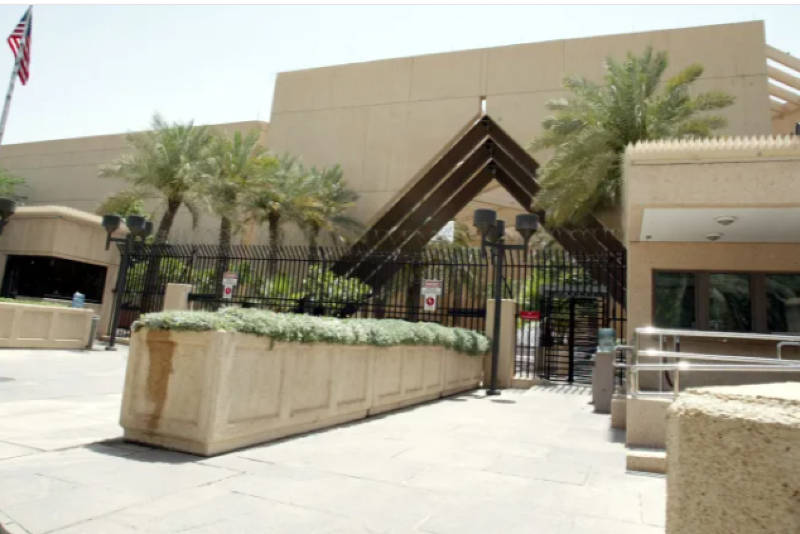
Tensions deepened after two drones struck the U.S. Embassy compound in Riyadh, Saudi Arabia. Authorities reported minor structural damage and no confirmed fatalities, but Washington responded by issuing urgent security alerts and ordering non-essential personnel and citizens to depart several Gulf states.
In Kuwait, the U.S. Embassy suspended operations indefinitely after what officials described as a “friendly fire” incident that killed six American service members and destroyed three military aircraft.
Expanding Military Fronts
The conflict has widened beyond Iran’s borders. Israel launched a new ground incursion into southern Lebanon, aiming to establish what it described as a “security zone.” Lebanese forces reportedly withdrew from several forward positions along the border.
Israeli airstrikes have also hit strategic targets inside Iran, including the Natanz nuclear facility and the Choqa Balk-e drone site. Satellite imagery indicates extensive structural damage.
In Tehran and Hamadan, residential neighborhoods and state infrastructure were struck, while reports indicate that a hospital in the capital sustained significant damage.
In Qatar, ballistic missiles were intercepted over Doha, marking a rare direct spillover into Gulf airspace. Pakistan announced a partial closure of its commercial airspace through the end of March, disrupting more than 150 international flights.
Rising Death Toll and Humanitarian Crisis
According to the Iranian Red Crescent, the death toll inside Iran has climbed to 787 as of March 3, with combined casualties in Iran and Lebanon exceeding 1,000. Mass funerals were held in multiple cities, including for 165 victims killed in strikes in the southern city of Minab. A growing displacement crisis is unfolding in Beirut’s southern suburbs following evacuation warnings.
Iran is currently governed by a three-member transitional council as the Assembly of Experts begins the process of appointing a successor to Khamenei. The leadership vacuum adds further uncertainty to an already volatile situation.
Political Fallout in Washington and London
U.S. President Donald Trump defended the military campaign, saying operations would continue until “all objectives” are achieved. However, Democratic lawmakers have challenged the legality of the strikes under the War Powers Act, arguing that the administration failed to demonstrate an imminent threat to the U.S. mainland.
Transatlantic tensions have also surfaced. Trump publicly criticized British Prime Minister Keir Starmer after the United Kingdom declined to join the military coalition, casting doubt on the strength of the longstanding “special relationship.”
Meanwhile, China condemned the U.S. strikes, calling them a violation of international law and urging a return to diplomatic negotiations.
Global Economic Reverberations
The closure of Hormuz and attacks on Gulf energy infrastructure have triggered supply disruptions worldwide. China’s Zhejiang Petrochemical Corp shut down a major 200,000-barrel-per-day processing unit, while Australia’s energy minister appealed to citizens to avoid panic buying amid rising fuel prices.
With energy corridors strained, diplomatic ties fraying, and casualties mounting, international observers warn that the conflict risks spiraling into a prolonged and devastating regional war unless urgent diplomatic efforts gain traction.
Read more🔗
https://theimpartial24.blogspot.com/2026/03/middle-east-war-deepens-as-iran-blocks.html