
Iran and Hezbollah Unleash Synchronized Cluster Munition Strikes on Israel
On the eleventh day of the escalating regional conflict, a significant and deadly shift in military tactics has emerged.
For the first time in the current campaign, security experts and military officials have confirmed that Iran and its Lebanese proxy, Hezbollah, have launched a series of "synchronized" cluster bomb attacks against Israeli population centers.
The development marks a pivot toward what officials describe as "non-conventional" attrition warfare, designed to overwhelm advanced missile defense systems and maximize civilian disruption.
A Coordinated Strategy: The "Double-Threat" Escalation
According to national security analysts speaking from the ground in Tel Aviv, the latest wave of attacks reflects a high degree of operational coordination between Tehran and Beirut.
Kobi Michael, a senior researcher at the Institute for National Security Studies (INSS), noted that the timing of these launches is no longer incidental.
"Hezbollah has fully integrated its command with Iran," Michael stated during a briefing held from a bomb shelter.
"We are seeing drones and short-range rockets from Lebanon launched at the exact same moment as long-range ballistic missiles from Iranian territory. This is a deliberate attempt to saturate the Iron Dome and Arrow defense tiers simultaneously."
The Arrival of Cluster Munitions
Perhaps the most alarming development for Israeli civilians is the widespread use of cluster munitions. Unlike standard high-explosive warheads, cluster bombs are designed to burst open at high altitudes, releasing dozens—sometimes hundreds—of smaller submunitions over a vast area.
Israeli military officials reported that roughly 50% of the projectiles intercepted over the last 24 hours were carrying these "bomblets."
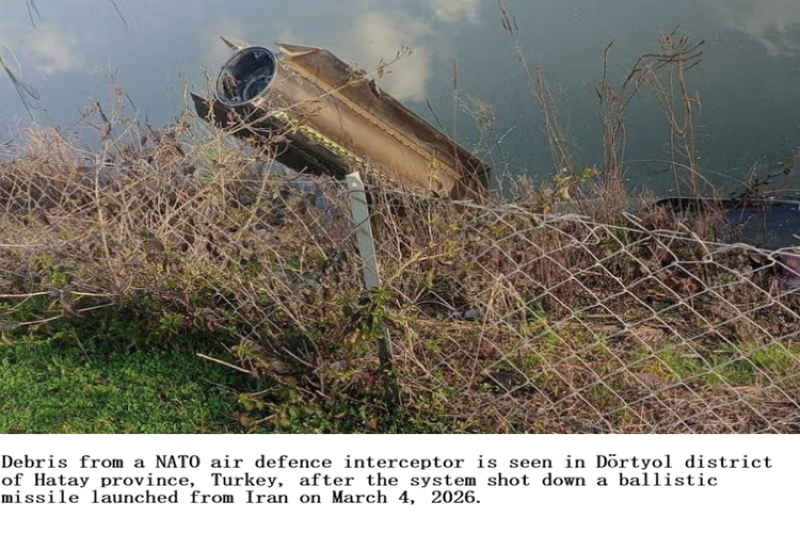
The Interception Challenge: While Israel’s defense systems can destroy the primary carrier missile, the submunitions often scatter before the hit occurs, raining down smaller, lethal fireballs that resemble orange streaks in the night sky.
International Status: Cluster munitions are banned by over 120 countries under the 2008 Convention on Cluster Munitions due to their indiscriminate nature and the high "dud rate," which leaves unexploded ordnance on the ground, posing a long-term risk to civilians.
Ground Realities: Life in the Shelters
From the northern port of Haifa to the financial heart of Tel Aviv, life has shifted into an "emergency routine." Sirens have become a constant backdrop as residents spend hours each day in reinforced rooms.
"Israel is a small country," Michael warned. "It cannot indefinitely contain this type of asymmetrical attrition. The targeting of civilian infrastructure with what are essentially indiscriminate weapons demands a response that reflects the severity of the threat."
In response, the Israel Defense Forces (IDF) have intensified their aerial campaign. On Tuesday night, the military launched a massive wave of strikes against Hezbollah’s logistical hubs in the Dahiyeh district of southern Beirut. This followed a series of urgent evacuation orders for Lebanese civilians living near suspected weapons depots.
Hezbollah’s Return to Guerrilla Tactics
While the air war rages, intelligence reports suggest that Hezbollah is preparing for a potential Israeli ground invasion. Moving away from the conventional military posturing seen in 2024, the group is reportedly returning to its "insurgent roots."
Sources familiar with Hezbollah’s operations indicate that fighters are:
Operating in small, autonomous units: To avoid detection from advanced U.S. and Israeli surveillance.
Radio Silence: Abandoning digital communication devices that are vulnerable to electronic eavesdropping.
Rationing Resources: Hoarding anti-tank guided missiles (ATGMs) for a protracted defense of southern Lebanon.
The town of Khiyam, located near the sensitive tri-border area between Lebanon, Israel, and Syria, has become a focal point of these preparations.
Military analysts believe this is where Hezbollah expects the first Israeli tanks to cross if a buffer zone is established up to the Litani River.
The Geopolitical Forecast
The international community remains divided on the path forward. While U.S. and Israeli forces continue "Operations Epic Fury" and "Roaring Lion," there is growing pressure on the Trump administration to ensure the campaign results in a permanent dismantling of the "Resistance Axis" rather than a temporary ceasefire.
"There is a hope that the U.S. will not simply declare victory and leave the threat to reconstitute itself," Michael added, referring to previous engagements with the Houthis in Yemen.
As global energy markets watch the Strait of Hormuz and world leaders call for restraint, the reality on the ground remains one of fire and sirens.
With half of Iran’s arsenal now reportedly consisting of cluster-type weaponry, the humanitarian and military stakes have reached their highest point in decades.