
CHOKEPOINT CHESS: Iran Threatens Global Blackout as Oil Wars Ignite

The world’s energy jugular is being squeezed. As Iranian officials vow to turn the Strait of Hormuz into a "dead zone" for Western oil, the United Nations has finally bared its teeth, and the U.S. has issued a "hit-back-harder" ultimatum.
With tankers burning and the IEA dumping 400 million barrels into a thirsty market, the shadow war in the Middle East has just stepped into the light.
The "Not One Drop" Ultimatum
Tehran has stopped playing nice. In a move that sent shockwaves through global markets, Iranian military commanders declared today that "not a single liter of oil" will pass through the Strait of Hormuz without their explicit permission.
Adding teeth to the threat, Iranian officials warned the world to "get ready for $200 a barrel," weaponizing the global energy market as a tool of war.
The threat isn't just talk; an anonymous Iranian security source told Al Jazeera that the conflict is entering a "new phase" where another undisclosed global chokepoint could face a similar blockade. "We still have many cards left to play," the source warned, hinting at a gradual, suffocating escalation.
Trump’s Cincinnati Counter-Punch
Speaking to reporters during a visit to Cincinnati, Ohio, on Wednesday, U.S. President Donald Trump delivered a blunt assessment of the naval conflict. He claimed that American forces have effectively "knocked out" Iran’s leadership twice and have decimated their maritime capabilities.
"They started talking about mines, so we hit 28 mine-laying ships as of this moment," Trump asserted, referring to recent strikes near the Strait. He dismissed Tehran’s $200-per-barrel prediction, promising instead that global oil prices "will soon be coming down" as the U.S. continues to dominate the chokepoint. He cautioned that any further attempts to obstruct global trade would be met with a response "twenty times harder" than anything seen in the war's first 12 days.
Fire on the Water: The Thai Rescue
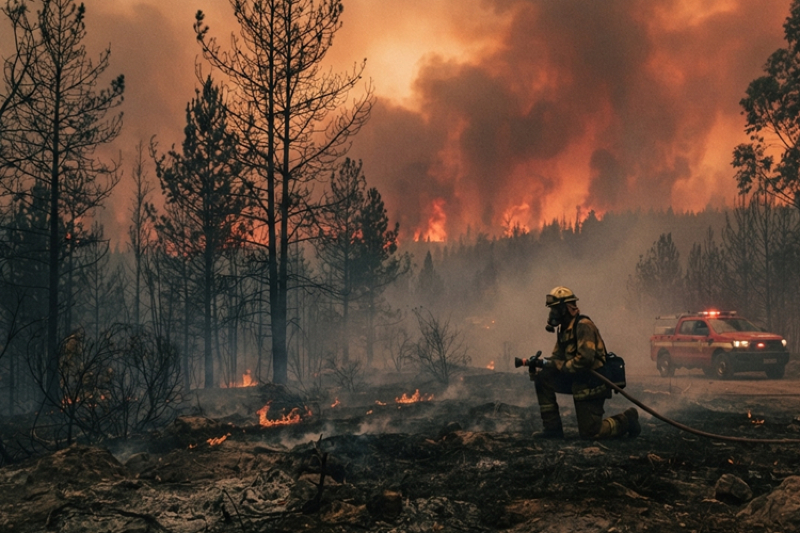
The rhetoric turned into a localized inferno near the Omani coast. Three oil-carrying vessels were targeted in a coordinated strike near the Strait:
The Mayuree Naree: The Thai-flagged bulk carrier bore the brunt of the attack, catching fire after being hit.
The Rescue: In a daring maritime operation, the Oman Navy rescued all 20 sailors—all Thai nationals—from the burning vessel and brought them to safety at Khasab.
Global Outrage: India issued a blistering statement "deploring" the attack on a ship bound for its own Gujarat coast, while the Japanese-registered ONE Majesty and the Star Gwyneth also reported strikes nearby.
The 400-Million-Barrel Gamble
To prevent a global economic cardiac arrest, the International Energy Agency (IEA) has pulled the emergency lever.
In an unprecedented move, the agency’s 32 member nations agreed to release 400 million barrels of oil from strategic reserves. It is the largest single release in history, designed to flood the market and blunt the impact of Iran’s blockade threats.
Diplomatic Isolation & The Lebanon Front
While the seas boil, the diplomatic walls are closing in. The UN Security Council adopted a GCC-sponsored resolution (13-0, with 2 abstentions) demanding an immediate end to Iranian aggression against Gulf nations.
Meanwhile, the human cost remains devastatingly high. Israeli air raids on Burj al-Shamali and Deir Antar in southern Lebanon killed eight more people today.
The 10-day death toll has now climbed to 634, including 91 children, as the "new phase" of this regional war threatens to consume everything in its path.
By March 11, 2026, the intensifying conflict involving the U.S., Israel, and Iran had claimed the lives of more than 1,700 people within Iran alone, according to regional authorities.
The hostilities, which erupted on February 28, have triggered a mounting humanitarian crisis, with Iranian officials reporting over 10,000 injuries alongside additional casualties across Lebanon and Israel as the fighting spreads.