
China Rebukes Use of Force in Iran, Signals Prudent Path for Trump Summit
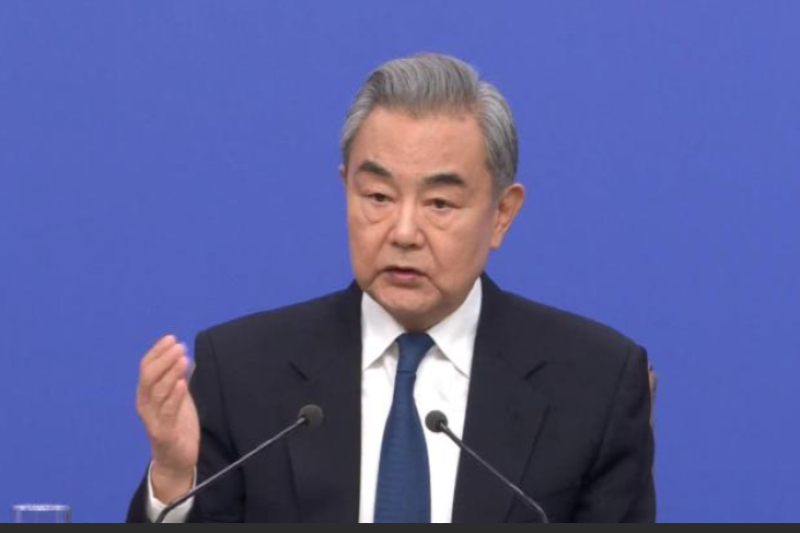
China’s Foreign Minister Wang Yi issued a pointed critique of the escalating conflict in the Middle East on Sunday, labeling the war in Iran a tragedy that "should never have happened" while carefully navigating a tightening diplomatic tightrope ahead of a visit by U.S. President Donald Trump.
Speaking on the sidelines of the "Two Sessions" parliamentary meetings, Wang struck a balance between defending Beijing’s partners and maintaining the "heartening" momentum of recent communications with the White House.
While he cautioned against a return to the "law of the jungle," his remarks stopped short of naming the U.S. President directly, signaling a desire to keep bilateral relations on an even keel.
A "Stabilizing Anchor" in Global Chaos
As the U.S. and Israel continue military operations against Tehran—following a year that has already seen the capture of Venezuelan leader Nicolás Maduro—Beijing is positioning itself as the "irreplaceable anchor" of global stability.
Wang argued that the pursuit of regime change through "strong fists" lacks popular support and fails to reflect "strong reason." He emphasized that:
The World Needs Multilateralism: China remains committed to the United Nations framework, implicitly rejecting Trump’s "Board of Peace" as an attempt to bypass international law.
Economic Resilience: Despite setting its lowest GDP growth targets in decades, Beijing claims to have weathered recent tariff volleys, allowing Wang to project a tone of "confidence" rather than the "warning" of previous years.
The Looming Xi-Trump Summit
The diplomatic maneuvering comes at a critical juncture. President Trump is scheduled to visit Beijing from March 31 to April 2—his first trip to the Chinese capital since 2017.
With both Iran and Venezuela serving as key oil suppliers to China, the disruption of global trade routes and the spike in energy prices weigh heavily on the agenda.
However, analysts suggest Beijing is prioritizing the face-to-face meeting to gauge Trump’s unpredictable foreign policy firsthand.
"Neither side can remodel the other," Wang noted, urging both nations to "treat each other with sincerity" to avoid a conflict that could "bring the whole world down."
Regional Tensions and Red Lines
While conciliatory toward Washington, Wang remained uncompromising on regional sovereignty. He reiterated that the "reunification" of Taiwan is an "unstoppable historical process," warning that those who defy it "shall perish."
He also directed sharp criticism toward Japan. Following Prime Minister Sanae Takaichi’s hints at military involvement in a Taiwan contingency, Wang accused Tokyo of using "self-defense" as a pretext to "hollow out its pacifist constitution," drawing parallels to Japan’s 20th-century militarism.
The "Back-to-Back" Alliance
Despite the global upheaval, Wang reaffirmed China’s "mountain-stable" relationship with Russia.
Avoiding any mention of the ongoing war in Ukraine, he characterized the Sino-Russian partnership as a "defining feature" of a new global alignment that remains “unmoved by wind and rain.”