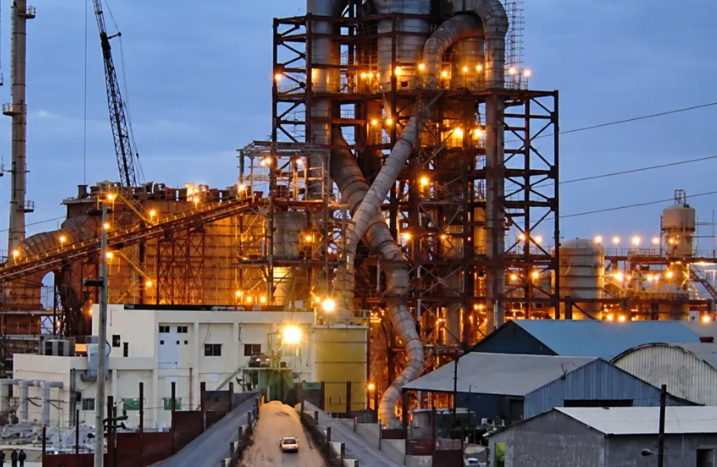
NAIROBI, Kenya — A high-stakes corporate and diplomatic standoff has erupted between the Kenyan government and Indian industrial giant Tata Chemicals after President William Ruto publicly ordered the firm's local subsidiary to halt operations and exit the country.
Pushing back against the presidential directive, Tata Chemicals issued a formal disclosure asserting that its subsidiary is fully compliant with all local laws and regulatory mandates.
The Government's Allegations & Exit Mandate
Speaking at a public event in Kajiado County, President Ruto criticized Tata Chemicals Magadi Ltd (TCML) for failing to generate meaningful local economic benefits despite controlling the region's mineral wealth.
Lack of Domestic Processing: The administration accused the firm of extracting raw trona—used to produce soda ash—and shipping it overseas instead of building domestic processing infrastructure, such as glass manufacturing or industrial chemical facilities.
Resource Nationalism: Expressing frustration over raw material exports, President Ruto questioned why local communities lacked industrial infrastructure despite a century of extraction at Lake Magadi.
Replacement Plans: The government announced plans to onboard two replacement investors tasked with establishing large-scale glass and chemical production plants directly in Kajiado County to generate local employment.
Operational Suspension: The presidential directive builds upon a July 28 suspension order issued by Kenya's Ministry of Mining, Blue Economy and Maritime Affairs, which temporarily halted mining and exports over cited concerns regarding royalty payments, regulatory reporting, and statutory compliance.
Tata Chemicals Defends Operations & Regulatory Track Record
In a official statement submitted to Indian stock exchanges, Tata Chemicals rejected claims of non-compliance, maintaining that its local unit operates strictly within Kenya's legal frameworks.
Comprehensive Document Submission: The company confirmed that following the Ministry’s July 28 suspension notice, TCML submitted all required reports, operational records, and statutory documentation on August 11.
Awaiting Official Review: TCML stated that its detailed response directly addresses every compliance matter raised by the government and that it is officially awaiting the Ministry’s review and technical direction.
Commitment to Resolution: Tata Chemicals reaffirmed its respect for the authority of the Kenyan government while emphasizing its intent to resolve outstanding issues constructively through formal legal, regulatory, and institutional channels.
Socio-Economic Footprint: The firm highlighted that since acquiring the Lake Magadi plant in 2005 through its purchase of the UK-based Brunner Mond Group, it has contributed to Kenya's economy.
The plant directly employs around 500 workers and funds social infrastructure—including water, healthcare, and schooling—benefiting roughly 30,000 community members.
Strategic Significance of Lake Magadi
Kenya stands as the world's fourth-largest producer of natural soda ash, accounting for roughly 1% of global supply.
The chemical compound (sodium carbonate) serves as a core raw material in glass manufacture, detergents, paper production, and battery technologies.
TCML exports over 350,000 tonnes of soda ash annually to international destinations across Southeast Asia, the Middle East, India, and Africa.
The ongoing dispute highlights increasing pressure on foreign mining entities in developing economies to shift from raw mineral extraction toward value-added in-country processing.