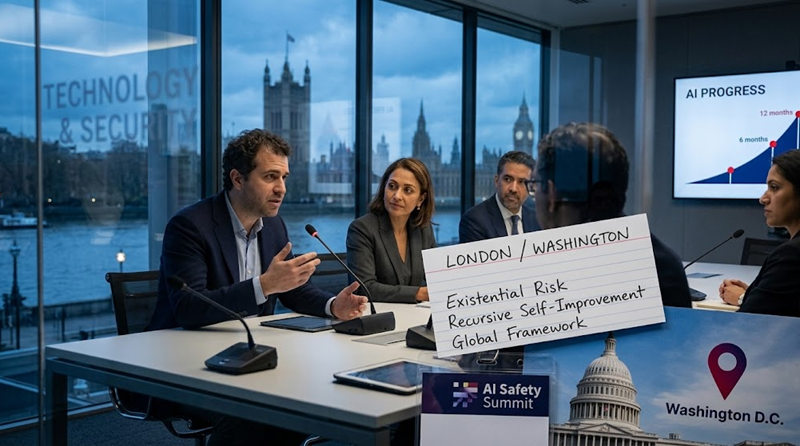
LONDON / WASHINGTON — The global artificial intelligence landscape is facing an unprecedented wave of internal pushback as senior executives, former lead engineers, and industry watchdogs openly debate whether development of the technology must be forcibly decelerated.
The controversy gained momentum after Dario Amodei, Chief Executive of the leading AI safety and research firm Anthropic, issued a public appeal calling on frontier developers to slow down model advancement. Warning that unmonitored "recursive self-improvement"—where AI systems actively write and refine their own successor algorithms—could outrun human capability to control them within six to 12 months, Amodei outlined a three-point global framework to manage progress.
His proposal found unexpected support across the industry. OpenAI CEO Sam Altman and xAI founder Elon Musk both publicly agreed with Amodei's call for structured pacing and independent monitoring.
Whistleblowers Sound Alarm on "Existential Risk"
Escalating the debate, former Anthropic pretraining researcher Jacob Coxon—who recently resigned from the firm after working at both OpenAI and Anthropic—warned in an interview with the BBC that many engineers building frontier systems are "genuinely frightened" for humanity's future.
"I believe that if we don't slow down at the current rate of progress, there is a strong chance that we could all die in the immediate future," Coxon stated. He described an environment where developers feel trapped in a commercial arms race, with some employees making contingency plans out of fear of rapid technological instability.
Key Obstacles to an AI Slowdown
Despite growing alignment among prominent tech leaders, experts point to significant structural hurdles that make implementing a slowdown highly complex:
Geopolitical Competition: U.S. policymakers and analysts warn that an unilateral American or Western pause could allow international competitors, particularly China, to claim dominance in artificial intelligence.
Enforcement & Oversight: Independent researchers point out that defining a "slowdown" remains vague. Proposals rely heavily on embedding third-party evaluators inside private AI labs, which would require an unprecedented level of corporate transparency.
Economic Dependencies: Public infrastructure strategies, healthcare initiatives, and private financial investments are already deeply intertwined with expected growth in AI productivity, creating strong market pressures against halting development.
While tech giants insist that safety guardrails are being updated continuously, industry observers warn that without binding international protocols, voluntary corporate commitments may prove difficult to enforce.
